inside sources print logo
Get up-to-date news in your inbox

Advice From Israel: Build That Wall!
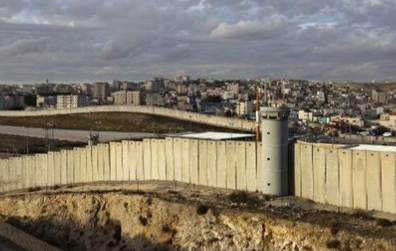
Thousands of migrants are ensconced on the Mexico-USA border, now even demanding extortion money – $50,000 for each migrant – to return to their home countries. Meanwhile, President Trump is locked in a head-to-head battle with Democrat leaders Charles Schumer and Nancy Pelosi over funding for Trump’s border wall, a conflict that may lead to a government shutdown. The Dems are insisting that upgraded patrols and technology are sufficient, while Trump is adamant in his stand that without a serious physical barrier, increased technology and patrols won’t do the trick. Despite the rancor on both sides, is it possible that a pragmatic examination of the “wall issue” could lead to a resolution?

Are Schumer and Pelosi really interested in a serious solution to the seemingly intractable problem of illegal immigration from America’s southern border or is this simply being used by the pair as a bludgeon with which to hammer the president? Assuming good will, that they are truly interested in resolving this major challenge to American sovereignty and laws, perhaps they would like to learn from Israel’s valuable experience in building a similar wall several years ago, and thereby stopping the illegal immigration in its tracks.

From 2010-2012, 55,000 illegal migrants – a huge number for a tiny country like Israel, which is barely the size of New Jersey – had entered from Eritrea and Sudan, settling mostly in the predominantly working-class southern neighborhoods of Tel Aviv and causing a sharp increase in murders and rapes in a city (and in fact a country) that had previously known only very minimal street crime. Terrorism was, and continues to be, a major challenge, but street crime in Israel is rare by American standards.

Under enormous grassroots pressure from the residents of southern Tel Aviv, as well as from residents of other depressed towns with substantial illegal immigrant populations, Israel’s government reached a decision to construct a high-tech steel wall on the Egypt–Israel border.

The barrier was completed over several years, with most of the work concluded by the beginning of 2015. By the end of 2015, 213 illegals had infiltrated Israel, a great improvement, but still not acceptable, which prompted the raising of the height to 25 feet and the installation of additional “smart-fence technology”. The results were remarkable. In 2016, just 11 illegals managed to get through, but in 2017, there was zero illegal immigrationfrom that border, prompting a fact-finding visit by US Homeland Security Secretary Kirstjen Nielsen to examine what America could learn from the Israeli experience in combatting what had become a major challenge for the United States.

In his conversations with the Mexican president and in other settings, President Trump has cited Israel’s wall as an example of what should be done at the US-Mexico border. “People want protection,” Trump said. “And a wall protects. All you have to do is ask Israel. They were having a total disaster coming across, and they built a wall. It’s 99.9 percent stoppage,” Trump said.

President Trump’s face-off with the Democrats on this issue is reaching a head, but the Israeli experience should be cited by those who truly want a solution, rather than just kicking the can down the road, in favor of throwing political hardballs back and forth.

Israel’s physical barrier has empirically worked, in halting the steadily increasing flow that had threatened to overrun its depressed neighborhoods with rampant street crime and massive social tension. Now no one is complaining, while simultaneously, legal productive immigration to Israel continues. Is any more evidence needed?
A Trip Through Trump’s Embattled Borderlands

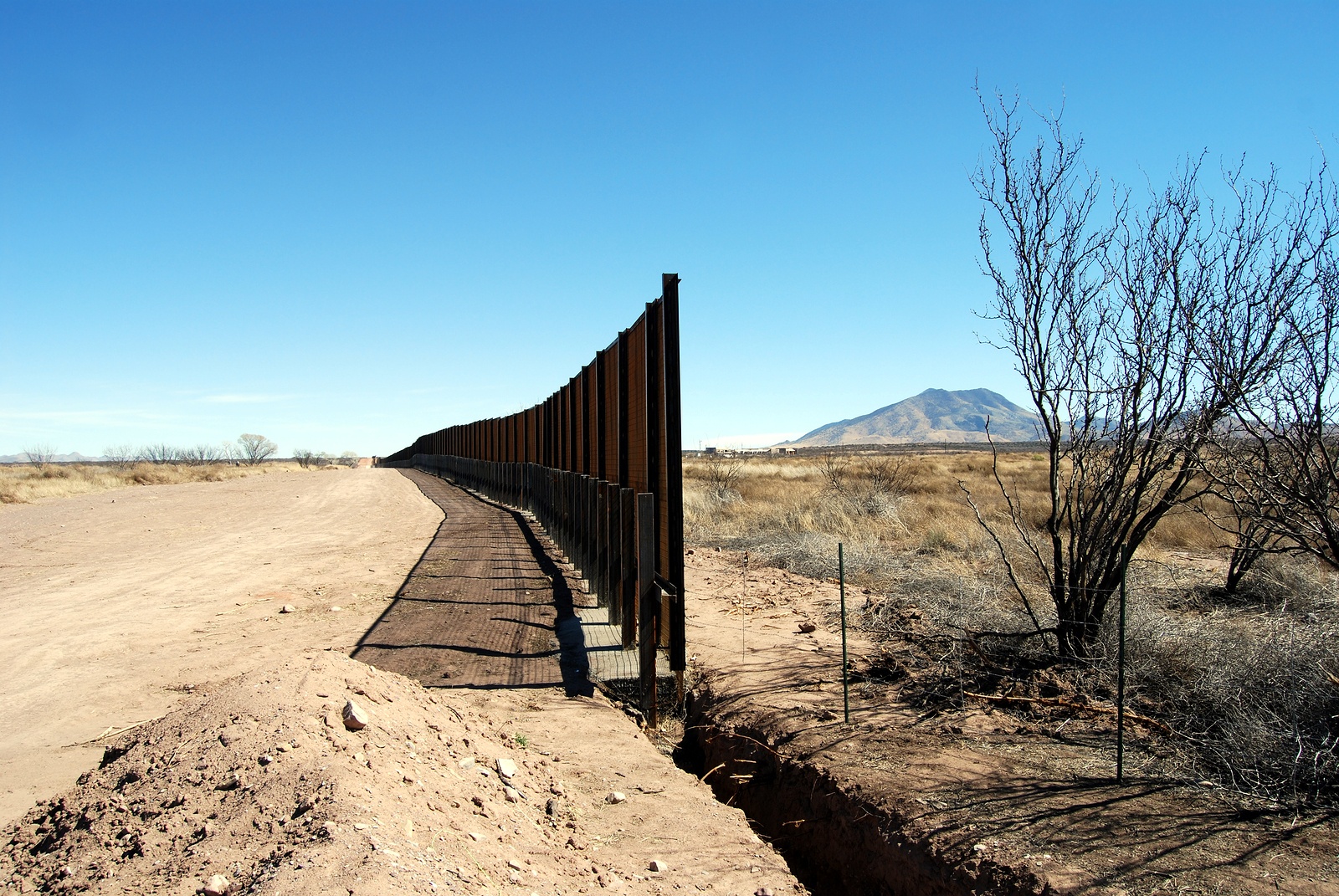
Deep in this beautiful wilderness of sagebrush, wildflowers and soaptree yucca, a freshly minted 18-foot-high steel barrier towers over the landscape. Out here in the remote New Mexico desert, the new border wall is the only man-made structure in sight.

This is a serene and silent place. There’s no military. No Border Patrol. No signs of migrant crossings. And, until recently, there was no border wall. The mass of metal, 20 miles long looks more like an abstract art installation than a border-security tactic. It seems absurdly out of place.

In April bulldozers descended on this peaceful stretch of desert to rip open the earth and erect 20 miles of President Trump’s border wall. To rush construction, the Trump administration illegally waived dozens of environmental and public-health laws that protect endangered wildlife, Native American graves, clean air and clean water, among other things.

The wall here is already doing real damage. It’s an impassable barrier that stops animal migrations essential to the survival of many wildlife species.

That’s not speculation. Radio-collar data show an endangered Mexican wolf migrating across the border through this very stretch of desert in 2017. Wolves know no borders. They need vast expanses of wild habitat to survive. Had the wolf found a hulking steel barrier in his path, he’d have had no choice but to turn back, axing his chances of finding a mate and undercutting the odds of his species’ recovery.

The bollard-style walls will also obstruct the natural migration of species like kit foxes, bighorn sheep and ringtail cats. The border wall will stop these animals from finding food and water, fragment wildlife populations and increase the risk of disease.

The Center for Biological Diversity, where I work, has sued to challenge border wall construction here. A hearing in U.S. District Court in Washington is scheduled for Dec. 18.

I first visited the area, just west of the Santa Teresa Port of Entry, in January, soon after the Department of Homeland Security waived dozens of laws and signaled its intention to start construction. I came back in June to join more than 400 community members, scientists and activists to protest this senseless and destructive project. And I returned again recently to see the status of construction.

Although I knew what to expect, it was heartbreaking to see. This wall in the wild is a $73 million eyesore, an insane waste of taxpayer funds and an affront to immigrant and border communities. It’s an immovable metal mass, baking in the sun and waiting to rust.

Politicians from both parties voted to fund this section of wall by approving a provision bundled into the 2017 appropriations bill. It didn’t get much coverage, and media still claim that Trump hasn’t built any new border wall. But no one who’s seen this New Mexico desert before and after this year’s construction could say that.

Now, Congress is pushing for more border wall funding before Democrats take the House in January. Trump and Republicans want $5 billion, and Trump says he’s willing to shut down the government to get it. That’s enough to build hundreds of miles of new border walls.

As negotiations and rhetoric ramp up, we need to remind Congress and Trump what most of the U.S.-Mexico border really looks like.

Our sprawling borderlands are peaceful and among the most biodiverse regions in the country. You’re more likely to see mountain lions, bobcats and javelina than cross paths with immigrants or smugglers. These landscapes are a national treasure, home to endangered species and protected wilderness areas, national parks and wildlife refuges.

It’s not too late to stop more miles of wall from being funded, but members of Congress need to hear from people who oppose it. We can’t afford to lose another inch of these spectacular wild places to Trump’s border wall.

Why Americans Can Be Thankful for the Tijuana I Know

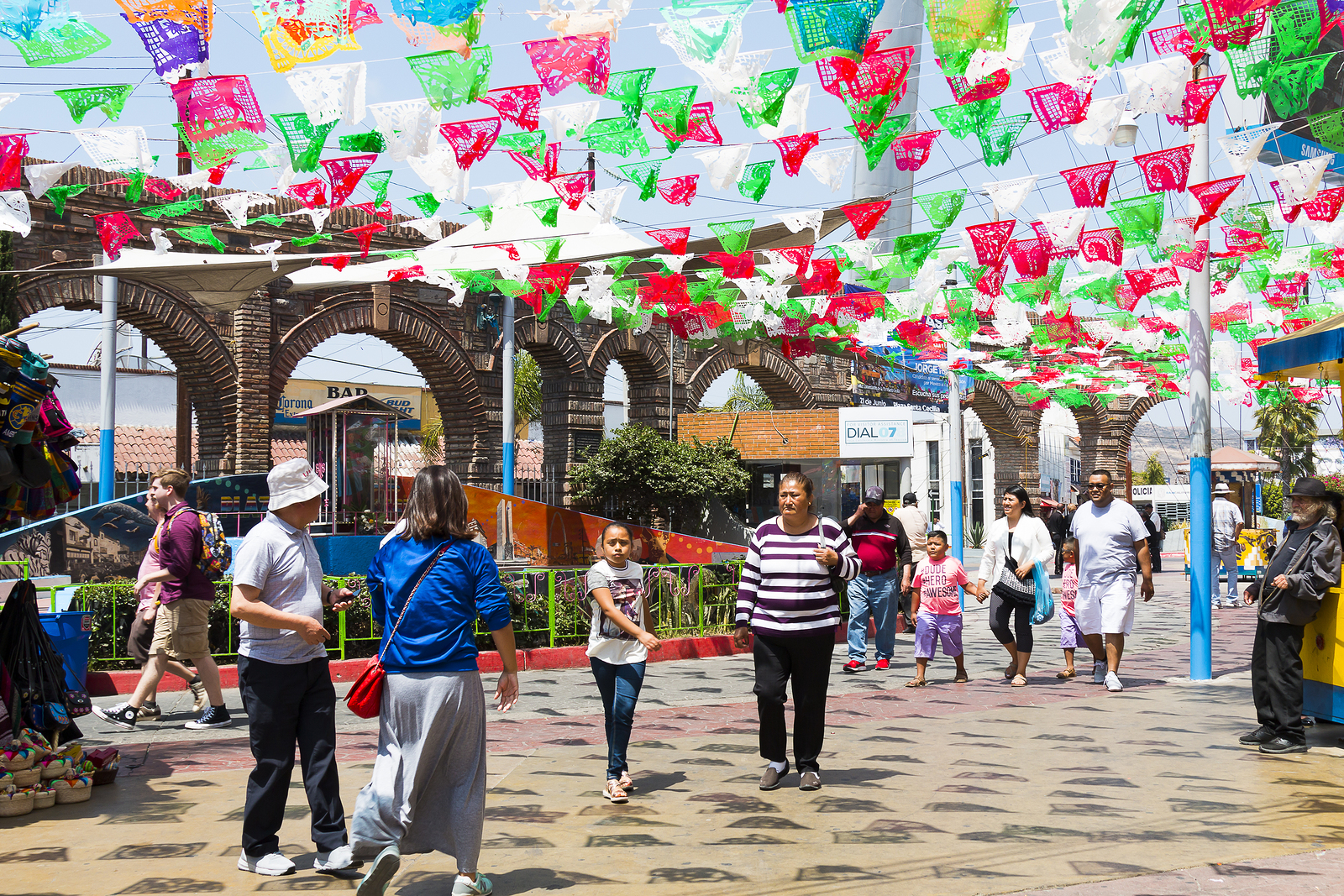
Americans have turned their attention south of the border, and particularly to the arrival of thousands of migrants in Tijuana. And the media spotlight on this border city has again framed Tijuana as a divided, unwelcoming and unsafe city. But as a lifelong resident of this special place, I want Americans to know three ways in which the power of collaboration and community are the true calling cards of my hometown.

Fueling Economic Growth on Both Sides of the Border

The United States and Mexico have been economic partners for decades through the strength of cross-border collaboration between Tijuana and San Diego. I remember Tijuana’s 1994 “Sister City” pact with San Diego that helped set the stage for where we are today.

It’s no accident that Tijuana is now home to the world’s largest land border crossing. In partnership with southern California, we’ve developed an interdependent market that encourages an innovative industrial economy that is thriving. The Tijuana region is now home to more than 570 world-class corporations. Companies like Panasonic, Foxconn, Plantronics, Bose and Samsung, among others, that provide good employment for Mexicans and Americans alike.

Tijuana is not merely a border town one crosses — it is a hub that attracts companies and people to create and transform. It has grown a local economy into a global, binational market that influences key North American markets in California, the Pacific Rim and Latin America. This growth is not by accident. It’s part of the Tijuana’s value to constantly pursue new ideas with passion and desire.

 Advancing Talent Development in the Region

While Americans are rightfully proud of their own system of higher education, few likely know much about the thriving university in Tijuana that Americans cross the border every day to attend. My institution, CETYS University, has campuses in border areas including Tijuana and Mexicali, and we’re thankful for the opportunity to educate students from both sides of the border and from around the world.

Like our peers in the United States, we’re charged with transforming lives through education and developing the type of talent that can fuel economic growth. That endeavor increasingly happens in partnership with U.S.-based institutions and corporations. And it definitely breaks down the borders of collaboration between our countries.

I have personally witnessed the power of our Tijuana campus for more than 15 years now and I have seen how Mexican and American students can develop into the type of talent that drives the innovation that our economy demands. There is no doubt that when it comes to talent creation and development, our futures in Mexico and the United States are inextricably linked.

Tijuana is a Melting Pot Similar to the U.S.

Living in the northern part of Mexico has given us a unique, independent identity. Yet, the United States constantly perceived us as the most Mexican community closest to the border. These dueling identities breed a tenacity and sense of community among Tijuanenses that is — dare I say it — similar to the spirit of perseverance found among many Americans.

Tijuana has become a melting pot that checks no box but its own. We are made up of people all around Mexico, Asian communities from China, Korea and Japan, Latin communities from across Central America and a growing population of Americans from the Southwest.

Yes, we battle crime and drugs just like major American cities. And we, too, must navigate the type of divisive rhetoric inherent to an issue as complex as human migration. But there’s so much more to our story. Tijuana is moving forward in many positive ways and we are proud of our melting-pot culture.

I am thankful for the Tijuana I know, and I’m optimistic about what we can continue building together on both sides of the border.