inside sources print logo
Get up-to-date news in your inbox

CFPB May Scrap Underwriting Requirements for Payday Loans
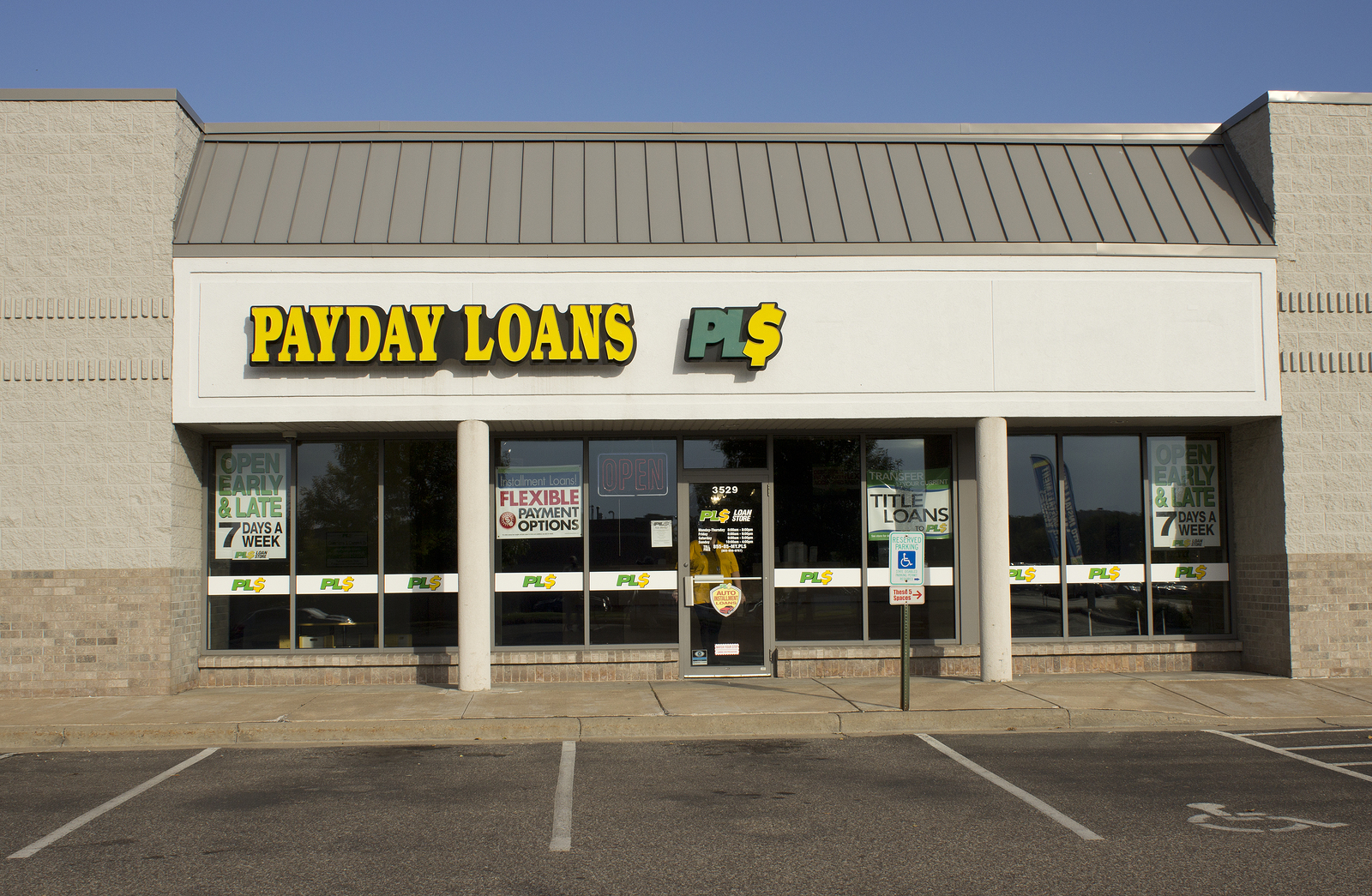
The Consumer Financial Protection Bureau (CFPB) may scrap some underwriting requirements for payday loans, which would make it easier for payday lenders to provide the loans and easier for some borrowers to procure them.

The underwriting requirements in question are part of the CFPB’s payday lending rule, which the bureau spent five years working on and which the last director and the current one, Mick Mulvaney and Kathy Kraninger respectively, seek to backtrack.

This part of the rule requires payday lenders to underwrite loans for borrowers who obtain more than six payday loans in a year. Lenders must verify the borrower’s income and examine the borrower’s other debts and spending. In other words, they must evaluate a borrower’s “ability to repay.”

The purpose of this provision is to prevent borrowers from falling into a long-term debt trap, as payday loans usually come with interest rates upward of 300 percent. If payday lenders believe a frequent borrower is unable to pay back the loans, they can refuse to provide more of them.

Rebecca Borné, senior policy counsel with the Center for Responsible Lending (an anti-payday lending advocacy group), told InsideSources she doesn’t see how nixing this provision will be good for consumers.

“What this would do is have devastating consequences for some of the country’s most financially distressed,” she said. “It would mean that payday lenders can continue to trap borrowers in 300% percent APR unaffordable loans that lead to a long term debt trap.”

Borné thinks such a reversal only supports the “predatory” payday lending industry, and said it is “disappointing if [the bureau] is already willing to undo what [it] spent five years very carefully developing.”

“It’s possible the bureau would say they would rely on better disclosures instead to address the debt trap,” she added. “We would just point out that the bureau, through multiple studies, found disclosures would not solve the problem. The financial incentive [for payday lenders] to get people stuck in the debt trap is just too strong.”

But there is some debate over whether the research supporting certain aspects of the payday lending rule are truly comprehensive or accurate. Some economists — including some from Berkeley’s Haas School of Business — argue there isn’t enough thorough research on payday lending or financial distress situations.

Daniel Press, a policy analyst with the Competitive Enterprise Institute (CEI), published a paper last year outlining how the CFPB ignored some aspects of payday lending research to support its payday lending rule, like the fact that 80 percent of payday loan users said the loans were easy to repay and only 2 percent said they disliked the loans “because they made it too hard to get out of debt,” according to surveys conducted by economists on the Federal Reserve’s Board of Governors.

Press argues that nixing underwriting requirements helps financially distressed borrowers to obtain the quick cash they need to survive, citing numerous studies that low-income and financially distressed borrowers consistently rely on payday loans when other credit options are unavailable.

The high APR is a consequence of the high default rate: the average default rate for payday loans is 20 percent compared to 3 percent for commercial banks.

Restricting or eliminating the payday lending industry, he argues, would only hurt the poor and the financially struggling.

“Small-dollar loans, such as payday loans, predominately support employed individuals who are trying to stay afloat between paychecks when they run short on cash, often because of an emergency,” he writes. “For financially strapped consumers, small-dollar loans are often a better option than the available alternatives, such as overdrawing a bank account or defaulting on a different loan. Defaulting on traditional forms of credit can ruin a person’s credit score and cost more than taking out a small loan.”

Furthermore, he argues, the “ability to repay” standard for frequent borrowers doesn’t make sense because “if borrowers had an immediate ability to repay— including a month of no financial trouble — they would have no need to patronize payday lenders in the first place. Instead, they would access traditional sources of credit, such as their own savings, credit cards, or bank loans. Such options are not available to the majority of payday borrowers, who know that they may have to string together multiple loans.”

In other words, the payday lending industry exists because there is demand for it, so the CFPB shouldn’t hamper it, despite recent studies showing that greater loan availability in general “leads to more financial difficulty.”

The problem, as Borné put it, really comes down to financial incentives for payday lenders and borrowers, which enable the cycle of debt.

But, as economists on both sides of the issue have found — and as Press states — there isn’t enough empirical evidence to show that the average borrower is tricked into a predatory payday loan, but the payday lending does encourage the debt cycle, so the real question is, how to stop borrowers from getting stuck in the debt trap in the first place?

Follow Kate on Twitter

New Bill Would Override State Usury Caps for Fintech Companies, Payday Lenders

The House just passed a bill that would override state usury caps on interest rates made by financial technology (fintech) companies or online and payday lenders, but it’s facing opposition from consumer financial protection advocates.

The bill — H.R. 3299, also known as the Protecting Consumers’ Access to Credit Act of 2017 — aims to accelerate fintech innovation and encourage business growth. There is a similar bill stalled in the Senate (S. 1642) over consumer financial protection concerns.

By allowing online companies to make loans at interest rates that may exceed some states’ usury limits, more small businesses and consumers may receive loans, thus improving credit access for entrepreneurs and needy individuals.

If passed, the bill would effectively cripple states’ ability to regulate online lenders and some fintech companies, and would encourage fintech companies to apply for national bank charters instead of state bank charters.

“This is a larger issue in at least two dimensions: first, the fintech companies have been trying now for at least two or three years to get charters from the controller of the currency,” Lawrence White, professor of economics at New York University’s Leonard N. Stern School of Business, told InsideSources. “The fintech companies have wanted a similar kind of national charter because they are obviously going to be headquartered someplace, but especially for fintech companies nowadays, scale is everything. They want to be able to operate and access as many customers in as many places as possible. They’re relatively small, relatively lean, and having to deal with 50 states would do-in their business model.”

Some states — like Arizona — have already told federal regulators to stay out of fintech and let states handle the regulation. Federal regulation overriding state authority in this matter means states will lose out on state banking charter revenue.

Varo Money, a fintech startup, became the first fintech company to receive preliminary approval for a national bank charter from the Controller of the Currency on Tuesday. If Varo Money nabs the charter, it will be “the first all-mobile national bank in the history of the United States.”

“This [House] bill advances the ball for [fintech companies] without waiting for the Controller of the Currency to give them a charter,” White said. “It’s giving them, in essence, a national charter. I’m guessing it will get passed and signed.”

White thinks the bill has a good chance of passing because current regulation of credit card companies sets a national precedent.

“The thing that echoes here is this same idea of being able to operate across the 50 states specifically with respect to usury laws was very important for credit card companies and still is important for credit card companies, so there’s adequate precedent for lenders having this kind of national charter to override the local state limits,” he said.

Small business coalitions, small bank associations and fintech groups sent a letter to senators Mark Warner (D-Va.) and Patrick Toomey (R-Pa.), co-sponsors of S. 1462, and representatives Patrick McHenry (R-N.C.) and Gregory Meeks (D-N.Y.), co-sponsors of H.R. 3299, in support of the bill last fall.

Some of the signers have also lobbied on the bill, including the American Bankers Association, Independent Community Bankers of America and the U.S. Chamber of Commerce.

Other notable groups who have lobbied on the bill include the National Association for the Advancement of Colored People (NAACP) and Harley-Davidson (which offers financing for the motorcycles it sells).

Rep. Emanuel Cleaver (D-Mo.) released a report on fintech companies and online lenders a few weeks ago, raising concerns that they disproportionately lend to poorer individuals and people of color and may discriminate against them as their algorithms for calculating interest rates are “black boxes” lacking transparency.

The Center for Responsible Lending (CRL) told InsideSources that because of consumer financial protection concerns, there is “equal speculation that the bill may not pass.”

“The top line is, there’s a narrative that this bill is necessary in order for fintech to innovate and evolve and expand credit access,” said the CRL’s Federal Advocacy Director Scott Astrada. “One, on its face, is not completely accurate. You could still make affordable loans under the current reg structure. What you can’t do is charge 400 percent interest rates. The bill is a very overly broad, all encompassing solution to a problem that doesn’t exist at this state.”

Astrada thinks financial innovation isn’t stifled by state regulation. On the contrary, he said, “financial innovation and technology should evolve alongside preexisting law.”

“What’s more at stake for us is the preemption of state law,” he said. “We see it continues to be the strongest bulwark for consumer protection. The state attorneys general have been aggressively pursuing bad actors and predatory lenders. South Dakota recently passed a ballot initiative, and this week Colorado put out a ballot initiative for a 30 percent cap on APR. These states have made an unequivocal claim that predatory lending is a problem and they’ve addressed it.”

Astrada fears the bill is too broad and will encourage malpractice in the lending community to the detriment of consumers.

“This bill would essentially open the floodgates and loopholes and target individuals unable to have the protection of the state law,” Astrada said. “That’s always the concern. We’ve expressed this to both cosponsors of the bill in the House and the Senate. During the House markup, a lot of members raised this issue as a big concern.”

NYU’s White believes consumers are fully capable of discerning predatory lenders apart from honest ones, especially since there is so much literature available on predatory lending available.

“By now I think any consumer understands they ought to shop around and be using their local bank and local credit union,” he said. “Sometimes they end up in the hands of a payday lender and my guess is fintech companies are probably going to be doing better than the payday lenders.”

But Astrada thinks the bill will only encourage wolfish payday lending across state lines: “Sen. Warner has publicly said there is a payday lending problem with this bill. We’ve seen lenders aggressively pursue regulatory loopholes.”

Given that about two-thirds of Americans can’t pass a basic financial literacy test, some regulators and think tanks believe it’s important to preempt financial malpractice with regulation as much as possible.

Further complicating the debate is whether young fintech companies can sustainably grow and innovate in a state regulatory environment. White says it’s extremely difficult, given that their business models rely on interstate e-commerce.

“They need some kind of a national presence, otherwise their business model just kind of collapses,” he said.

“A lot of the concern we have for this bill are what what we see in the current marketplace are high APRs and recurring default rates,” Astrada added. “While there is room for innovation, it can’t come at the expense of consumer protection. A toxic loan is a bad loan. No amount of innovation is going to change that.”

Follow Kate on Twitter

Innovative Financial Services or Online Loan Sharks? Jury’s Out

Depending on how you feel about borrowing and lending, Texas-based Elevate Credit could be the first hot new tech stock of 2016 — or an ignoble, consumer-exploiting failure.

The company, backed by Silicon Valley venture capital heavyweights, set out to reinvent small-dollar lending over a decade ago and now peddles online installment loans that it says can replace traditional, high-interest “payday” loans that have been derided by consumer groups since the 1980s.

With money rolling in — the company had revenues of nearly $400 million in 2015 — Elevate bills itself as the lower-interest alternative to payday lending for people who don’t qualify for credit cards and other mainstream loans.

“Elevate is leading the transformation of the underserved non-prime credit market,” said Ken Rees, the company’s chief executive officer.

Or not. Groups such as the National Consumer Law Center have dubbed Elevate a purveyor of “payday installment loans” — products that might not take the form of payday loans, but still offer credit with such high interest rates as to make them inappropriate for consumers who are already living in fragile financial circumstances.

“All installment loans have lower rates than payday loans,” said Lauren Saunders, the center’s associate director in Washington. “But a longer-term loan that binds you to a triple-digit rate is still dangerous.”


IPO, Regulator and Critics

Elevate wants to debut on public markets at the same time a new federal regulator, the Consumer Financial Protection Bureau, is writing the first federal rules for small-dollar lending. The plan is generating both uncertainty in the marketplace, and an opening for critics of the emerging online industry to seek rules that would prevent consumer harm, even as Silicon Valley makes the case that it’s doing well by doing good.

The plans for Elevate’s IPO — now in flux thanks to recent stock market turbulence — are likely the opening salvo between consumer groups and the technology industry over whether it has truly reinvented a business that’s long been synonymous with exploitative loans, or merely repackaged loan-sharking for the digital age. Silicon Valley is eager to get on the right side of consumer groups that could be valuable allies as tech firms aim to disrupt other areas of finance long dominated by Wall Street.

Other startups, such as Avant, LendUp, ZestFinance, and Activehours are all at work concocting their own formulas for changing payday lending. Paul Leonard, senior vice president for federal policy at the Center for Responsible Lending, a Durham, North Carolina-based advocacy group, said he has yet to see the company that truly breaks the mold.

Some offer marginally better products, but Leonard’s group and others are wary of entrepreneurs who can best traditional payday lenders without really changing the lives of low-income borrowers.


Beat Payday By A Dollar

“I give the Silicon Valley types credit for being very, very transparent. But they are trying to beat payday by a dollar,” Leonard said. “There has not been the storm of innovation that gets affordable credit to people with bad financial histories.”

Elevate spokeswoman Kelly Ann Doherty didn’t respond to a request for comment. Companies that are selling shares on stock markets for the first time generally observe a “quiet period” during which they don’t speak publicly beyond what’s in documents filed with the Securities and Exchange Commission.

The market for small loans used to be dominated by payday lenders, brick-and-mortar establishments that might extend a 2-week loan of $100 for a $20 fee, and hold a post-dated check — after the borrower’s next payday — as collateral. The borrower could either pay back the loan and fee, or simply let the lender deposit the check.

Such loans are legal in about half the U.S. states. Under federal law, lenders have to disclose interest as an annual percentage rate (APR), and on that basis, the cost of payday loans is high. For example, the 2-week $100 loan for $20 would be an APR of 520 percent.

The problem, the consumer bureau found in a 2012 study, is that 80 percent of borrowers either renewed their payday loan after 2 weeks or took out a new one. That pattern leads many borrowers into a spiral of debt, in which new loans cover the interest on old ones.

Entrepreneurs, together with financial investors looking for a decent return on their money in an era of low interest rates, have sought to create more affordable loans either by finding novel ways of underwriting loans, or by turning them into longer-term installment loans, or some mixture of the two.


Use Vast Amounts of Data

Elevate, for example, uses the advanced analytics made possible by crunching vast amounts of data to find borrowers who are good credit risks, but who might not otherwise qualify for a credit card or other bank-based loans. And, it lends larger amounts than traditional payday loans, for longer periods. For example, a person might borrow $2,000 and repay over 24 months.

The average effective APR in Elevate’s portfolio of installment loans is 176 percent — well under what a payday loan might cost, but still far, far higher than the vast majority of credit cards, according to documents Elevate filed with the SEC. Borrowers who take out new loans with Elevate can get lower rates, as far down as 36 percent, according to the documents.

Elevate has come to the threshold of an IPO after over a decade of looking for ideas in online lending that are both lucrative and unlikely to run afoul of regulators — two musts for any company that wants to go public.

The company was spun out from Fort Worth, Texas-based Think Finance, a company that offered a variety of loans and also licensed software that Native American tribes used to set up online lending operations.

Think Finance attracted venture capital from two major Silicon Valley funders, Sequoia Capital, an early backer of Google, and Technology Crossover Ventures, which invested in Facebook. Victory Park, a Chicago-based fund, provided the money that Think Finance then lent online.

But regulators in state and federal agencies didn’t take kindly to the approach of working with Native American tribes in Montana, Oklahoma and Louisiana. The tribes claimed that the doctrine of sovereign immunity, which protects tribal governments from interference by states, allowed them to follow federal, not state laws. Many states limit or ban high-interest, small-dollar lending; the federal government does not.

It’s a situation analogous to the legal status of Native American-owned casinos, except that gamblers must actually travel onto a reservation to try their luck. The Internet allows the tribes to offer their loans anywhere in the country, and they have.


Native American Lenders

Some states, like Washington, have taken to warning consumers against taking out loans with the tribal enterprises. Pennsylvania sued Think Finance. And the Consumer Financial Protection bureau launched its own investigation of the company and its tribal partners. Spinning off its non-tribal lending business into Elevate is a way for investors to cash out, said Jer Ayler, president of Trihouse Inc., a Las Vegas-based payday lending consultancy.

“They are desperate for the founders to get money out of that company,” Ayler said. “They’ve reinvented themselves three or four times.”

Elevate may yet have to reinvent itself again.

The Consumer Financial Protection Bureau is formulating rules on small-dollar lending — the first at the federal level — that would require lenders to assess a borrower’s ability to repay a loan. In other words, online lenders would have to behave in much the same way as mortgage companies, by checking a person’s income, credit history and other expenses.

Elevate charged off loans equal to 51 percent of its revenues in 2014, the last full year for which data is available. In other words, Elevate deemed those loans that its own system approved to be a failure in the sense that customers couldn’t repay them.

“The CFPB is focused on the ability to pay back a loan,” said Saunders, of the National Consumer Law Center. “A high charge-off rate does not tell us they are making loans that the vast majority  of borrowers can pay back.”