inside sources print logo
Get up-to-date news in your inbox

When it Comes to Charitable Giving, Warren and Sanders Are Millionaires Who Don’t ‘Pay Their Fair Share’
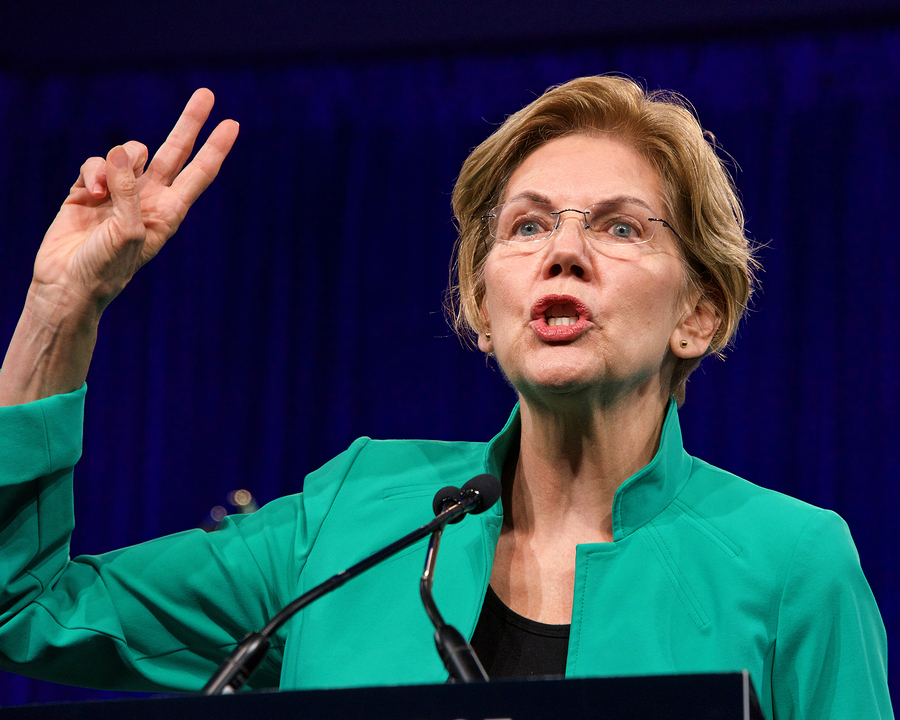
If you woke up New Year’s Day feeling guilty about all those last-second charitable solicitations you ignored, it might ease your conscience to know you aren’t alone. Just ask Liz Warren.

On the campaign trail, Sen. Elizabeth Warren (D-Mass.) tirelessly attacks the greed and self-interest of America’s wealthy, the “millionaires and billionaires” who, she claims, are “waging war on America’s middle class.”

“It’s time for the millionaires to pay their fair share!” Warren demands.

But when it comes to spreading the wealth to charitable causes and community service, Warren is one of the millionaires who apparently hasn’t gotten the message.

According to the tax returns Warren has posted on her campaign website, she and her husband Bruce Mann have earned more than $10 million since 2008, but they’ve rarely donated more than 4 percent of their income to charitable causes. For example, in 2014 Warren earned more than $1.6 million but gave just 2.7 percent to charity. The following year she took in nearly $1.2 million, but donated just 2.3 percent.

All that changed, however, in 2017 when Warren was preparing to formally enter the presidential race. That year her charitable donations suddenly spiked to 8.4 percent, leading some to speculate that her newfound generosity was more about electability than philanthropy. In 2018, she donated 5.5 percent of her income to charity.

Exclude her “presidential primary” years, and Warren donated an average of just 3.5 percent of her millions in income to charitable causes. That number is low for the average American in her income bracket (the average millionaire donates nearly twice that amount), and it sounds particularly ungenerous given her political platform of income redistribution, trillion-dollar tax increases and “you didn’t build that!” rhetoric.

And yet compared to her fellow 2020 progressives like Sen. Bernie Sanders, Warren’s the Oprah Winfrey of the Democratic field.

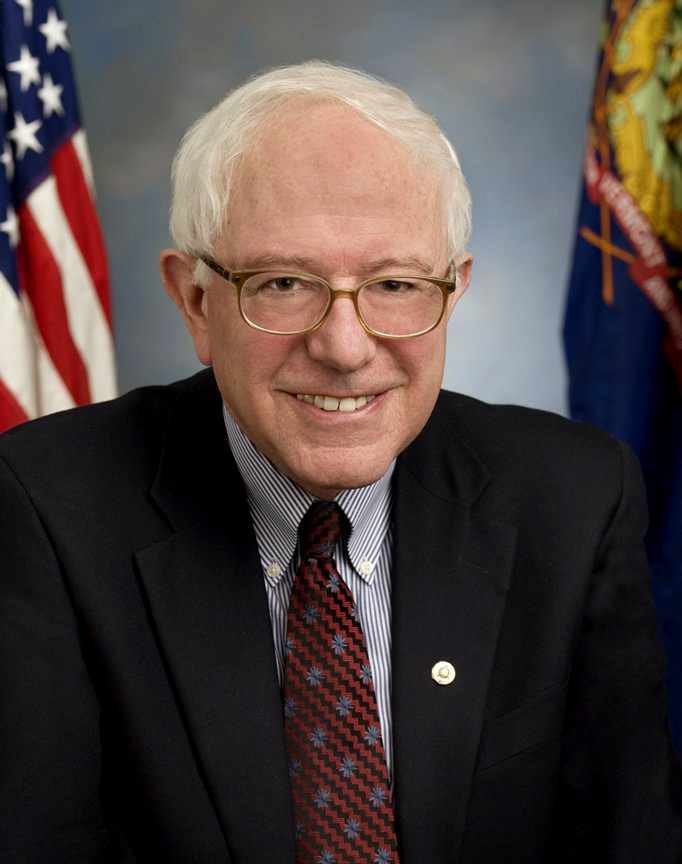
In 2016, Sanders donated just $10,600 of his $1 million income — around 1 percent — to charity. His total household donations since 2009 manage to get him to the two percent level.

According to analysis by Forbes magazine, the least charitable Democrat is also the poorest: Mayor Pete Buttigieg. Despite his progressive bona fides, including a “paid” volunteerism program,  Buttigieg has donated just 1 percent of his income to charity since 2009.

And then there’s former Vice President Joe Biden, who made headlines in 2008 when Barack Obama tapped him to be his running mate it was discovered the Bidens had donated just $3,690 to charity over the course of an entire decade. He’s since raised that number to six percent, much of it donated to Biden family foundations.

Thus far the issue of charitable giving hasn’t come up on the campaign trail, perhaps because Democratic primary voters are also less likely to support charitable causes themselves.

According to multiple studies, Americans on the left are less charitable than their Republican counterparts. States that supported Hillary Clinton in 2016 were, on average, less generous in their charitable giving than those carried by Donald Trump.

Arthur C. Brooks, a social scientist at Harvard’s Kennedy School and author of the book on charitable giving Who Really Cares says his research finds, “People who favor government income redistribution are significantly less likely to donate to charity than those who do not.”

Data from the Indiana University Lilly Family School of Philanthropy show that a smaller percentage of Americans are donating to charity each year, but overall donations are rising. In fact, over this same 2009-2017 period during which millionaire candidates like Warren and Sanders give so little, total U.S. donations to charity rose by nearly $100 billion, from $314 billion to $410 billion.

The same “millionaires and billionaires” whose greed is allegedly endangering our democracy are giving more to charity and community service. Even as progressive politicians give so little.

There are exceptions, most notably Sen. Cory Booker. The former Mayor of Newark has donated nearly half a million dollars — about 11 percent of his income — to charity over the past decade. Unfortunately, Democratic primary voters aren’t being as generous toward his campaign and Sen. Booker continues to linger around 2 percent in the polls.

From free healthcare for illegal immigrants to paying off everyone’s student loan debt, Elizabeth Warren has lots of plans for taxpayer-funded generosity. American voters may want to ask why her charity doesn’t begin at home.
When it Comes to Charitable Giving, Warren and Sanders Are Millionaires Who Don’t ‘Pay Their Fair Share’

If you woke up New Year’s Day feeling guilty about all those last-second charitable solicitations you ignored, it might ease your conscience to know you aren’t alone. Just ask Liz Warren.

On the campaign trail, Sen. Elizabeth Warren (D-Mass.) tirelessly attacks the greed and self-interest of America’s wealthy, the “millionaires and billionaires” who, she claims, are “waging war on America’s middle class.”

“It’s time for the millionaires to pay their fair share!” Warren demands.

But when it comes to spreading the wealth to charitable causes and community service, Warren is one of the millionaires who apparently hasn’t gotten the message.

According to the tax returns Warren has posted on her campaign website, she and her husband Bruce Mann have earned more than $10 million since 2008, but they’ve rarely donated more than 4 percent of their income to charitable causes. For example, in 2014 Warren earned more than $1.6 million but gave just 2.7 percent to charity. The following year she took in nearly $1.2 million, but donated just 2.3 percent.

All that changed, however, in 2017 when Warren was preparing to formally enter the presidential race. That year her charitable donations suddenly spiked to 8.4 percent, leading some to speculate that her newfound generosity was more about electability than philanthropy. In 2018, she donated 5.5 percent of her income to charity.

Exclude her “presidential primary” years, and Warren donated an average of just 3.5 percent of her millions in income to charitable causes. That number is low for the average American in her income bracket (the average millionaire donates nearly twice that amount), and it sounds particularly ungenerous given her political platform of income redistribution, trillion-dollar tax increases and “you didn’t build that!” rhetoric.

And yet compared to her fellow 2020 progressives like Sen. Bernie Sanders, Warren’s the Oprah Winfrey of the Democratic field.

In 2016, Sanders donated just $10,600 of his $1 million income — around 1 percent — to charity. His total household donations since 2009 manage to get him to the two percent level.

According to analysis by Forbes magazine, the least charitable Democrat is also the poorest: Mayor Pete Buttigieg. Despite his progressive bona fides, including a “paid” volunteerism program,  Buttigieg has donated just 1 percent of his income to charity since 2009.

And then there’s former Vice President Joe Biden, who made headlines in 2008 when Barack Obama tapped him to be his running mate it was discovered the Bidens had donated just $3,690 to charity over the course of an entire decade. He’s since raised that number to six percent, much of it donated to Biden family foundations.

Thus far the issue of charitable giving hasn’t come up on the campaign trail, perhaps because Democratic primary voters are also less likely to support charitable causes themselves.

According to multiple studies, Americans on the left are less charitable than their Republican counterparts. States that supported Hillary Clinton in 2016 were, on average, less generous in their charitable giving than those carried by Donald Trump.

Arthur C. Brooks, a social scientist at Harvard’s Kennedy School and author of the book on charitable giving Who Really Cares says his research finds, “People who favor government income redistribution are significantly less likely to donate to charity than those who do not.”

Data from the Indiana University Lilly Family School of Philanthropy show that a smaller percentage of Americans are donating to charity each year, but overall donations are rising. In fact, over this same 2009-2017 period during which millionaire candidates like Warren and Sanders give so little, total U.S. donations to charity rose by nearly $100 billion, from $314 billion to $410 billion.

The same “millionaires and billionaires” whose greed is allegedly endangering our democracy are giving more to charity and community service. Even as progressive politicians give so little.

There are exceptions, most notably Sen. Cory Booker. The former Mayor of Newark has donated nearly half a million dollars — about 11 percent of his income — to charity over the past decade. Unfortunately, Democratic primary voters aren’t being as generous toward his campaign and Sen. Booker continues to linger around 2 percent in the polls.

From free healthcare for illegal immigrants to paying off everyone’s student loan debt, Elizabeth Warren has lots of plans for taxpayer-funded generosity. American voters may want to ask why her charity doesn’t begin at home.

Universal Basic Income Is a Flawed Idea

With the madness of the midterm elections behind us, the sprint toward the 2020 presidential election has begun. And some Democrats eyeing to unseat President Trump have dusted off an old idea to drum up support: a universal basic income policy, or UBI for short.

But what exactly is a UBI?

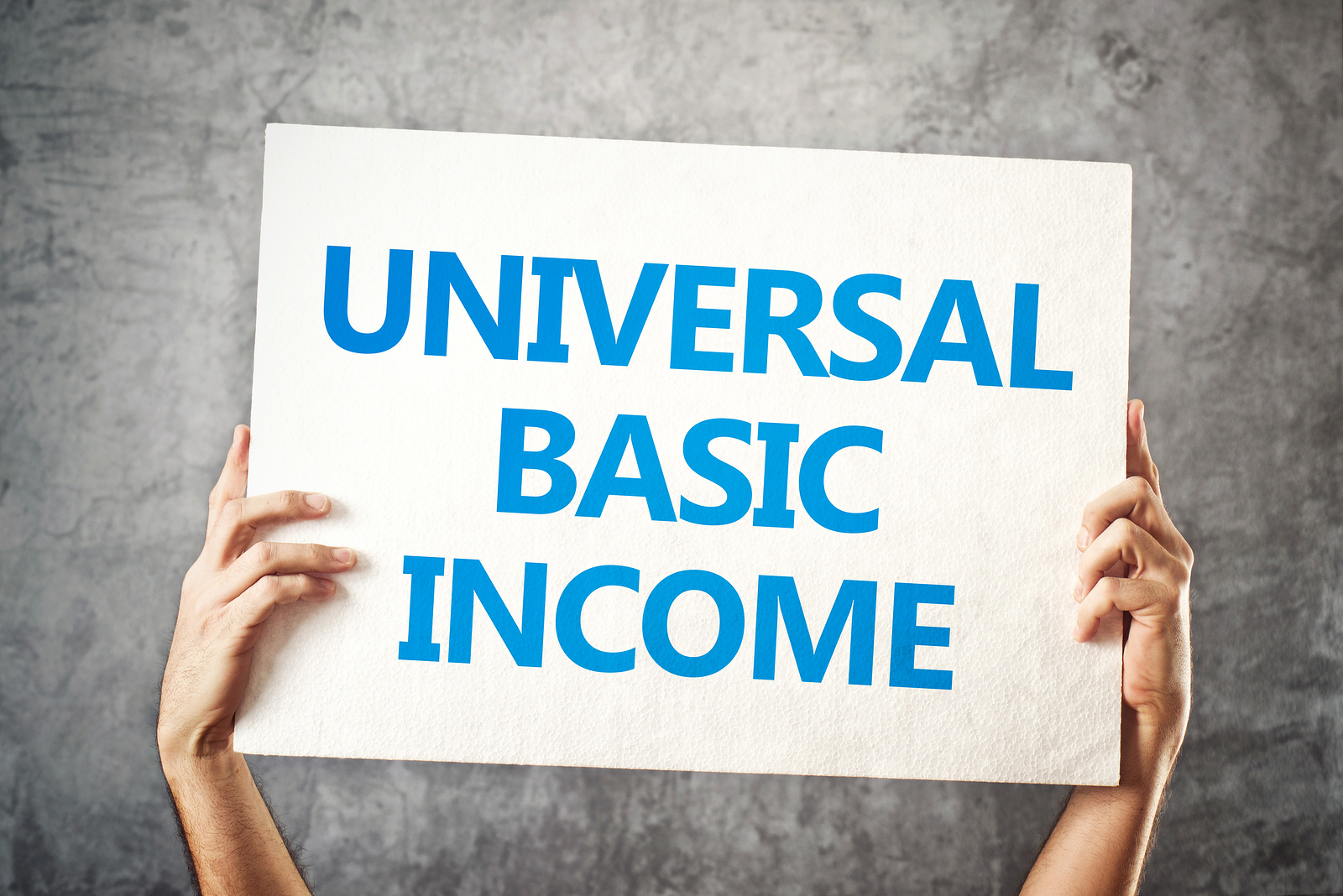
Generally painted as a way to shrink income inequality, a UBI is a government guaranteed minimum income for everyone — regardless of employment status. In other words, a program that provides free money. And while the specifics of the policy sometimes differ, the gist stays the same — it’s the most radical bloating of the welfare state since … well, ever.

While a policy like this may sound desirable in a campaign stump speech, in practice, it would have major consequences — including tax hikes that would be necessary to pay for the program and reduced work motivation, leading to less productivity.

Two Democratic frontrunners for 2020 are positioning themselves as champions of UBI-light policies — Kamala Harris and Cory Booker. They’re not exactly treading new ground. During the last election cycle, Bernie Sanders flirted with the concept, and has been more vocal about supporting UBI since 2016. Hillary Clinton’s book “What Happened” reveals that she would have liked to make UBI a larger part of her campaign.

While politicians often try to package UBI as a fresh new idea, the concept has been tried before. And unsurprisingly, it hasn’t worked.

In 2017, Finland experimented with a pilot program, putting 2,000 randomly chosen Finns on UBI, with the government providing a monthly check of 560 euros. But earlier this year, Finland abruptly decided to not extend its experiment.

Although the Finnish government doesn’t plan to release the findings until the end of 2019, some point to the program’s price tag as one of the main reasons it was doomed to fail from the start.

In fact, according to an independent analysis, Finland would have been forced to raise its income tax by nearly 30 percent to keep such a program alive. And when the personal income tax rate in Finland already maxes out at more than 50 percent, another increase would likely prove unsustainable.

Finland is not the only example where the flaws of UBI have been exposed.

In Canada, Ontario’s government decided to launch a UBI experiment in July 2017. But a few months ago, they decided to end the experiment — two years ahead of schedule. Upon the conclusion of the trial, a Canadian official called the experiment “quite expensive” and said “it was certainly not going to be sustainable.”

Even in the United States, a form of UBI has already been tested. From 1968 to 1980, the federal government ran a “negative income tax” experiment — meaning that a minimum income is guaranteed, but phased out as earnings increase. The goal was to incentivize work, but the policy ended up encouraging just the opposite.

The program resulted in a drop in working hours across the board. Most strikingly, working hours fell by 43 percent for single men not responsible for a family. To make matters worse, stints of unemployment were prolonged — meaning that after someone lost a job, it took them longer to begin a new one.

Democrats may attempt to use basic income program proposals to help build support in the 2020 presidential election, but they better hope Americans don’t venture beyond their elevator pitch. Because after examining UBI programs of the past, it’s clear the policies lack feasibility and weaken economic prowess.

If politicians want to gain the support of the American electorate, they should focus on policies that build off the economic success of the past year rather than undermine it.

Sanders’ Quest: Selling Denmark Socialism on Main Street USA

Perhaps the harshest critique of left-wing politics in this country is the idea that it’s fundamentally un-American — that limited government was central to the founders’ vision for a free society and any steps away from it are steps away from a core national identity.

This is hardly a majority opinion — both political parties have pursued big government policies since before Abraham Lincoln — but it’s one Democratic presidential candidate Bernie Sanders addressed Thursday in a speech on democratic socialism at Georgetown University. Venturing into uncharted waters for a mainstream White House hopeful, the Vermont senator sought to clarify a political philosophy few U.S. politicians claim. Yet it’s hard to imagine his remarks put him any closer to 1600 Pennsylvania Avenue.

From the outset, Sanders’ campaign has defied expectations. Few could have predicted that a 74-year-old grandfather of seven would be electrifying the Democratic base, much less one with unkempt white hair and a thick Brooklyn accent. Even fewer would have guessed that such a candidate would proudly wear the label of “socialist,” a term Democrats have been running from throughout modern political history. After all, it’s become common for Republicans to attack their left-leaning rivals by suggesting they want to make America more like other countries: In 2012, GOP White House hopeful Mitt Romney criticized President Barack Obama for drawing inspiration “from the capitals of Europe.”

To the extent that liberals have a response to this, it’s that American political tradition has always been “a balance between our love of individual freedom and our devotion to community,” as E.J. Dionne writes in Our Divided Political HeartOne of the goals of that book was to reclaim “the American idea of the federal government as an active and constructive partner with the rest of society in promoting prosperity, opportunity, and American greatness.” Dionne and others argue that activist government isn’t something imported from foreign countries, but something that’s part of the American DNA.

Which makes Sanders all the more striking. His speech at Georgetown was a reminder that he doesn’t shy away from saying his politics are somewhat borrowed from overseas. Sure, he talked about Franklin Delano Roosevelt and other American liberals, but he also said: “My view of democratic socialism builds on the success of many other countries around the world, who have done a far better job than we have in protecting the needs of their working families, their elderly citizens, their children, their sick, and their poor.” He name-checked countries like Denmark, Sweden, and Finland as well as Canada, France, Germany, and Taiwan.

Given that most Americans tell pollsters they wouldn’t vote for a socialist, Sanders has faced criticism for this kind of talk. In a debate last month, front-running Democratic presidential hopeful Hillary Clinton told the senator, “We are not Denmark,” and argued that capitalism needed to be fixed but not overhauled, as the Washington Post observed. This difference, according to reporter Jim Tankersley, represents “an important fault line in this primary campaign.”

Ironically, it’s not clear that the substance of Sanders’ proposals are outside the parameters of Democratic Party thought. Slate’s Jamelle Bouie tweeted that none of them are socialist “in any meaningful sense” but rather “on the left-liberal end of the American mainstream.”

“I don’t see why Sanders can’t just call himself a Social Democrat or New Deal liberal,” Bouie wrote.

The senator certainly tied himself to the New Deal’s author Thursday. He quoted Roosevelt’s “second Bill of Rights” address in which the president said Americans had the right to “a decent job at decent pay” and “adequate food, clothing, and time off from work.”

FDR also touted “the right for every business, large and small, to function in an atmosphere free from unfair competition and domination by monopolies” and “the right of all Americans to have a decent home and decent health care.”

“This is, in my view, one of the more important speeches ever made by a president,” Sanders said Thursday.

Building on FDR, he rebuked a bedrock belief of conservatives that fewer government programs means more freedom for Americans: “People are not free — they are not truly free — when they are unable to feed their family. They are not truly free when they are unable to retire with dignity. They are not truly free when they are unemployed, underemployed, or when they are exhausted by working 60, 70 hours a week. People are not truly free when they don’t know how they’re going to get medical help.”

Despite references to revered American icons, there was at least one way Sanders speech may have fallen short: it didn’t do much to persuade voters that socialism, as distinct from liberalism or progressivism, is a laudable American tradition. For all his robust government action, FDR wasn’t a self-described socialist, as progressive Nation writer John Nichols reminded InsideSources after Sanders’ speech.

Nichols, who authored The “S” Word: A Short History of an American Tradition … Socialism, thought Sanders remarks were “pretty good,” but fell short in describing the history of socialism in America. The writer wished the senator had noted how socialists have already been elected to Congress and served as big city mayors in America. He also wanted to hear more about Norman Thomas, who ran against FDR as a socialist presidential candidate.

“FDR met with Norman Thomas,” Nichols said. “FDR acknowledged that he had great regard for many of the ideas that came from Social Democrats.”

In the end, maybe Sanders’ speech never had the power to transform his campaign. Philosophical lectures don’t tend to move voters. But for those who believe socialism belongs overseas, it probably looks every bit as foreign as a few days ago.

Follow Graham on Twitter