inside sources print logo
Get up-to-date news in your inbox

Noon Today: “Day After The Midterms” With Bill Kristol and NH GOP Insiders

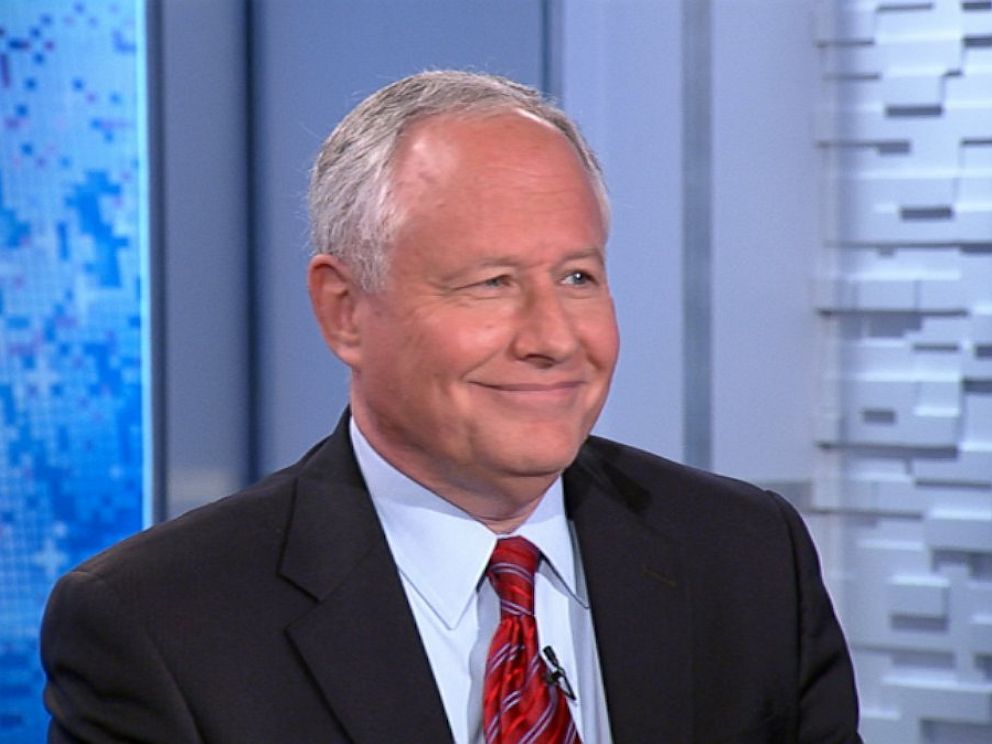
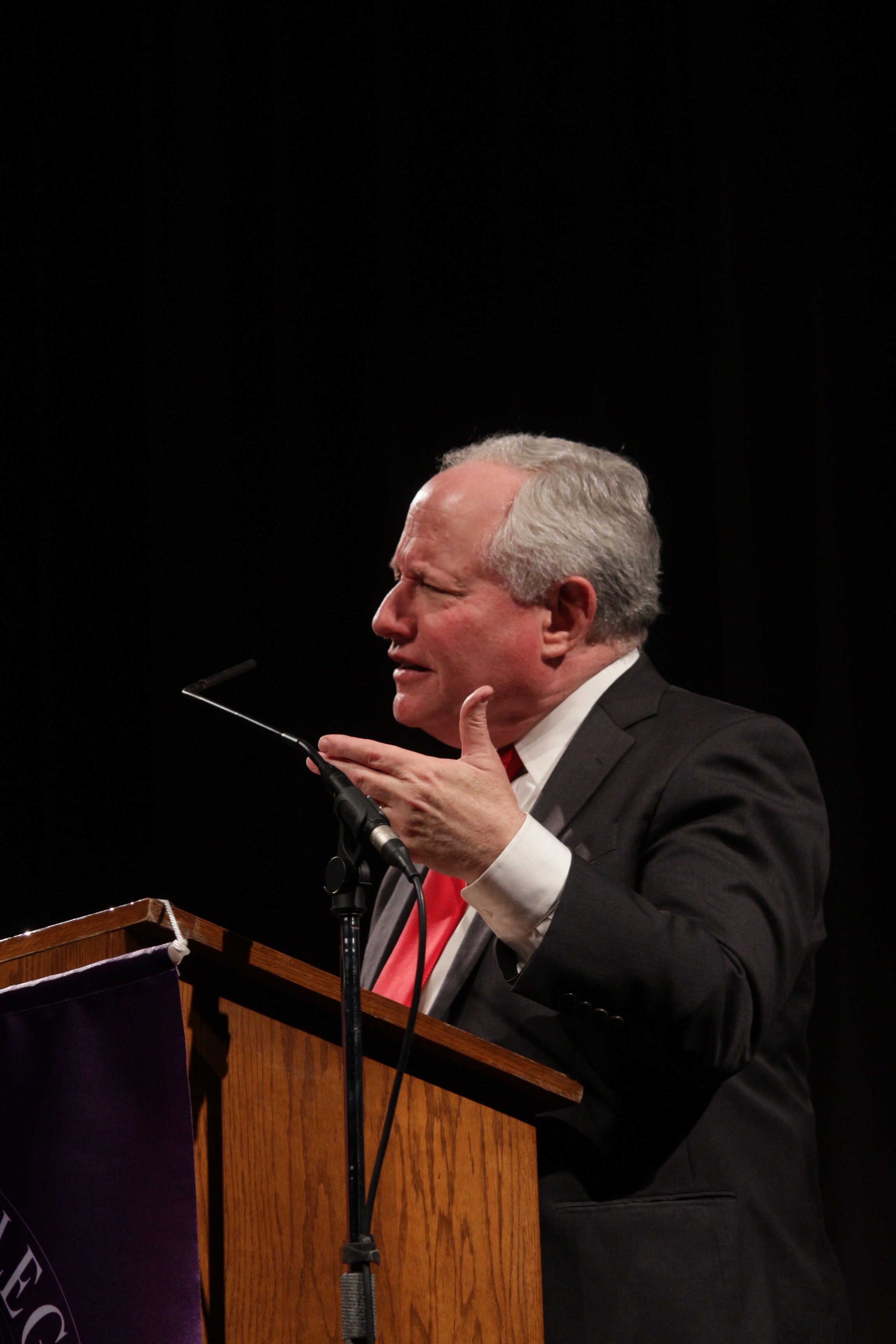
New Hampshire is the home of the “First In The Nation” presidential primary, and on November 7th it will be home of the first event of the 2020 presidential election cycle when nationally-known conservative leader Bill Kristol joins a panel of Granite State GOP insiders on the day after the 2018 midterms.

This free event, hosted by NH Journal and the SNHU College Republicans, will feature a panel analyzing the results of the midterm elections and the performance of the Republican Party.  Did the GOP hold the House? How did Republican candidates fare in swing districts like NH-01? And is a serious GOP primary challenge of President Donald Trump more or less likely?


All these topics will be covered by a panel to include:

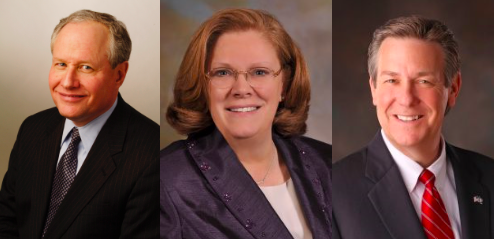
  • Bill Kristol – Co-founder of The Weekly Standard
  • Chris McNulty – Causeway Solutions, Former RNC Political Director
  • Ovide Lamontagne – 2012 NHGOP Gubernatorial Nominee
  • Sen. Sharon Carson – NH State Senator
  • Daniel Passen – Chairman, NH Federation of College Republican

So make plans now to join NHJournal and the SNHU College Republicans on Wednesday, November 7th, noon-1:30pm at SNHU’s Walker Auditorium in Manchester, NH.

The event is free but seating is limited, so advance registration is strongly recommended. Click here to reserve your seats.

Bill Kristol on Trump, 2020, and the Democrat Republicans Should Fear Most

The “Politics and Eggs” breakfast at the New Hampshire Institute of Politics is one of the compulsory events in Granite State politics for anyone considering a presidential run.  Conservative journalist and national leader of the #NeverTrump movement, Bill Kristol, will be making an appearance–and firing up the 2020 rumor mill–on Wednesday, May 23rd.

NHJournal’s Michael Graham caught up with Kristol at one of his Harvard Yard haunts on the eve of his speech for a quick Q&A:

MG: My first question for you is this: Is Bill Kristol coming to “Politics and Eggs” to formally announce his candidacy in the 2020 presidential race?

BK:  It’s tempting, it’s tempting. But then I’d be laughed out of New Hampshire and I’d be slipping back across the border to Massachusetts in about 12 minutes. So I think I won’t do that.

I’m just talking about my analysis of the political situation. It’s always great to be in New Hampshire because people here are so interested in national politics, and they follow it much more closely than almost any other state because they’re so conscious of their “First in the Nation” primary. And I do think the fact that independents can vote in either primary–and so many New Hampshire voters are independents–means they tend to follow both parties. In some states the Republicans follow Republican stories, and the Democrats have the Democratic stories. In New Hampshire, everyone follows everything.

MG: Which potential 2020 candidate best matches the mood of the Democratic electorate?

BK:  I think there are several moods going at once, which is why it’s complicated. There’s obviously a ‘We hate, loathe and despise Trump and we will reward the person who hates, loathes and despises him the most’ [mood].  There’s also a ‘Look, we’ve got a win’ [mood], with Democrats saying ‘We cannot afford to lose to this guy and, incidentally, we lost because we were out of touch with parts of middle America. Some of those concerns were legitimate, and some of those concerns are traditional Democratic concerns–stagnant wages and stuff like that–and so we need somebody who can speak to them.’

That leads you in two pretty different directions.

The conventional wisdom among Republicans in Washington is the Left has all the energy. Everything’s going Left. The empirical evidence so far in the primaries is a little mixed, I would say. Some moderates have won primaries. Some Lefties have won some primaries, and some have just been extremely close like the Nebraska [NE-2] primary. So I’m sort of open-minded about that debate on the Democratic side.

MG: What about Republicans?  Trump’s approval is back in the upper 80s, approaching 90 percent among Republicans. Of those Republicans who are dissatisfied–maybe they’re reluctant Trump supporters, whatever. Are they angry at Trump, or do the just want their party to go in a different direction?

BK:  I think Trump supporters–let’s just say it’s 80, 85 percent of the Republicans–are split into two categories: Half of them, some 40 percent of the Republican Party, are Trump loyalists. They believe in him. They are proud to have voted for Him. They hate his enemies and they like the fact that he’s shaking things up.  But about half of Trump supporters are reluctant Trump supporters. They voted for someone else in the primary–Bush or Cruz or Rubio.  They mostly voted for Trump in the general election because of Hillary and judges and so forth.

They support some of the things Trump has done, but they’re not Trump loyalists and I think they’re open to the following argument, one which you can’t really make now, you have to make it the day after the midterms:

It goes like this: ‘You voted for Trump. We’re not gonna criticize that. You support a lot of things he does. You think a lot of the criticisms of him are unfair. We’re not going to quarrel with that.  But–do you really want to do this for another four years?

It’s a little crazy. It’s a little chaotic. He comes with some downside risks. In foreign policy and and other things, maybe you could just like pocket the gains and get a more normal, so to speak,  Republican or Conservative.’

I think that message would have–could have– more appeal after Election Day this year. Right now it sounds like, ‘Well, you’re just anti-Trump. We’ve got to rally to Trump, we’ve got to defeat the Democrats.’  But I think November 7th [the day after the midterms], everything changes.  Because the question becomes not a retrospective question of were you right to vote for trump or his critics, or ‘what about Hillary?’ It becomes a prospective question. What do you want going forward?

MG: Last question: The Democratic ticket that you think Republicans should be the most afraid of in 2020?

BK: That’s a good question. These things are actually harder to predict.  I’m inclined to give the conventional answer, which I think is right, which is the more moderate the candidate Democrats nominate, the easier it is to win back some Republican voters and independents.  I guess I have the kind of conventional view that that’s the most dangerous thing for the Republicans.

But you know, sometimes history fools you.  Everyone thought Reagan would be easier to defeat than a more moderate Republican.  Take Elizabeth Warren. [Republicans think] That’d be great. We can demonize her. She’s scary. She’s left wing.

Well, I don’t know.  Maybe she could run a campaign that was pretty intelligent and get the best of both worlds: The Hillary Clinton appeal, first woman president; And some of the Sanders energy. Look, she’s a Harvard law professor. She’s not crazy.

It could be like Obama. [Independent voters saying] ‘She’s a little more liberal that I like, but she comes from modest origins.’ So I think [my fellow conservatives] may underrate Warren a little bit.

Kristol Calls for a Return to the Status Quo in Iowa Visit

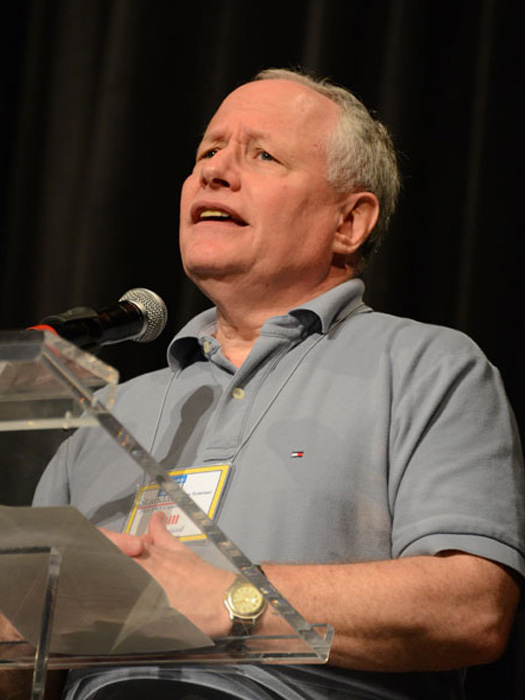
After prefacing his visit with the message to expect the unexpected in American politics in 2018, 2020, and beyond, Weekly Standard co-founder and conservative pundit Bill Kristol advocated for a different kind of political change to a sold-out audience at Cornell College in Mt. Vernon, Iowa this week. Kristol argued that amid a divided voting bloc, cultural feuds, and political infighting that a lack of respect, acknowledgement, and acceptance of the country’s status quo has led to tumultuous political times.

While cautioning the audience to indeed not expect politics to bounce back in line or to return to standards of normalcy experienced before 2016, Kristol’s broader message was that the country’s masses have forgotten the successes and disregarded the normalcies of previous administrations over the last 50 years that resulted in numerous, world-wide achievements prior to 2016, and that America is in need of a return to those times.

“There were a lot of mistakes made (in the world) with us at the center trying to create and preserve political alliances,” Kristol said of modern policy and globalization. “I think one of the problems of the last few years is no one defends the status quo. No one has the nerve to say, ‘wait a second, look at what the world looks like in 2016.’ Think of the last 30 to 70 year period. It wasn’t such a bad time in 2016 as people thought it was.”

Kristol, a proclaimed #NeverTrump-er cited Trump himself as someone who failed to see the successes of American institutions over the last 40 years of “establishment” administrations, and “shrewdly” tapped into a emotionally-primed electorate who were under the impression that those achievements hadn’t been made, or had occurred too quickly for their comfort. In an effort to gain votes, Trump made false promises to these voters, who now make up a large part of Trump’s base, and are a source of his high popularity numbers.

While his message was Burkean in nature, calling for a return to a conservatism that respects American institutions, Kristol assured the audience that he was not making a “rah rah rah” speech for conservatism. He called his talk at Cornell a “political scientist’s” look at Trump, examining the impacts of the administration on the reputation of American politics.

Some have speculated whether Kristol may wish to challenge Trump for the Republican nomination in 2020. Visits to New Hampshire and Iowa leading up to midterm elections are usually a telltale sign of someone with presidential aspirations. Kristol specifically noted that Cornell had invited him to give his lecture.

But Kristol was also recently scheduled to speak at the “Politics and Eggs” forum hosted by St. Anselm College’s Institute of Politics in New Hampshire. That forum has become a mandatory stop on the presidential campaign speaking circuit. While Krisol’s visit was postponed by a Nor’easter earlier in March, likely-candidate Sen. Jeff Flake appeared at the event just two days later.

Kristol also discussed a policy study he conducted with Bill Galston, who was deputy assistant for domestic policy in Bill Clinton’s White House. That study, called “The New Center,” examined issues that both Republicans and Democrats could support, and considered the possibility of a centrist agenda. Kristol stated in his lecture that 2020 could be the year that an independent candidate, campaigning on a balanced platform, may appeal to both parties and result in a success not seen before in American politics.

Kristol made his point stating that even though the American political system appears to have been commandeered by radicals from both the right and left, Donald Trump and Bernie Sanders only won 45 percent of the vote in their respective primaries, leaving plenty of room for centrists to make an impact.

Still, Kristol expressed that this infighting within the parties represents a desire to rebuke the politics of the prior 40 years that led to great accomplishments for the United States. Upon reflection, he said this upheaval can be traced back to the quick rise of Barack Obama against the establishment candidate, Hillary Clinton, in the 2008 Democratic Primary. Obama’s insurgency in the party to take on the Clinton name was bold, and his message called for course correction on the establishment. The results of Obama’s presidency don’t show a clear directional change from the establishment politics he ran against, and so perhaps, the anti-establishment was left wanting much more.

Kristol attributed the animosity towards the establishment and the status quo as an anxiety towards change in the American economy and the impacts of globalization on culture, job and wage growth, and social mobility. However, while he said Trump was “shrewd” and “clever” to pick up and poke that anxiety, Trump has not put forth policies that will quell that anxiety or address it, adding that people “will believe in false solutions when there are no solutions provided” (referencing the Democratic Party’s lack of solutions to addressing the anxiety). While Kristol admitted that in 2009 and 2015 he called for the Republican Party to reform itself to be palatable to minority groups and a younger demographic, he said that perhaps overall change in the nation had occurred at a rate that people weren’t prepared for. However, to completely discount the achievements of administrations past because of slow economic growth, lack of social mobility, and cultural change wasn’t a valid thought process either. Kristol said that the world has experienced fewer wars, the spread of democracy, and expanding economies in places that were riddled with poverty over the last decade, not to mention growths in cultural differences between gender and race.

So while calling for a return to the status quo is a unifying message for Kristol, what’s his solution for anxiety? Education.

Kristol said that voters “shouldn’t be too nostalgic” for earlier American times of coal mining and assembly line working, calling the professions, “dangerous” and “alienating” from society. In the changing economy, access to education is the solution that can allow Americans to transcend their predicament, no matter their age.

Kristol warned that in 2020, whether or not Trump receives the nomination, politics will still be different. There’s the possibility that the Democrats become more radical in their choice of candidates and philosophies. And if Trump is the Republican nominee, he will most likely double down on his campaign promises, which could leave many Americans looking for someone else. Perhaps a centrist candidate by the name of Kristol?


In Iowa Stop, Kristol To Discuss ‘Expecting the Unexpected in 2020’

Bill Kristol has a message for Iowa: In the current political climate, expect the unexpected. Something as unexpected as, say, a presidential bid by a prominent member of the conservative media like Kristol?

With his upcoming visit on Wednesday to Iowa’s Cornell College in Mount Vernon, on the heels of a planned appearance two weeks ago at a prominent political event in New Hampshire (postponed due to weather), Kristol is certainly creating a stir.

The influential conservative commentator and co-founder of The Weekly Standard will be a guest of Cornell College as part of its Roe Howard Freedom Lecture series, and will discuss “American Politics in the Age of Trump,” and what’s ahead in 2020. Two weeks ago, Kristol was scheduled to speak at “Politics and Eggs,” a forum hosted by St. Anselm College’s Institute of Politics that has become a mandatory stop on the POTUS campaign speaking circuit.  While Krisol’s visit was postponed by a Nor’easter, Sen. Jeff Flake appeared at the event just two days later.

Visits to New Hampshire and Iowa leading up to midterms are usually a telltale sign of someone with presidential aspirations, but Kristol told InsideSources that he’s not currently planning for a 2020 run, rather looking to “encourage the people of Iowa,” about the state and future of America’s politics ahead of the 2020 presidential discussion.

“One of my messages will be that this is such an unusual time that people should expect the unexpected in 2020,” Kristol told InsideSources, “which is interesting given the premise that the incumbent always gets renominated, I think that [assumption is] in question.”

Kristol is considered one of the originators of the #NeverTrump movement and has continued to affirm his anger with the president during his time in office.  Kristol believes that America’s politics are extremely fluid and observers are underestimating the degree to which the country is in “uncharted waters.”

Though he describes today’s politics as fluid, one thing Kristol believes is certain: Trump has led the GOP astray.

“I don’t think the future of the Republican Party is to be an older and whiter party or nativist and sort of disdainful of every new group and new thought,” Kristol said. “You can win an election or two with that, but it’s ultimately a losing proposition.”

Kristol believes the GOP has some work to do in order to attract not only younger voters who may be turned away by Trump, but also a more diverse group of voters when it comes to race and culture. Kristol believes that Trump is causing the party “significant damage” among young voters. While Kristol himself found the promise of the Republican Party as a young adult, he doesn’t believe the party is appealing to 23-year-olds today.

One of the challenges facing the Republican Party is the staunch divide between its base and the rest of the GOP. Kristol argues that Trump was able to win over a large portion of voters to the GOP with his ability to express anger over the issues that were worrying these groups of people. But Trump has since failed to keep his promises to them.

“There’s a real sense of alienation from the establishment, from the coast and D.C.,” Kristol said. “Whether Trump’s going to solve that or whether Trump’s just going to accentuate them depends, and people would argue he’s failing to address their problems, that’s a big question, and I think people could react in very different ways to another Trump presidency in that respect. I do think the next candidate from both parties actually is going to have to think through real policies, real proposals that deal with people’s anxieties. A lot of those anxieties are legitimate. It doesn’t mean the solutions they’ve attempted to embrace haven’t been good ones, but if you don’t have any solution, people will embrace bad solutions.”

In Iowa, 51.1 percent of the voters embraced Trump in 2016.  According to a February 2018 poll by Des Moines Register, Trump’s approval now hovers around  44 percent. Assuming the GOP base stays loyal to Trump and he’s re-nominated for president in 2020, Kristol believes the party will be in a different state than it is currently, having doubled down on Trump. In that event, while Kristol said that the Republican Party wouldn’t then be one he’d be comfortable being a part of, he doesn’t think that there’s an immediate need for the party to split, or create a third party.

“I think the first effort would be to save the Republican Party or revive the Republican Party,” Kristol said. “It’s a huge party and has a distinguished heritage. It would be foolish to walk away from it and say ‘it’s hopeless.’ But it may turn out for people like me if Trump is nominated, maybe re-elected, I wouldn’t necessarily want to stay in the party. And we’ll have to make up our own minds then.”

In fact, Kristol believes that the 2020 election will be one in which a third-party candidate will have a decent shot of securing a large swath of voters, something rarely been seen in American politics. That being said, Kristol believes that the Republican Party has strong leaders and is encouraged by the quality of Republicans who are running for office. While he’s not pessimistic about the future of the GOP, he does believe the challenges of keeping the party together are real.

Challenges that someone like Kristol could solve? Expecting the unexpected?