inside sources print logo
Get up-to-date news in your inbox

Letter Pushes Restrictions on Taxpayer-Funded Union Work

The practice of letting federal officials conduct union work as a substitute for their actual jobs should be restricted, argued a letter to congressional leaders Thursday.

Federal officials are allowed to do union tasks instead of their regularly assigned work because of a policy known as official time. The workers retain their title, salary, and benefits while doing the union tasks. The Competitive Enterprise Institute (CEI) urged congressional leaders to support a bill that would limit the practice.

“Union official time is a taxpayer-funded subsidy to federal employee unions that pays for federal employees’ salary and benefits while they perform union business, including attending union conventions, lobbying Congress, and filing grievances, instead of the federal work they were hired to do,” the letter declares. “Unions should finance their own political activity with members’ dues payments.”

The Official Time Reform Act prohibits federal employees from conducting political activity on union official time. The bill also calls for federal employees to lose service credit toward pension and bonuses if they perform union business for 80 percent or more of the hours in a workday.

“Like all other individuals or organizations, federal employee unions have the right to lobby government, but they should not do so at the taxpayer’s expense,” the letter states. “Congress has taken legislative efforts to root out lobbying by federal employees while using tax dollars. It is time to close the loophole that allows federal employees to engage in political activity while being paid by the taxpayer on official time.”

The CEI letter is addressed to House Speaker Paul Ryan and Minority Leader Nancy Pelosi. The letter contests official time is not in the best interest of taxpayers since it only serves unions and their members. It adds taxpayer funds could serve a public purpose.

“Political activity performed on official time only serves the interests of unions and their members, not the public,” the letter states. “The taxpayer does not receive a direct benefit in return for subsidizing official time. Taxpayers should know that their tax dollars serve a legitimate public purpose, and are not used to subsidize the political activity of federal employee unions.”

The Office of Personnel Management (OPM) found official time cost taxpayers $162 million in 2014. The Government Accountability Office (GAO) has expressed some concerns over how official time hours are calculated. It found in a 2014 report that current methods underestimate how much official time hours are actually being used.

“Due to poor tracking and reporting of official time, it is unknown how much official time federal employees use to lobby Congress,” the letter states. “However, any time spent by federal employees engaging in political activity on the behalf of federal employee unions is too much.”

Supporters argue that official time allows federal unions to properly fulfill their legal mandated duties. Federal agencies and unions negotiate official time provisions in their collective bargaining agreements. Federal officials are only allowed to use official time for certain activities like negotiating or filing grievances.

“The goal of this legislation is to eliminate the ability of federal employees to form and join a union,” National Federation of Federal Employees President Randy Erwin said. “And to viciously penalize federal employees who serve as union representatives, like stewards, and singling them out and retroactively cutting their pensions.”

The Official Time Reform Act was introduced earlier this month. It has currently been making its way through committee. Republican leaders have taken on an ambitious agenda, making it unclear if the bill might reach the floor for a vote.

The Department of Veterans Affairs (VA) has faced backlash in recent years over questionable treatment practices. The agency subjected veterans to incredibly long wait times which left many dead. The scandal sparked a national outcry when it first broke in 2014.

The scandal was partially blamed on agency employees using official time. The VA spent an estimated $48 million on official time hours back in 2014. The GAO conducted a more recent report Jan. 24 which looked specifically at the VA. It found the agency is still not properly tracking official time hours.

Follow Connor on Twitter

Subscribe for the Latest From InsideSources Every Morning

Free-Market Coalition Urges Senate to Approve Trump’s Labor Secretary Pick

A coalition of free-market groups sent a letter Monday urging the Senate to approve President Donald Trump’s pick for labor secretary.

CKE Restaurants President Andy Puzder was nominated Dec. 8 to lead the Department of Labor (DOL). He was immediately attacked by some lawmakers and unions for his lack of government experience and conduct as an employer. But a coalition of groups, led by the Competitive Enterprise Institute, is urging his approval.

“We believe a change of labor policy at the federal level is crucial to encourage job creation and spur economic growth,” the letter stated. “Andrew Puzder would bring a welcome, fresh perspective to the U.S. Labor Department that our country needs.”

Former President Barack Obama and his administration issued numerous regulations aimed at protecting workers. Those opposed have argued the regulations have overwhelmed employers, hurting workers in the process. Puzder operates several franchise chains and has been an outspoken critic of the regulations.

“Over the years, he has warned about the harmful impact of overly burdensome workplace regulation, and his firsthand experience dealing with those burdens should prove invaluable in identifying and targeting regulations that do more harm than good,” the letter stated.

The letter was signed by 17 free-market organizations including Americans for Tax Reform, FreedomWorks, the Freedom Foundation, and the Center for Individual Freedom. It was addressed to the Senate Health, Education, Labor and Pensions (HELP) committee.

“American workers need a Labor Secretary with real-world experience creating jobs and opportunities, and we believe Andrew Puzder will fulfill that role,” the letter concluded. “By making sure the Labor Department promotes deregulatory policies, Andrew Puzder can foster and encourage the business formation that makes job creation possible.”

Puzder supporters see his nomination as a way to bring balance back to the Labor Department. The letter notes that during the previous administration the department imposed $55.7 billion in regulatory costs on employers. It adds that during that time gross domestic product growth averaged less than two percent, while an increased number of people dropped out of the labor market.

Obama has argued the goal was to strengthen worker rights and protections. He stated numerous times during his time in office that unions are critical to protecting workers. Critics have contested the regulations actually helped unions at the expense of workers.

Nevertheless, Puzder isn’t without critics who have painted him as a sexist who mistreats his employees. Democratic lawmakers and union leaders have been particularly critical of the nominee. The union-backed Fight for $15 movement has even held protests which apparently included employees that work for his franchises.

Democratic Sen. Patty Murray and AFL-CIO President Richard Trumka argued during a press call Dec. 22 that the president has already betrayed his promise to the working class by picking Puzder. Murray is currently the ranking Democrat on the Senate HELP Committee.

The HELP Committee is scheduled to hold a hearing next week to determine whether his nomination will be approved. Puzder, if approved, would be the top federal official for enforcing and issuing workplace policies. Obama, for instance, initiated much of his economic agenda through department regulations.

Follow Connor on Twitter

Subscribe for the Latest From InsideSources Every Morning

Why New Deal Era Laws Are a Drag On the American Worker

The New Deal has been the foundation of national workplace law for almost a century, but now some argue it’s hurting the very workers it was meant to help.

The Competitive Enterprise Institute released a detailed report Thursday listing policies it hopes the next Congress will tackle. The report lists financial policies, regulations, the environment, and technology as a few key areas that need to be addressed. It also argues labor and workplace laws are in critical need of reform.

“Obsolete New Deal–era labor laws and regulations are becoming a drag on the economy,” the report states. “The old adversarial master–servant model of labor relations has little to offer the 21st-century workforce, which is characterized by horizontal corporate structures, significant job mobility, and instant, constant communications.”

The economy has changed in significant ways in recent years. Emerging technologies have opened up new ways of doing business that give workers more flexibility and control. The report argues federal agencies have failed to adapt to the changes and have instead opted to expand on outdated laws and institutions like labor unions.

“Recent regulatory efforts by those agencies have sought to restrict flexible work arrangements and well-established business-to-business relationships, while giving favorable treatment to labor unions,” the report states. “Members of Congress must resist efforts to politicize regulation, adjudication, and legislation in labor relations.”

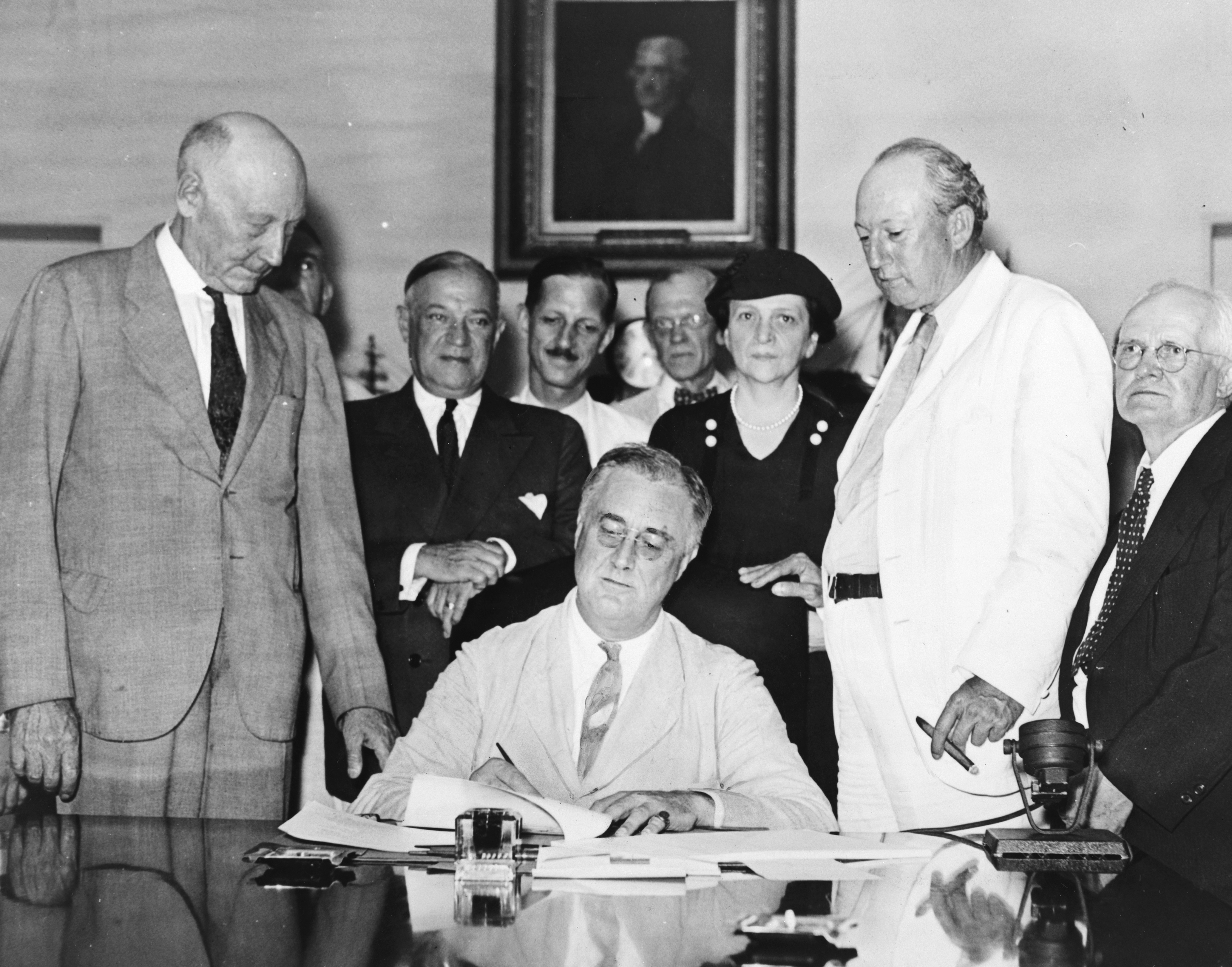
The New Deal consisted of many policies that fundamentally transformed the economy and society during the 1930s. President Franklin D. Roosevelt ushered in the changes in response to the Great Depression. It included laws that govern wages, union organizing, worker rights, and many other critical policy areas.

“The National Labor Relations Act sets the rules for union elections and unfair labor practices,” the report states. “Much of it is outdated and needs reform. The Employee Rights Act, a comprehensive reform measure introduced in the past two Congresses, would go a long way toward bringing labor law in line with the needs of the 21st-century.”

The Employee Rights Act would change union relations is several key ways. It would require secret ballot elections and mandate that unions hold reauthorization votes to remain in a workplace. The report also urges lawmakers to end a loophole that it claims has allowed for union threats and violence.

“One such restriction should be outlawing union violence,” the report states. “The U.S. Supreme Court’s 1973 decision in United States v. Enmons created a loophole in the Hobbs Act, a major federal anti-extortion law, that exempts unions from prosecution for violence committed in the course of promoting union goals.”

The National Labor Relations Board (NLRB) was established during the New Deal to oversee union elections and resolve labor disputes. It was designed to be impartial so that unions, employers, and employees are treated fairly. The report argues the board has failed in its duties to be unbiased.

“Almost all NLRB members have had either a business or union background,” the report states. “Consequently, most Board members have a predisposition to favor one side or the other. With nearly all Board members having a bias, the NLRB has been unable to act in an impartial manner, as it was created to do.”

President Barack Obama and his administration have altered labor policies in some very significant ways. The NLRB has changed how union elections are held, how companies can contract together and how workers are classified. The Department of Labor (DOL) has tackled policy areas like overtime and federal contracting.

The report argues the changes have made the outdated labor laws worse. Republicans will soon have the chance to change the New Deal labor policies and the Obama era reforms.

The NLRB and DOL did not respond to a request for comment by InsideSources.

Follow Connor on Twitter

Industry and Labor Unite Against Major Railway Reg

Industry groups, free-market advocates and organized labor have all expressed opposition to a proposed regulation that could force private railroads to open their tracks to competitors.

The Surface Transportation Board (STB) is looking to make it easier for a company to gain access to a private railroad. The move, however, has prompted an unlikely alliance between industry groups, free-market advocates and labor. The Association of American Railroads (AAR) notes the opposition underscores the problem.

“It is perhaps most interesting to see free market organizations…and major railroad labor organizations independently opposing the same regulation, albeit for different reasons,” a spokesman for AAR told InsideSources. “It underscores that the measure is misguided and would have far-reaching effects.”

AAR is an industry trade group representing major freight railroads. Private railroads own and maintain their own tracks but those investments could be reduced under the proposal. The Competitive Enterprise Institute (CEI) led a coalition letter of other free-market groups expressing similar concerns Thursday.

“Rail carriers, their unions, and some customers are concerned about the direct impact this proposed rule would have on railroad industry investment, employment, and quality of service,” CEI scholar Marc Scribner told InsideSources. “Railroad deregulation remains one of America’s greatest economic liberalization success stories.”

Railroad companies invest billions of dollars into maintaining their privately owned tracks. Allowing competitors to use the tracks at a low rate could result in reduced investments, degraded service quality and higher prices for consumer goods. The United Parcel Service (UPS) has also expressed similar concern when filing a comment with the STB.

“UPS’s experience in other contexts leads us to conclude the implementation of a new reciprocal switching scheme will lead to decreased network velocity, diminished capital investments into the freight network, and deteriorating rail intermodal service levels,” UPS stated.

The International Association of Sheet Metal, Air, Rail and Transportation Workers (SMART) represents workers in the railway industry. The union has warned that the regulation could hurt wages and benefits. The union notes the proposal could also undermine regulations already in place.

“The proposed regulations would further undermine the existing regulatory framework and could have a chilling ripple effect on areas affecting labor, including the wages, rules and working conditions,” SMART said in a brief submitted to the STB. “Any reduction to railroads’ revenue will directly impact employees’ wages and benefits.”

The federal government already has the authority to require railroads to open up their tracks at a discounted rate. Under the previous standard, however, the railroad had to have shown anticompetitive behavior. STB seeks to remove the requirement to further promote competition among railroads.

Those opposed argue it will not promote competition and instead would undermine private ownership. The Staggers Rail Act of 1980 was enacted as a reform that deregulated the railroad industry significantly. CEI detailed in its letter that the deregulation push helped save the railroad industry and that the new rule would undermine that success.

STB did not respond to a request for comment by InsideSources.

Follow Connor on Twitter

House Republicans Fight to Delay Obama’s Overtime Rule

The House Rules Committee debated a Republican-supported bill Tuesday designed to delay contested changes to overtime regulations by six months.

The Department of Labor (DOL) will soon make millions of more workers eligible for overtime. Republican Rep. Tim Walberg, however, believes businesses weren’t given enough time to adjust to the rule. He introduced a bill to delay the new overtime rule by six months.

“We all agree our nation’s overtime rules need to be updated and modernized,” Walberg stated before the committee. Nevertheless, he argues “the administration should withdraw the rule completely and update our laws responsibly. Unfortunately, the clock is ticking. A six month delay provides much needed relief.”

The DOL released the final version of the rule May 18 after nearly a year of debates. Managers and executives currently cannot qualify for overtime if they have a salary of at least $23,660. The new rule will increase the overtime salary exemption to $47,476 when it goes into effect Dec. 1.

“I, obviously, strongly opposed this legislation because I look at it as denying working families, who work fifty, sixty, seventy hours a week, a raise,” Rep. Jim McGovern, a Democrat, said before the committee. “I think when people work for a living they ought to earn a fair wage and a decent wage and basically this is an attempt to take money out of their pockets.”

The White House estimates the rule change will make an additional 4.2 million workers eligible for overtime. It has argued the updated rule will help restore overtime privileges that have dwindled over the years. Most full-time salaried workers, at 62 percent, qualified for overtime back in 1975. Now only 7 percent of those same type of workers qualify for overtime.

“Over the past 40 years, overtime protections eroded as a result of inflation and lobbyists’ efforts to weaken them,” the White House said when the final rule was released. “This extra income will not only mean a better life for American families impacted by overtime protections, but will boost our economy across the board.”

The Competitive Enterprise Institute has been one of several policy groups expressing concern over the rule. Its research has found businesses, nonprofits and even colleges could be hurt. CEI Labor Policy Expert Trey Kovacs notes a six-month delay would be helpful but that it doesn’t address the main issue.

“It’s certainly not answering the real issue but it is a good compromise since it’s probably politically impossible to do away with the rule,” Kovacs told InsideSources. “Small businesses and nonprofits are really going to have a tough time achieving compliance with the rule by December 1. So giving them an additional six months will be extremely helpful.”

The Economic Policy Institute (EPI) has been a vocal supporter of the upcoming overtime rule. It has stated the update will greatly help middle-class and lower-income families. EPI criticized Walberg for trying to delay the rule by six months.

“He wants to delay lower-middle class workers from either getting a raise or getting to spend more time with their families,” EPI Vice President Ross Eisenbrey said in a statement. “Wages have been stagnant for 35 years. The updated overtime rule is a first step to turn that around and ensure that when workers work hard, they get ahead.”

The U.S. Chamber of Commerce and the International Franchise Association (IFA), among over fifty other groups, filed a lawsuit claiming the department ignored congressional intent when drafting the rule. The lawsuit alleges that federal law never intended the salary threshold to be increased so drastically and arbitrarily.

The DOL is also facing a lawsuit from 21 states challenging the rule. Additionally, Republican Sens. Lamar Alexander and Ron Johnson introduced legislation June 7 to block the rule before it goes into effect. Republicans have received some support from Democrats concerned about it, as well.

REPORT: Regulations Suppress the Rise of Flexible Work

Employees have seen increased access to some very unique and flexible work arrangements, but regulations have been stifling the new opportunities, a report warned Wednesday.

Employment looks radically different than it did just ten years ago. Technology and innovative new markets, like the sharing-economy, have challenged traditional employment practices like the nine-to-five job. The Competitive Enterprise Institute (CEI) warns in a report that outdated laws are creating challenges for employees in this new economy.

“Developed economies are moving away from that industrial model to more cooperative arrangements, such as contracting and the ‘sharing economy.'” the report detailed. “Thus, today’s economy is bound by laws designed for an earlier industrial era.”

The report adds that many of the earlier laws were meant to help workers in a time when there was a more distinct line between employer and worker. Traditional structures of employment have begun breaking down because employees can more easily go into business for themselves or contract out their work.

“We need to reflect what people actually want from work and how the institution is evolving,” the report noted. “Regulations designed for the corporate era are being wrongly applied to what are actually commercial market transactions.”

The report cites several incidents where innovative employment has outgrown the traditional model. The sharing-economy, for instance, allows people to build their own business venture through phone applications. Cellphones and digital technologies also make it easier to work from home or anywhere else.

“In order to enable the system of natural liberty to reemerge on terms set by individuals acting in markets rather than be strangled at birth by regulation designed for a bygone era, legislators and regulators will need to make certain policy changes,” the report noted.

The report makes several policy recommendations to help foster the innovative changes. It first recommends policymakers reconsider all laws that tie non-economic social goals to employment contracts. They should also reform the National Labor Relations Act which may be preserving unions and outdated laws.

“Union membership declined steadily, particularly in the private sector,” the report noted. “Yet management’s reaction to this change did not reflect a decrease of workers’ bargaining power. Rather, employees went from being viewed as ‘cogs in the machine’ to important assets whose creativity and potential could be sources of competitive advantage.”

Union membership nationwide has been in sharp decline over the decades. Federal administrators have issued rules with the express purpose of preserving unions and the older laws. Labor Secretary Thomas Perez, among others, has argued that building upon the existing regulatory system is critical to preserving worker rights.

Themed Week Educates Workers on How to Leave Their Unions

A coalition of over a hundred groups have dedicated this week to educating workers about their choices when it comes to leaving their union.

The National Employee Freedom Week (NEFW) campaign was first started four years ago to highlight worker choice policies. Campaign organizers have noted concern many workers just don’t know their options when it comes to union representation.

“The National Employee Freedom Week was originally started to inform union members of their rights to leave their union if they want to or at least opt-out of a portion of their union dues if they wanted to,” NEFW Communications Director Michael Schaus told InsideSources. “If they don’t feel the union is a good fit for them.”

NEFW released a survey Monday which found one-third of union workers would opt out if they could. Nevertheless, the coalition has still faced plenty of resistance from union leaders and even some workers themselves. Schaus notes some push back is expected.

“I think when you talk about unionization you’re going to get some push back,” Schaus noted. “Generally speaking you get it from the union leaders or some of their cheerleaders in the media but then you tend to get a little bit of push back from workers who don’t take the time to understand what you’re trying to say.”

Right-to-work tends to be the most well known but there are many other policies that impact worker choice. Right-to-work outlaws mandatory union dues or fees as a condition of employment. It has only become law in 26 states meaning many workers in other states don’t know there are different policies they can utilize too.

“[We’re] just raising awareness among workers that they do in fact have options,” Schaus also noted. “So many people don’t realize they have the options to leave their union or opt-out of a portion of their dues.”

Workers in states without right-to-work laws can choose to not pay a portion of their dues. A union can only legally require a worker to pay what it costs to represent them but not other expenses like political contributions. Unions often make it difficult to pay the service type fees but they can never outright stop a worker.

“In some states you can choose to opt-out of your union membership entirely,” Schaus stated. “Where you are able to save all the money that would be spent on dues. But there are a lot  states where you can only opt-out of a portion of the dues and the portion would be what the union says it uses for political purposes.”

Unions have been known to deploy opt-out windows to discourage workers from leaving. Essentially, unions only allow workers to leave or pay service fees during certain times of the year. Sometimes information is not readily available to workers.

“Especially on the local level a lot of the opt-out windows, for example, they’re buried in a sixty plus page labor contract a worker might sign,” Schaus said. “In some cases getting out of a union contract is even more difficult and more obscure.”

The Nevada Policy Research Institute (NPRI) created the concept for an informational campaign for worker choice policies. The institute conducted a campaign to let teachers in Clark County, Nevada, know they could end their membership with the Clark County Education Association by submitting a written notice from July 1 to July 15.

“We saw the success from that and we realized we could not be the only state facing that sort of problem where union members did not know they even had the option of opting out. So we decided to take it national,” explains Schaus.

The coalition is supported mostly by small groups, but a few major organizations have signed on to help. Americans for Limited Government, the Center for Union Facts, the Competitive Enterprise Institute, FreedomWorks and the National Right to Work Committee, among others, have all supported the information campaign.

“Our core mission is to present those options and let employees know what their rights are in the workplace when it comes to unionization,” Schaus continued. “But its also taking a look at how we can address some of the contentious issues when it comes to right-to-work or what have you.”

The coalition has also grown to advocate for policies with lawmakers. It supports a policy known as worker choice which would allow workers to represent themselves. Employees in workplaces with a union cannot currently circumvent their labor representatives.

“Essentially if someone decides to opt-out of a union then they will be able to negotiate their pay and their benefits directly with the employer,” Schaus stated. “Thereby reducing the risk of the so-called free-rider argument unions often complain about. So its kind of a solution to both sides.”

Labor unions must represent everyone in a workplace they are at whether or not they pay dues. They note policies that give workers a choice will cause many to just free-ride off the benefits they advocate for. Schaus adds that while worker choice might help address the free-rider problem, unions are usually against it.

“Worker choice can easily be something that people understand can be a benefit to the unions and the people who want to get out of the union,” Schaus said. “So that was something we wanted to highlight this year just because the timing seemed right.”