inside sources print logo
Get up-to-date news in your inbox

Trump Shows Silicon Valley Love with Transportation Secretary Pick

President-elect Donald Trump’s minuscule support from Silicon Valley compared to his general election opponent hasn’t dissuaded him from throwing a booming part of the tech sector some love, his choice for transportation secretary shows.

This week Trump named as his pick to head the Department of Transportation Elaine Chao, who brings eight years of cabinet experience to the Trump White House from her time as labor secretary throughout the entire George W. Bush administration. Chao also has experience in the Transportation Department, where she acted as deputy secretary for the George H.W. Bush administration. The nominee is married to Republican Kentucky Sen. Mitch McConnell, the majority leader of the Senate, where she’ll face a confirmation hearing.

Chao will be charged with heading up a crucial revamp of decaying and failing transportation infrastructure across the country. Her selection also sends a friendly sign to a booming sharing economy sector of the transportation market centered in Silicon Valley, where Trump saw little traction during election season as a result of his contentious views on certain tech issues.

“Literally millions of people today participate in the digitally-enabled, peer-to-peer economy,” Chao said at an American Action Forum event last November in a speech discussing the sharing and gig economies. “So it is legitimate to ask if the regulatory solutions of the past– crafted by big government for big business– are appropriate for a peer-to-peer economy that is fluid, flexible and filled with workers who prefer independent arrangements.”

Chao said American workers no longer spend “the majority of their lives in one establishment or one profession,” and advocated loosening decades-old regulations governing how companies treat workers.

“Most of the major laws creating these programs were enacted during the depression era, the 1950’s or the 1970’s,” Chao told attendees. “At the time, they addressed important social issues such as child labor, industrial accidents, and the need to strengthen union democracy. But the Fair Labor Standards Act of 1938, which created the 40 hour workweek among other key reforms, is 77 years old. The Landrum Griffin Act mandating union financial transparency is 56 years old. The Occupational Health and Safety Act of 1970 is 45 years old. And the pension protection law commonly known as ERISA is 41 years old.”

Highlighting statistics from some of the biggest names in the peer-to-peer economy including Uber, Etsy and Airbnb, Chao said more than half of those in the former two are college educated and use the platforms for supplementary income, while the latter helped hundreds avoid foreclosure.

“Nearly half of the Uber drivers surveyed had a college degree or higher. 62 percent had another full-time or part-time job. Nearly half had health insurance coverage through another job, spouse or family member,” Chao said. “A 2012 company survey found that– much like Uber– more than half of Etsy’s sellers are college educated.”

“Ninety percent of Airbnb participants rent rooms in their primary residence. In July 2010, the company received 300 letters from homeowners who said they were able to avoid foreclosure because of the extra income derived from Airbnb rentals,” she added.

The speech highlights the ongoing debate between gig economy companies and workers, who are fighting for employee benefits like healthcare from companies like Uber, who consider them private contractors and ineligible for benefits. Chao’s argument for a reevaluation of many of the laws mandating those protections suggest her policies may be more sympathetic to companies than legal challeneges brought against them.

“The digitally-enabled, peer-to-peer economy has provided an important safety net for many families during difficult times,” she concluded. “At a minimum, government policies must not stifle the innovation that has made this sector such an explosive driver of job growth and opportunity.”

Following Trump’s announcement, representatives from the sector including Uber and Lyft publicly endorsed Chao.

“Ms. Chao’s knowledge of transportation issues is extensive, and we look forward to working closely with her,” Niki Christoff, Uber’s head of federal affairs, told InsideSources in an email.

“We have the utmost respect for Elaine Chao, an accomplished public servant and highly capable leader,” Lyft spokesman Adrian Durbin said according to Bloomberg. “We congratulate her on the nomination and look forward to working with her on an array of transportation issues.”

Those issues will also include the regulatory green-lighting of artificial intelligence and autonomous vehicles, where technology is expected to progress rapidly in the next five years.

“In many ways, she may be the cabinet member with the most interesting and important tech policy issues out there,” Uber adviser Bradley Tusk said.
Follow Giuseppe on Twitter

Warren Calls Out Uber, Lyft for Resisting Worker’s Rights in the Gig Economy

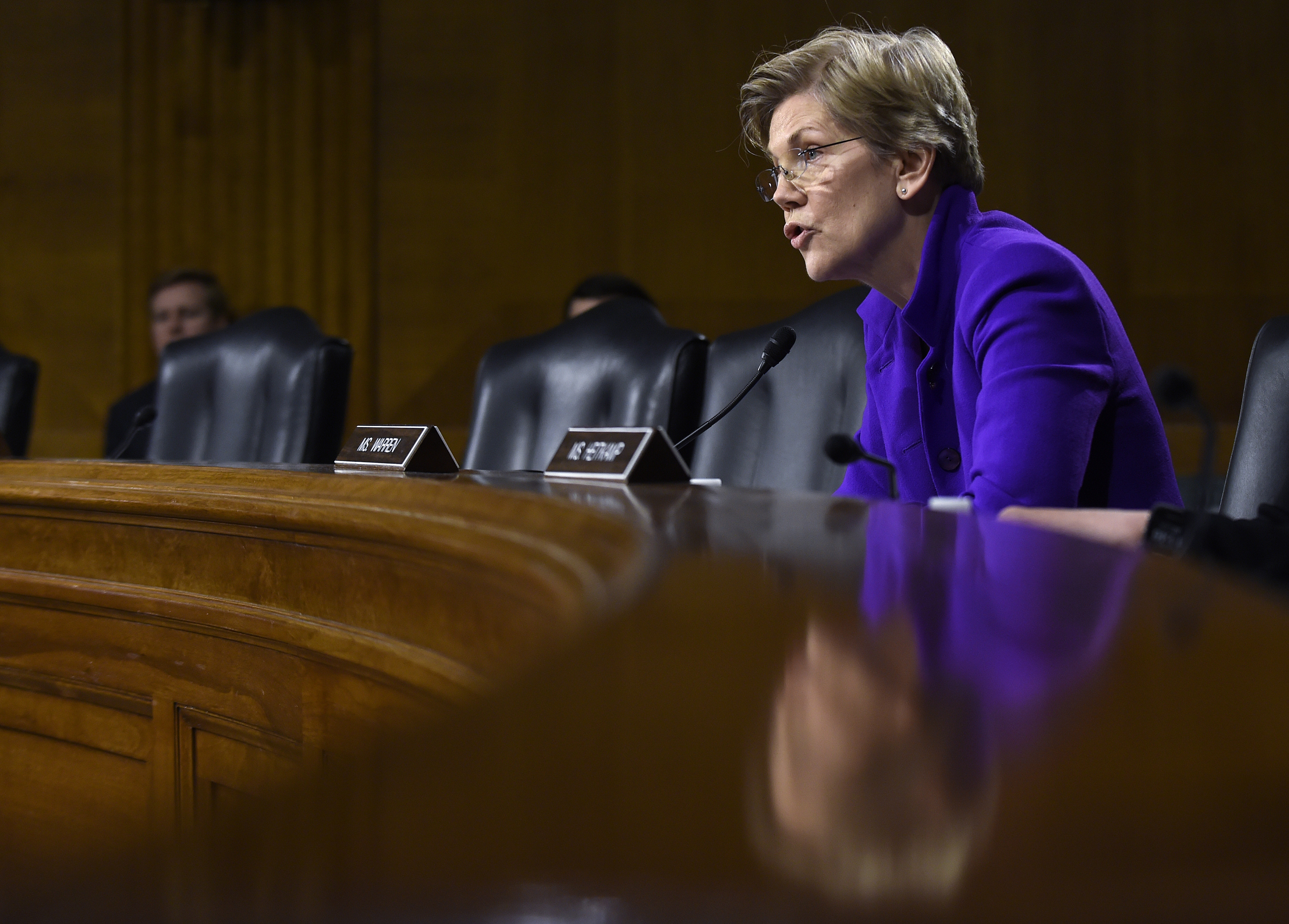
Sen. Elizabeth Warren joined the progressive call for an overhaul to workers’ rights in the sharing economy during a speech Thursday in Washington, where the Massachusetts Democrat named companies like Uber and Lyft as antagonists in the fight for employee welfare in the 21st century.

While the ridesharing services have fought hard for their chance to compete against decades-old taxi monopolies in major cities across the country, Warren said they’ve fought equally hard against regulations to level the playing field between the old and new, and resisted “rules to promote rider safety and driver accountability.”

“And while their businesses provide workers with greater flexibility, companies like Lyft and Uber have often resisted efforts of those very same workers to try to access a greater share of the wealth that is generated from the work that they do,” Warren told attendees of New America’s annual conference, titled “The Next Social Contract.”

The ridesharing companies have come to represent the forefront of the “gig economy,” as well as the public face of its growing pains in recent years. Both have engaged in numerous legal battles resisting the attempts of their workers — hired as independent contractors — to claim the same benefits as full-time employees, including paid leave, insurance, tax withholding, retirement income and the ability to form unions.

Warren likened those fights to the battle for occupational safety standards and worker’s rights amid the Industrial Revolution.

“Workplaces were monstrously unsafe, wages were paltry, hours were grueling,” she said. “America’s response wasn’t to abandon technological innovations and improvements from the Industrial Revolution — we didn’t send everyone back to the farms.”

Warren said no one “entertains the idea of pulling the plug on the Internet,” but said history has proven “policy also matters” to bolstering a strong middle class.

“Instead, we came together, and through our government, we changed public policies to adapt to a changing economy to try to keep the good, and get rid of the bad,” the Massachusetts senator said.

She added the problems aren’t unique to the gig economy — it just represents the most recent “merciless attack” on workers over the last three decades.

“Long before anybody ever wrote an article about the gig economy, corporations had discovered the higher profits they could wring out of an on-demand workforce made up of independent contractors,” Warren said.

Dubbed 1099 workers after the IRS form for reporting miscellaneous income, independent contractors have little or no access to unemployment insurance, workers’ compensation and social security, which according to Warren, “means the workers who most need the safety net are the ones least likely to have it.”

She speculated the benefits of the gig economy — like working when convenient and making ends meet in a weak labor market — “might be true for some workers in some conditions,” but added “for many the gig economy is simply the next step in a losing effort to build some economic security in a world where all the benefits and wealth are floating to the top 10 percent.”

Warren’s list of fixes include universalizing workers’ comp and paid leave — including medical, family and personal — across the 1099 divide, requiring payroll deductions for disability, workers’ comp and Social Security (contractors pay in themselves, often at lower rates than their full-time counterparts, resulting in a smaller cushions), making benefits like health insurance portable from job-to-job, introducing worker-run pension plans similar to those managed by unions, giving contractors the right to organize like unions and creating narrowed definitions for worker classification.

“It’s time for all workers to have access to the same low-cost, well-protected retirement products that some employers and unions provide today,” the Massachusetts senator said.

Warren’s Republican colleagues in the upper chamber, including Florida Sen. Marco Rubio, have resisted calls for more regulation to what they paint as the frontier of the new American economy.

“The on-demand economy is a miracle that only American free enterprise could produce,” Rubio said in October. “That’s why it’s so shameful that the biggest obstacle to the growth of this platform is our very own government.”

The Florida senator said the gig economy gives workers the freedom to seek higher education and increases upward mobility by freeing disruptors like Uber from the obligation to provide costly benefits like health insurance.

He also pointed out 1099 requirements prevent companies from establishing minimum standards for service and appearance, or from providing “perks and benefits” to attract “high-quality professionals.”

“Our outdated politicians bash the on-demand economy for not taking better care of workers,” Rubio said, “Yet our outdated government is the exact force preventing it from doing so.”

Though the Federal Trade Commission has launched invenstigations into certain practices in the gig economy, FTC Commissioner Maureen Ohlhausen told companies during a workshop last year the agency has no “planned, big enforcement push” coming to the sharing space.

Follow Giuseppe on Twitter

Rubio Calls for Fewer Regulations for the On-Demand Economy

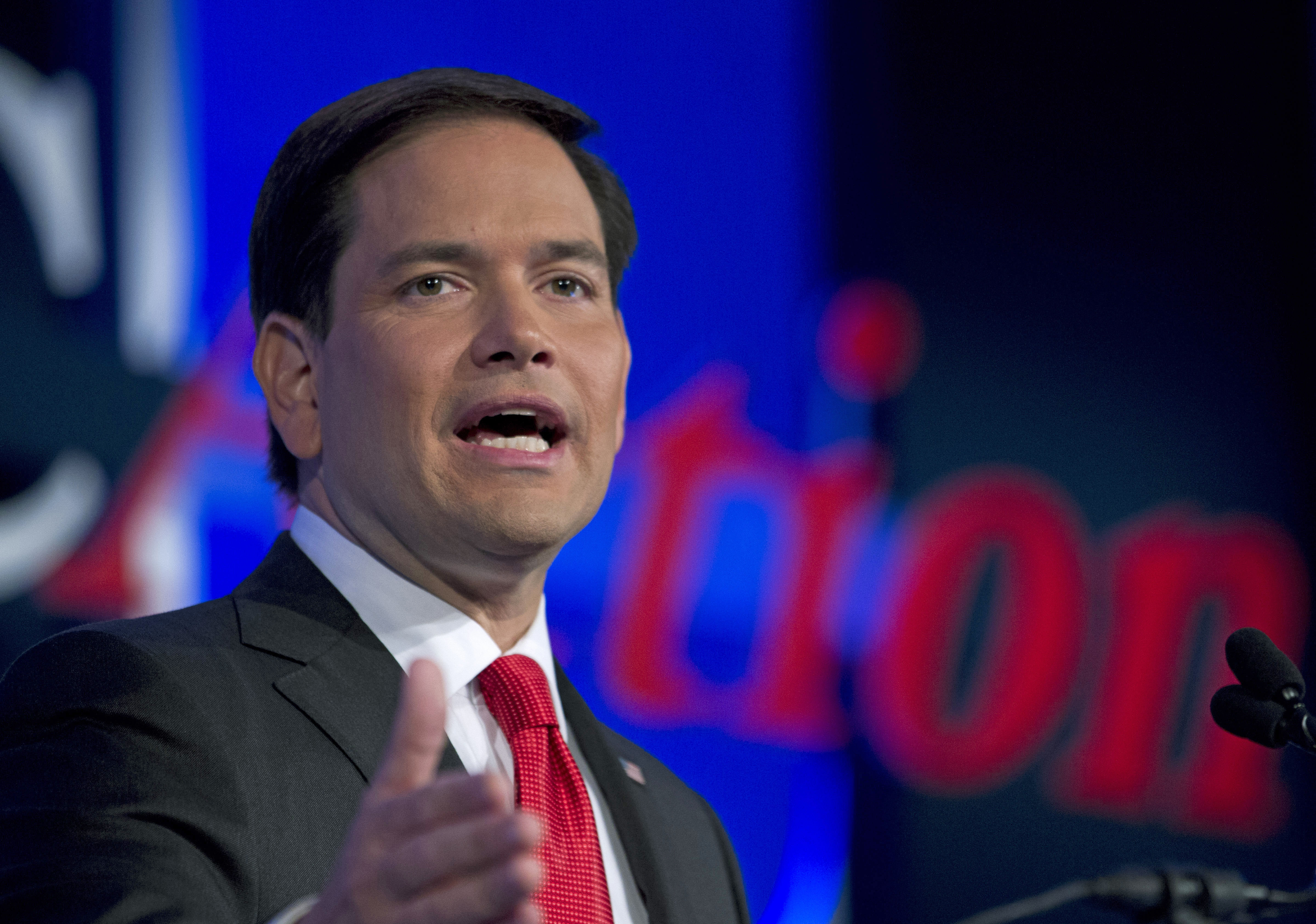
Florida Sen. Marco Rubio became the latest 2016 GOP presidential candidate to cater to the on-demand economy Tuesday, calling for fewer regulations for companies like Uber and Airbnb during a policy speech in New York.

“The on-demand platform is one example of an important truth facing us in this election, which is that the American economy is fundamentally transforming,” Rubio told the Civic Hall in New York. “Uber didn’t even exist when our current president was sworn in. Today it’s worth $51 billion.”

Rubio started the speech with a story about his home refrigerator in Miami breaking last summer, and the three days it took for him to hire someone to fix it.

“That just can’t be how our economy works in the year 2015,” he said. “Other things that took three days in the old economy now take three minutes – or three seconds. What struck me in that moment was the following realization: Inevitably, somewhere not far from me, there was someone capable of repairing appliances who was just as eager to make some extra money that day as I was to have a functional refrigerator. The only problem was that this person and I had no way of finding each other.”

The Florida senator said that problem would be solved in a year or two (companies like Yelp, Angie’s List and Thumbtack already operate in that vein), and in areas like transportation and travel, companies like Uber and Airbnb have already found solutions and generated no small amount of economic disruption for longstanding market players like the taxi and hotel industries.

As a result, the sharing economy has faced a number of regulatory hiccups in recent years as regulators and established industries try to grapple with the new competition, including in New York City, where Mayor Bill de Blasio abandoned a plan to limit the number of Uber drivers in the city, and in California, where the ridesharing service lost a court battle over whether its drivers should be treated as employees or contractors.

“The American people have chosen an economy in which the most valuable retailer in America, Amazon, owns not a single store; the largest transportation company, Uber, owns not a single vehicle; and the largest accommodation provider, Airbnb, owns not a single hotel,” Rubio said.

RELATED: Startups Look to 2016 Debate for Policies Boosting Innovation Economy

“The on-demand economy is a miracle that only American free enterprise could produce,” he continued. “That’s why it’s so shameful that the biggest obstacle to the growth of this platform is our very own government.”

Rubio said hurdles including an “antiquated tax code, burdensome regulations, and numerous outdated politicians” threaten to stifle the most crucial sector of the future U.S. economy.

That future includes startups like Handy, a platform for finding contractors to take on jobs like Rubio’s fridge repair, which now operates in 37 cities and employs 11,000 contractors at an average of $18 an hour. As contractors, workers can choose their own hours.

Such freedom allows Americans to seek higher education and increases upward mobility, Rubio added before defending Handy, Uber and others’ ability to hire workers as contractors instead of employees, freeing them from the obligation to provide costly benefits like health insurance.

“If Handy’s CEO, Oisin [Hanrahan], classifies the workers as W2 employees, then much of the flexibility that makes working with Handy so appealing would disappear,” Rubio explained. “He’d have to regulate workers’ hours and comply with a litany of expensive requirements that would stunt the growth of his company.”

However, Rubio also pointed out 1099 independent contractor requirements prevent Handy from establishing minimum standards for service and appearance, or from providing “perks and benefits” to attract “high-quality professionals.”

“Think about how ironic that is,” Rubio said. “Our outdated politicians bash the on-demand economy for not taking better care of workers, yet our outdated government is the exact force preventing it from doing so.”

As president, Rubio said he would tackle those issues by supporting a tax-free Internet, setting a cap on the cost of regulations annually and conducting analyses on how new regulations would impact “competition and innovation.”

Rubio said other countries are already ahead of the U.S. in establishing a framework for the the sharing economy, including Germany, where businesses can hire workers as “dependent contractors” — a designation between employee and independent contractors, allowing workers to stay with a single company, receive benefits, protections and maintain control of their schedules.

Rubio also put in a shot against those hinting at forthcoming regulations for the on-demand model, including Federal Trade Commission Chairman Edith Ramirez, who last week suggested “targeted regulatory measures” for startups, and fellow 2016 presidential hopeful Hillary Clinton, who said in July the “gig economy” is “raising hard questions about workplace protections and what a good job will look like in the future.”

“Right now, [regulators] recognize that the new economy doesn’t fit our current tax code and our current way of doing things, so they ask themselves: How can we force the new economy to adapt to our old policies?” Rubio said. “I’d rather ask: How can we change our old policies to adapt to the new economy?”

Follow Giuseppe on Twitter

FTC Assures Uber There’s No ‘Big Enforcement Push’ Coming to the Sharing Economy

A commissioner with the Federal Trade Commission told a gathering of sharing economy entrepreneurs, tech sector representatives and government officials Tuesday the FTC has no plans for a regulatory “big enforcement push” over the blooming Silicon Valley-based economic sector.

“The workshop will examine competition, consumer protection, and economic issues arising in the sharing economy to promote more informed analysis of its competitive dynamics as well as benefits and risks to consumers,” the FTC said on its website describing Tuesday’s “Sharing Economy” workshop in Washington. “The workshop will consider if, and the extent to which, existing regulatory frameworks can be responsive to sharing economy business models while maintaining appropriate consumer protections.”

Federal Trade Commissioner Maureen Ohlhausen opened the agency’s workshop with an assurance for startups leading the on-demand economic revolution like Uber, Lyft, Airbnb and others that the agency isn’t seeking to punish them for a business model the current regulatory framework wasn’t designed to take into account.

“While it is true that some of those efforts later led to some investigations and even a few enforcement actions, I want to assure you that we did not convene today’s workshop as a prelude to some planned, big enforcement push in this space,” Ohlhausen said.

The app-based services have exploded in popularity in recent years, and in cases like Uber, upset longstanding market incumbents like taxi services and driver unions in cities across the U.S. As a result, many are looking to lawmakers and regulators to step and reign in startups, which often operate within gray areas concerning consumer safety, privacy, licensing and competition.

Those gray areas include workers for the companies themselves like Uber, which hires drivers as independent contractors, making them ineligible for benefit packages offered by traditional driver employers.

“I am going to repeat myself here because I really cannot stress this enough — interest in new developments in the economy by the FTC does not automatically portend a flurry of future enforcement actions,” Ohlhausen said.

“Just as government should not directly decide how future competition should unfold, so too is it inappropriate for existing competitors to exercise control over the firms they compete with,” she added. “The sharing economy, pitting a number of long-established business models against aggressive new entrants, appears a particularly fertile ground for such mischief.”

According to workshop organizers and speakers, which included representatives from Uber, Airbnb and more, the workshop wasn’t designed to find ways to regulate the burgeoning economic sector, but rather a way for the companies themselves to discuss their businesses now, including regulatory and legal concerns, and their plans for the future.

“But let me be clear where I stand — the evolution of markets should be driven by consumer demand, rather than artificial, regulatory preferences for one business model over another,” Ohlhausen said.

“So for all of the various industry participants in the audience, I want you to understand that your relationship with the FTC need not be an adversarial one. In fact, you may find us to be a valuable ally in situations where your private interests and our broader, public mission intersect.”

Follow Giuseppe on Twitter