inside sources print logo
Get up-to-date news in your inbox

Republicans Disagree Over Whether to Break Up Big Tech
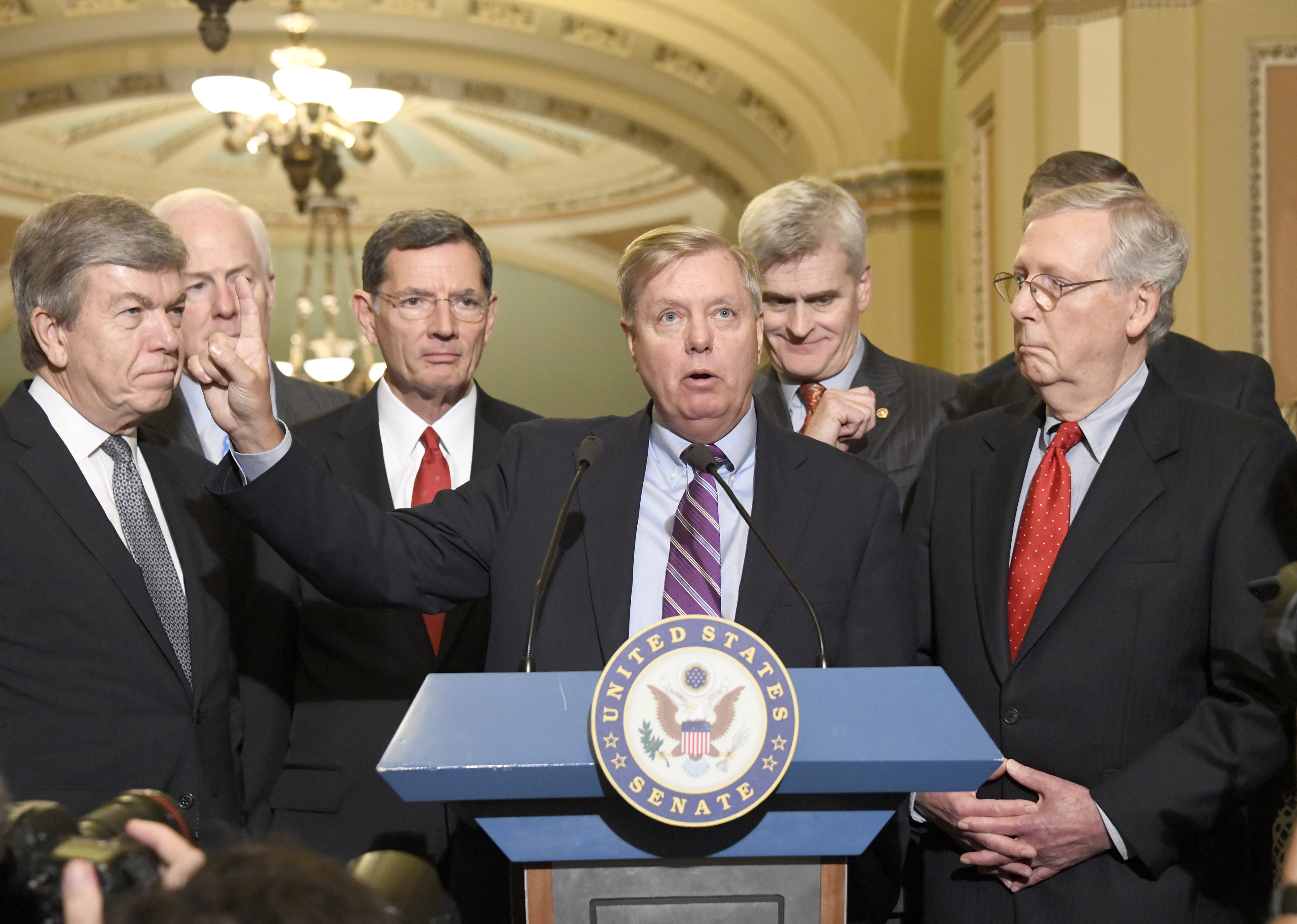
Some Republicans — like senators Marsha Blackburn (R-Tenn.), Josh Hawley (R-Mo.) and Ted Cruz (R-Texas) — are outspoken over problems they see with Big Tech, but others aren’t so sure using antitrust enforcement against Facebook and Google is a good idea.

“Google is bigger now than Standard Oil was when it was broken up,” Cruz said at a Senate Judiciary Committee hearing Tuesday.

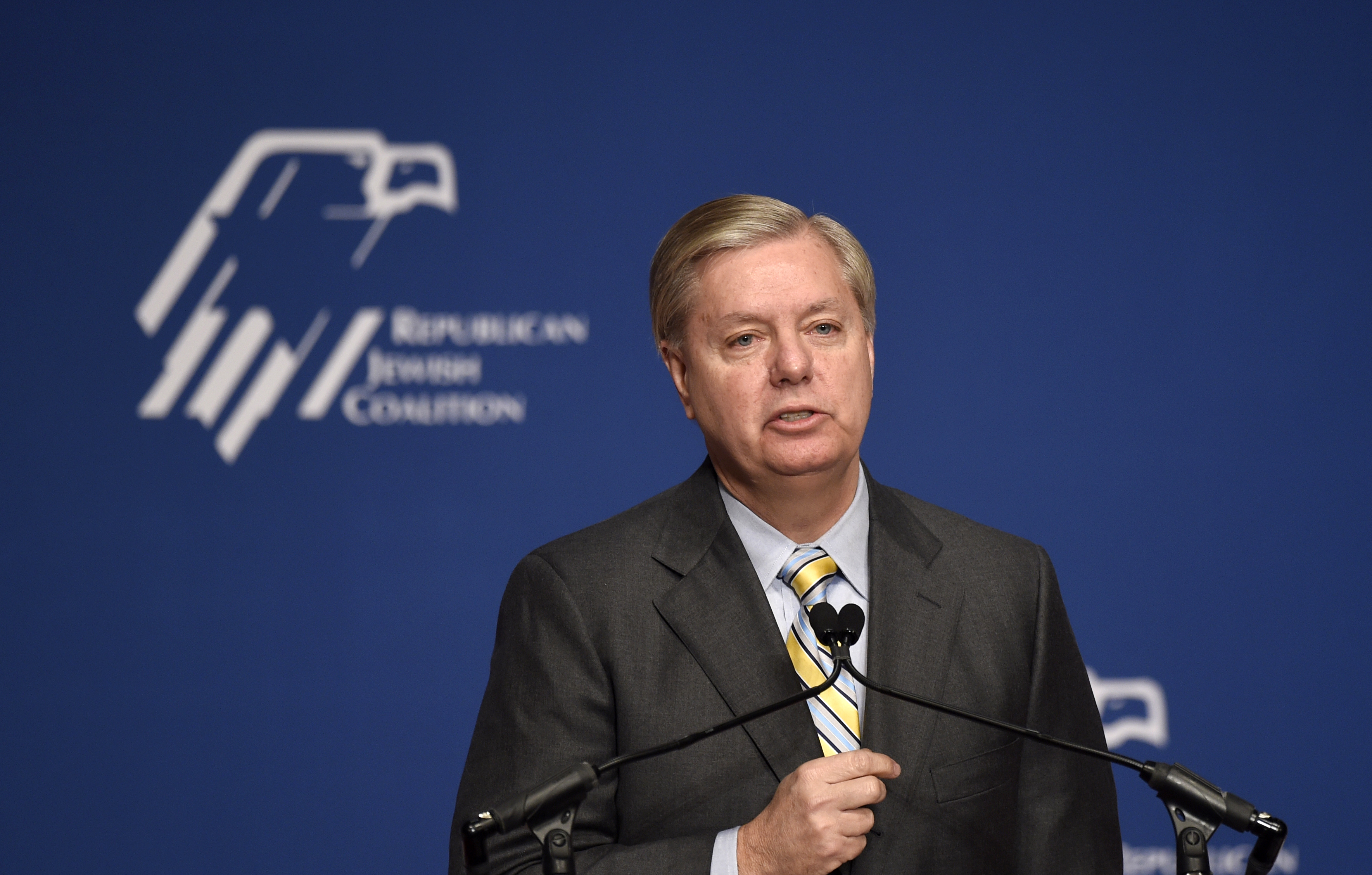
Senators Lindsey Graham (R-S.C.) and Mike Lee (R-Utah), meanwhile, pushed back on proposals to break up Silicon Valley heavyweights.

In response to multiple witnesses describing Big Tech’s anticompetitive practices, Graham said, “Well my job is to make sure we have a viable industry after all this is over.”

Witness Brian O’Kelley, founder and former CEO of AppNexus (an advertising platform bought by AT&T), told Graham and the committee members that Big Tech companies have gotten really good at fooling consumers into thinking they have a choice to opt out of sharing their personal information when using an online service.

“Everyone has become pretty used to clicking ‘yes’ [to Terms and Conditions], and I worry that’s the illusion of choice, but not real choice,” he said.

But Graham didn’t buy O’Kelley’s argument.

“You agree that no choice is bad?” he asked.

“If you gave me the choice of being robbed when I walk out of here today, I’m going to say no,” O’Kelley explained. “Why don’t we make robbery illegal?”

To which Graham replied: “Whatever.”

Lee suggested maybe privacy advocates exaggerate privacy concerns and abuses by arguing that private companies misusing data isn’t as bad as governments misusing data. He also pointed out that companies like Google and Facebook created products that consumers want — so why should regulators break them up?

“In the absence of anticompetitive conduct, is there anything about that that amounts to an antitrust violation?” he asked.

One witness, Freshfields Bruckhaus Deringer LLP Counsel Jan Rybnicek, thinks Big Tech isn’t harming consumers — and that breaking up Big Tech will harm them.

“Not only is this proposal putting the cart before the horse as no clear market failure has yet been identified, but the solution itself is unworkable,” he said. “The proposal may sound simple in theory but it is anything but that in practice. For one, it is not clear exactly what these companies would be broken up into and how they would operate afterwards. …In recent years there have been calls to dramatically reshape the antitrust laws to address what critics perceive to be an under-enforcement problem, including with respect to digital platforms and digital advertising.”

But Yale University’s Professor of Economics Fiona Scott Morton said there is an overwhelming amount of economic research and evidence that build a strong antitrust case against Big Tech companies like Amazon, Google and Facebook.

The problem isn’t how big the tech companies are, she said, but how they’ve suppressed and snuffed out competition in the advertising market to establish dominance and limit consumer choice.

“If there were more competition in the marketplace, we wouldn’t be so concerned about this problem,” she said.

O’Kelley told the committee that over the past 20 years, the biggest tech companies (like Google and Facebook) have used anticompetitive practices and manipulated regulatory policies to widen profit margins.

O’Kelley and Morton both reminded the committee that consumer harms, like privacy abuses, are just a symptom of anticompetitive behavior. Antitrust isn’t about “bigness,” and it isn’t about breaking up companies just because they’ve harmed consumers.

“The biggest loophole right now is advertising-supported companies seem to be free to consumers, so if we only look at the consumer price, you can do any advertising-based merger [or acquisition],” O’Kelley said, “and if you’re Facebook and Google, you can acquire hundreds of companies and see no antitrust enforcement.”

Hawley said it seems more online startups put money towards advertising dollars to work with Google’s and Facebook’s algorithms rather than toward the products they’re developing, which suggests Google and Facebook control the ad market.

According to O’Kelley, Google’s prioritization of its own in-house products and the ad market forced him to sell AppNexus to AT&T.

“They had so many different pieces to compete, that we could not compete,” he said. “Waiting for regulators to catch up, I had to sell my company. We have to figure out how to keep different businesses separate, Google can’t share data across them. YouTube should be open to any advertising platform. There search data should be available to any platform or no platform. I think that’s a very clear way to break them up or force them to act fairly.”

Despite Graham’s and Lee’s skepticism towards antitrust, enough Republicans are on board with antitrust that they might help push an update to antitrust law — like the one introduced by Sen. Amy Klobuchar (D-Minn.).

Sen. Richard Blumenthal (D-Conn.) said he thinks regulators and lawmakers should deal with Big Tech in two ways: first through antitrust enforcement to address the underlying anti-competitive behaviors, and secondly through a federal privacy law to deal with some of the effects of those anticompetitive behaviors.

“It’s not against the law to be big, it’s against the law to use that power in a predatory way, which is what they have done, by buying out innovators, suffocating competition, by controlling the ecosystem,” he said at Tuesday’s hearing. “We need both antitrust enforcement and new privacy protection. We need them both. I think antitrust enforcement has an enormously important effect, I saw it myself in Microsoft litigation that I was instrumental in bringing. I think the same is true here.”
Follow Kate on Twitter

Senators Demand to Know If NSA Is Spying On Their Communications With Foreign Leaders

Members of Congress demanded answers from representatives of the National Security Agency and other intelligence agencies on Capitol Hill Tuesday over whether their communications with foreign governments are intercepted by the intelligence community.

During a hearing on the renewal of an expiring law that lets NSA intercept the communications of foreigners and their exchanges with Americans, senators pressed attorneys and leaders from the intelligence community to answer whether their conversations with foreign governments are surveilled and if so, whether lawmakers have a legal right to know.

“Am I entitled as a United States Senator to know, whether or not the intelligence community monitored a conversation I had with a foreign leader abroad?” South Carolina Republican Senator Lindsey Graham asked.

Graham expressed concern about whether conversations like then-incoming National Security Advisor Michael Flynn had with Russian Ambassador Sergey Kislyak in December about lifting Russian sanctions could be intercepted by intelligence agencies, de-anonymized and used against government employees “politically.” Under Section 702 of the 2008 Foreign Intelligence Surveillance Act (FISA) Amendments Act, conversations like Flynn’s can be intercepted without a warrant when the foreign party is overseas.

The law expires at the end of December. The Senate Judiciary Committee convened Tuesday’s hearing to discuss whether and how to renew the law — something Graham indicated he was not inclined to do without knowing if it can be abused to smear officials like Flynn. Americans incidentally collected under such “upstream” surveillance are anonymized to protect their privacy unless, like in Flynn’s case, investigators under the Obama administration request that their identities be unmasked. Reports of Flynn’s conversations were leaked to the press, he was fired and is now under FBI investigation.

“I don’t really mind if you’re listening,” Graham said. “I do mind if somebody can take that conversation and use it against me politically. Is that possible under the current system?”

Representatives from NSA, the Office of the Director of National Intelligence (ODNI), FBI, and the Justice Department said they’re working with congressional intelligence committees on an answer, but wouldn’t confirm if Graham has the legal right to know.

“It’s my understanding, Senator, we have that request from you and we are processing it,” ODNI Acting General Counsel Bradley Booker said.

“Yeah, like months ago, so am I ever gonna get it in my lifetime?” Graham interjected. “And if you’re not gonna give it to me, tell me why?”

Graham repeated the question to blank looks from the witness table until other members of the committee complained he ran over his time limit for questions. Chairman Chuck Grassley gaveled the committee into silence and insisted Graham would continue until he received an answer.

“I want you to proceed until you get an answer,” Grassley barked. “I mean if there’s anything in this country people are entitled to, it’s at least an answer to their question.”

“I’m violently agreeing with you. So if I were you I’d answer my question, because he’s mad,” Graham quipped to the witness table.

Booker said there was no legal reason the intelligence community couldn’t answer Graham’s question, and that it would continue processing his request.

The exchange highlighted lawmakers’ growing impatience with witnesses from the intelligence community declining to answer questions, and further declining to provide sound legal backing for doing so. Director of National Intelligence Dan Coats and NSA Director Mike Rogers similarly refused to answer during a June hearing whether President Donald Trump had pressured them to make public statements denying his campaign colluded with Russia during the 2016 election.

Attorney General Jeff Sessions declined to answer questions in June about his conversations with Trump concerning the firing of former FBI Director James Comey, despite the fact the administration has not invoked executive privilege.

Congress isn’t the only branch of government expressing displeasure with a lack of intelligence community transparency. Senators on both sides of the aisle pointed to a declassified April opinion from the Foreign Intelligence Surveillance Court (FISC), which approves surveillance requests for the intelligence community in secret, highlighting compliance issues with Section 702 including a failure to disclose those issues.

The typically intel-friendly court that approves the vast majority of surveillance requests chastised the government for an “institutional lack of candor” on a “very serious Fourth Amendment issue.” One such opinion said NSA has engaged in “significant overcollection…including the content of communications of non-target U.S. persons and persons in the U.S.”

As a result, NSA in April suspended a practice known as “about” collection — when NSA sweeps up American emails and text messages exchanged with overseas users that simply mention search terms — like an email address belonging to a target — but isn’t to or from a target. Witnesses at Tuesday’s hearing said they’re working on a technical solution to reengage about collection.

Follow Giuseppe on Twitter

Subscribe for the Latest From InsideSources Every Morning

The Cybersecurity and Surveillance Questions Nobody is Asking 2016 GOPers, Part 1

Republicans are already two debates deep into the 2016 primary field, and though candidates have staked out a number of positions on foreign and domestic policy, many are still elusive on some of the most rapidly growing threats at home and abroad — surveillance and cybersecurity.

Wonks at the national security law and policy forum Just Security agree, that’s why they posted “Six National Security Questions Presidential Candidates Should Have to Answer,” this week — an effort aimed at sparking in-depth debate about national security in 2016, which has thus far “been reduced not only to generalized sound bites, but to preposterous caricatures of complex and multifaceted legal and policy issues,” according to Steve Vladeck, co-editor-in-chief.

So far, Vladeck contends, candidates prefer “to distance themselves from their competitors on more politically sexy topics, like who will defund Planned Parenthood faster, or whose mom will look better on the $10 bill.”

Included in those questions are three focused more narrowly on surveillance and cybersecurity — issues that have grown in relevance since the leak of massive, and in some cases unconstitutional, National Security Agency surveillance programs, and hacks of crucial government data related to cybersecurity, like at the Office of Personnel Management.

As the post points out, many candidates on the crowded GOP field have yet to lay any foundation within their platform on any of those issues, but others have — particularly those with a tech background or in Congress, where new bills on surveillance, data and cyber policy pop up almost daily.

The first question asks candidates to weigh in on the most high profile example of such legislation — the USA Freedom Act, passed earlier this summer to shut down NSA’s collection of virtually all Americans’ landline telephone records, and replace it with a system in which telephone providers store the records and mandate NSA get a court order to search for specific metadata.

RELATED: Senate Passes USA Freedom Act

“In your view, does the USA Freedom Act strike the right balance between the government’s need to engage in terrorism-related foreign intelligence surveillance and privacy and civil liberties considerations? With section 702 set to sunset in December 2017, what conditions, if any, would you seek to place on congressional reauthorization of that authority? As president, what other reforms — either expanding or constraining the government’s surveillance authorities — would you pursue?”

Texas Sen. Ted Cruz was the only candidate to vote for passage of the Freedom Act, and said in June the bill “strikes the right balance between protecting our privacy rights and our national security interests.” South Carolina Sen. Lindsey Graham abstained from voting over concerns the bill threatened the privacy of Americans’ phone records, now “in the hands of the phone company with hundreds of people available to look at the records versus 20 or 30 people in the government.”

“So I think the [metadata] program has been undermined in terms of the Freedom Act, and quite frankly, we’ve told the enemy so much about it, I’m not sure it works anymore,” Graham said after the vote.

Florida Sen. Marco Rubio voted against the bill, saying it would “absolutely” restrain NSA’s ability to track terrorists.

“I’m always sensitive to protecting people’s privacy expectations and privacy rights, but I’m also concerned about eroding our capability to gather actionable intelligence that allows us to prevent attacks and take on our enemies,” Rubio, who sits on the Senate Intelligence Committee, said last year.

Kentucky Sen. Rand Paul voted nay over concerns the bill didn’t go far enough in protecting civil liberties.

“I have fought for several years now to end the illegal spying of the NSA on ordinary Americans,” Paul said before stalling the chamber into shutting down the program at the end of May. “The callous use of general warrants and the disregard for the Bill of Rights must end.”

Paul and New Jersey Gov. Chris Christie spent a portion of the first debate disagreeing over the move, with Christie asserting the NSA needs the program to find probable cause for surveilling terrorist suspects.

“You know, when you’re sitting in a subcommittee just blowing hot air about this, you can say things like that,” Christie said on Fox. “When you’re responsible for protecting the lives of the American people, then what you need to do is to make sure you use the system the way it’s supposed to work,” the governor said, adding “there’s not one step within the law that I wouldn’t take to prevent the killing of one American.”

RELATED: Christie: NSA Can’t Get a Warrant Without Surveilling for Probable Cause First

During her tenure at HP Carly Fiorina helped then-NSA Director Michael Hayden begin building the mass surveillance apparatus that would eventually leak via a cadre of NSA whistleblowers, and served as chairman of the CIA’s advisory board — a role she described as a “privilege.”

In June Fiorina told Fox’s Andrew Napolitano she would “somewhat” dial back NSA’s surveillance powers if elected president, and cited the Freedom Act as a successful example of “dialing back” the signals intelligence agency’s scope and authority.

Fiorina went on to call the phone company storage provision a “bad idea” and the law overall a “hodgepodge that doesn’t satisfy anybody.”

Former Florida Gov. Jeb Bush has expressed unwavering support for the intelligence community, and NSA in particular, since the Snowden leaks in 2013. Ahead of the vote in June, Bush said Paul was “wrong” to claim people’s rights were being violated under Section 215 of the Patriot Act.

“I think we need to reauthorize the Patriot Act, and put aside who’s speaking where,” Bush said in May. “The simple fact is that it’s been an effective tool to keep us free and to keep us from being attacked by Islamic terrorists.”

In a cyber-focused policy proposal dropped last week, Bush said it was time to stop “demonizing” members of the intelligence community charged with protecting U.S. interests online, and in August, said the balance between privacy and security was shifting the “wrong way” as a result of encryption products agencies can’t get around for surveillance.

RELATED: Bush Says He’s Willing to Do What Obama Won’t on Cybersecurity

He later added there was “no evidence” to suggest Americans’ civil liberties had been violated by the Patriot Act.

None of the candidates have staked out specific positions related to Section 702 of the FISA Amendments Act, which allows the government to collect the content (rather than just metadata) of Americans’ online communications when they’re swept up during the surveillance of foreign targets on overseas Internet infrastructure, but one could reasonably expect many of them to fall along lines similar to Section 215.

Follow Giuseppe on Twitter

Here’s What You Won’t Hear at Thursday’s Debate — Because These Candidates Won’t Be Allowed on Stage

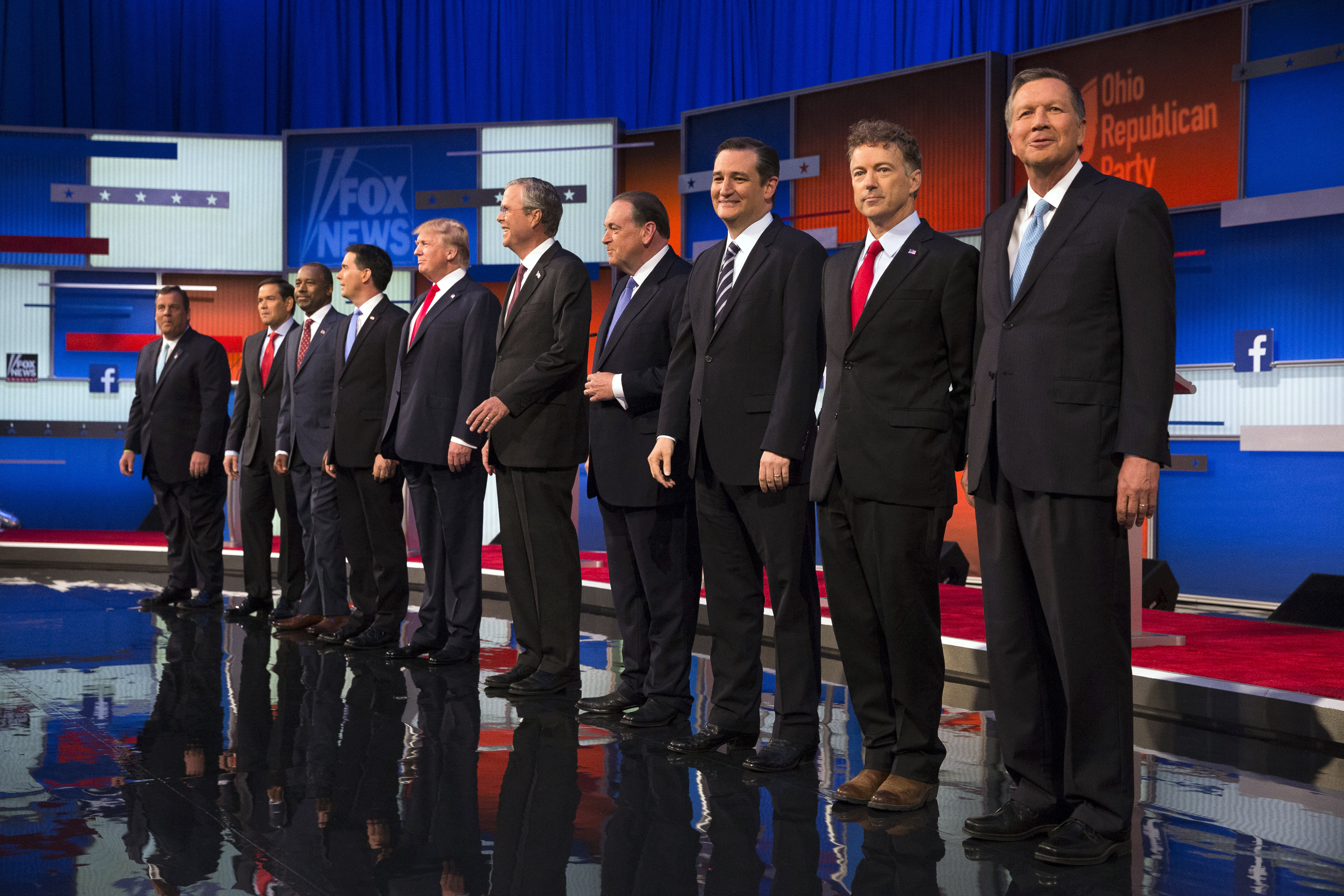
Fox News announced late Tuesday the roster for the first of six Republican presidential primary debates set to narrow the crowded 17-candidate lineup between now and 2016, with polling heavy hitters Donald Trump, Jeb Bush, Scott Walker and others taking the first ten spots on stage Thursday night.

Texas Sen. Ted Cruz, Kentucky Sen. Rand Paul, Florida Sen. Marco Rubio, New Jersey Gov. Chris Christie, Ohio Gov. John Kasich, former Arkansas Gov. Mike Huckabee and retired neurosurgeon Ben Carson round out the rest of Thursday’s roll call.

But that doesn’t mean they’re the only candidates worth hearing from, especially when taking into account the slim margin of error that separates the majority of candidates — most of whom reside in the single digits — in polls used to finalize the lineup.

Louisiana Gov. Bobby Jindal, former Texas Gov. Rick Perry, South Carolina Sen. Lindsey Graham, former Hewlett-Packard CEO Carly Fiorina, former Pennsylvania Sen. Rick Santorum, former New York Gov. George Pataki and former Virginia Gov. Jim Gilmore didn’t make the cut, and will instead were invited to a pre-debate forum Thursday, where they’ll try to cover lost ground by expanding on issues separating them from the frontrunners.

Fiorina in particular has used her outlier status to position herself as the most viable and only female Republican contender capable of taking on Democratic frontrunner Hillary Clinton.

“Here’s the thing, in order to beat Hillary Clinton, or whoever their nominee turns out to be, we have to have a nominee on our side who is going to throw every punch because this is a fight,” Fiorina said during a forum with 13 other Republican candidates Monday. “It’s a fight for the future of this nation, it’s a fight for the character of this nation and, unfortunately we know that sometimes the right questions don’t get asked in a presidential debate.”

Fiorina, who has also painted herself as the most tech-savvy candidate in the 2016 GOP field, followed up her criticism of Clinton’s tenure at the State Department, particularly in regard to the 2012 attack on the U.S. consulate in Benghazi, on MSNBC’s Morning Joe Wednesday.

“Technology is a great tool that can be used to re-engage citizens in the process of the government,” Fiorina said. “It’s also a weapon that is being used against us, as we know, from all the data breaches from the Chinese. And Hillary Clinton, of course, doesn’t understand that technology well enough to know that her server has most assuredly been hacked because Secret Service Agents can’t protect it from being hacked.”

Fiorina isn’t the only underdog to set her sights on Democrats instead of fellow Republicans. Graham took time Monday to highlight his long tenure in Congress as evidence the South Carolina senator knows how to fight the leading Democratic political dynasty.

“As to the Clintons, I’ve been dealing with this crowd for 20 years. I’m fluent in Clinton-speak. You want me to translate that? When Bill says, ‘I didn’t have sex with that woman,’ he did,” Graham said in reference to former President’s Clinton’s affair with ex-White House intern Monica Lewinsky.

“When she says, ‘I’ll tell you about building the pipeline when I get to be president,’ it means she won’t,” Graham said of Hillary Clinton. “And when she tells us, ‘Trust me, you’ve got all the emails that you need,’ we haven’t even scratched the surface. So I understand this crowd, and I can beat them. And if we can’t beat them it doesn’t matter.”

Perry meanwhile has taken up a cause similar to some financially-focused Democratic wonks like Vermont Sen. Bernie Sanders and Massachusetts Sen. Elizabeth Warren, using a speech in New York last week as an opportunity to lay out his ideas for Wall Street reforms aimed at averting another financial crisis.

“If we want to truly end ‘too big to fail,’ we need to restore market forces to banking, where failure is not rewarded or bailed out,” Perry said at the Yale Club in Manhattan last week, adding Americans “were screwed” in the wake of the housing crisis and left feeling “that the game is rigged.”

Perry’s ideas include separating banks’ commercial lending and investment sectors and requiring them to hold more capital against leverages, two factors widely regarded among economists as significant drivers of the crisis, and major tenants of Warren and Sen. John McCain’s proposal to re-institute Glass-Steagall — the legislation implemented after the Great Depression and repealed in 1990s that imposed separation between investment securities and commercial lending.

Jindal became the first Republican in field to take significant action against Planned Parenthood this week over videos alleging the organization is illegally profiting from the sale of fetal tissue. The Louisiana governor cut off Medicaid funding to the women’s health organization Monday, the same day Republicans in Congress tried unsuccessfully to advance a bill doing the same.

“Planned Parenthood does not represent the values of the people of Louisiana and shows a fundamental disrespect for human life,” Jindal said in a statement. “It has become clear that this is not an organization that is worthy of receiving public assistance from the state.”

Jindal also showed up for Monday’s forum, where he called on fellow candidates to unite against Democrats instead of dismantling one another.

“I’m so tired of this president and the left trying to divide us,” Jindal said. “We’re all Americans. We’re not hyphenated Americans.”

The Santorum camp responded to Tuesday’s lineup announcement with an attack on Fox and the Republican National Committee, both of whom “should not be picking winners and losers,” according to the campaign.

“That’s the job of the voters,” Santorum’s campaign communications manager Matt Beynon said in a statement. “The idea that they have left out the runner-up for the 2012 nomination, the former four-term governor of Texas, the governor of Louisiana, the first female Fortune 50 CEO, and the three-term Senator from South Carolina due to polling seven months before a single vote is cast is preposterous.”

Thursday’s 9 p.m. ET debate will be preceded by a 5 p.m. forum featuring the remaining candidates.

Follow Giuseppe on Twitter