inside sources print logo
Get up-to-date news in your inbox

Democrats Who Cheered White House Input on Net Neutrality in 2014 Say It’s Illegal Now
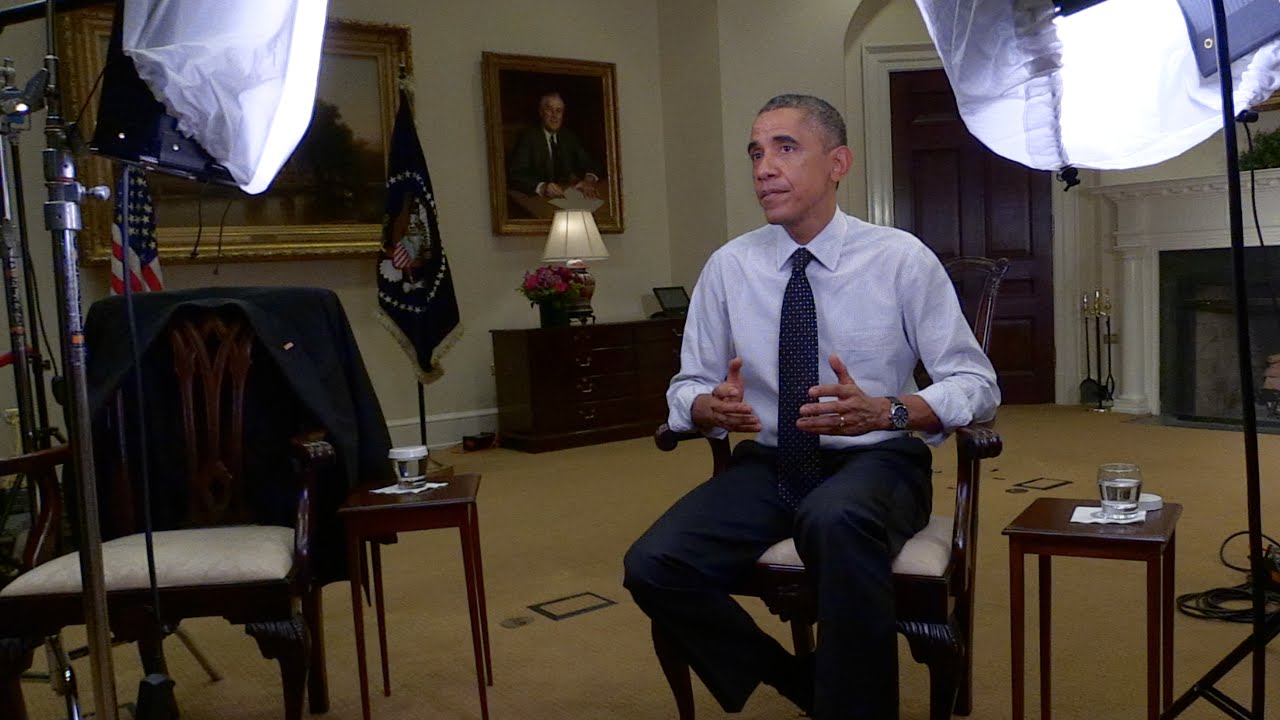
Democrats in Congress are accusing the Trump administration of influencing the Federal Communications Commission to repeal net neutrality rules former President Barack Obama called for in 2014, a move they applauded.

In comments to the independent agency filed Friday, House Democrats accused the White House of “directing the actions of the commission” over its potential plan to repeal net neutrality rules. The regulations restrict internet providers like AT&T and Comcast from blocking, throttling, or prioritizing web traffic.

“It appears that the president directly ordered [FCC] Chairman Pai to repeal net neutrality, potentially during a visit to the Oval Office,” Democrats wrote. “If true, this proposal clearly violates our intention to create an agency independent of the executive.”

The filing lays out a timeline beginning in early March when FCC Chairman Ajit Pai met with President Donald Trump in the Oval Office. Neither the White House nor Pai revealed what they discussed during the meeting, but an FCC press release said “no proceedings pending at the FCC were discussed.”

Democrats go on to mention a March 30 White House press conference when then-press secretary Sean Spicer “specifically said that the president intended to take away Americans’ privacy rights. He then implied that the president intended to follow through with his campaign promises to undermine the legal foundations of net neutrality.”

“Shortly after this announcement, Chairman Pai circulated a draft proposal that tracked precisely with the announcement from the White House,” Democrats’ filing reads.

During the press conference in question, Spicer told reporters the White House endorsed a bill from congressional Republicans to remove privacy rules for internet providers, passed under the Democrat-led FCC during the Obama administration. While those rules were an outgrowth of net neutrality, they were passed under a separate proceeding, and no mention of repealing net neutrality is made during the March 30 press conference.

Pai didn’t release his proposal to scale back net neutrality rules until the end of April. But regardless of Democrats’ purported timeline of events, the White House publicly came out in support of Pai’s plan to review the rules in July, when then-deputy press secretary Sarah Huckabee Sanders said, “[W]e support the FCC chair’s efforts to review and consider rolling back these rules.”

“While the President and his administration are certainly entitled to voice an opinion, it is not permitted to direct the actions of the agency,” Democrats including Pennsylvania Rep. Mike Doyle, the ranking Democrat on the House subcommittee charged with overseeing the FCC, wrote in their comments to the agency. “Unfortunately, this process has been wrought with indications that the president is actually directing the actions of the commission.”

But Doyle didn’t have a problem with the White House directing the FCC in 2014, when Obama in a video and comments filed with the agency, called on the FCC to adopt the strong net neutrality rules it eventually put in place.

“I’m glad to see the president take a strong position in support of the open internet, and join with those of us who have long fought for strong net neutrality rules,” Doyle said in 2014. “I strongly encourage FCC Chairman [Tom] Wheeler and the rest of the commission to adopt the president’s proposal.”

He wasn’t alone. Democrats all the way up to House Minority Leader Nancy Pelosi applauded Obama.

“Today, President Obama affirmed that free and open access to the internet is a bedrock right of the 21st century,” Pelosi said. “The FCC must act swiftly to create clear and enforceable net neutrality standards so the internet can continue to foster freedom and prosperity here in the United States and around the world.”

Almost 40 caucus Democrats in the House and Senate echoed similar sentiments including Massachusetts Sen. Elizabeth Warren and Vermont Sen. Bernie Sanders, and noted in a 2014 joint letter asking the FCC to adopt net neutrality that “President Obama recently joined us in urging this action.”

Not only did Obama publicly call on the agency to take a specific action, that call reportedly forced the FCC to change course after months of work on a very different, lighter-touch regulatory approach. Republicans, concerned Obama had improperly influenced the agency, subpoenaed documents including emails from the FCC that show former FCC Chairman Tom Wheeler ordering his pending plan “paused” after the president’s announcement. He then directed a proposal that mirrored Obama’s comments.

Republicans detailed the order of events, corroborated by press accounts, in a lengthy 2016 report that was widely panned by Democrats. Wheeler later testified to Congress he was not directed by the White House, and that he weighed Obama’s comments like any other.

Pai gave similar testimony to lawmakers following his March meeting in the Oval Office.

“Will the FCC operate independently of the White House?” New Mexico Democrat Sen. Tom Udall asked Pai.

“Absolutely sir,” he replied.

It’s unlikely Pai would’ve needed White House influence to take action on net neutrality. He loudly opposed and voted against the rules when they were passed in 2015 and predicted today’s events if the FCC opted to expand internet regulation on a party-line vote.

“I don’t know whether this plan will be vacated by a court, reversed by Congress, or overturned by a future commission,” Pai said at the time the rules were passed. “But I do believe that its days are numbered.”

Follow Giuseppe on Twitter

Republicans Push to Reduce Burdens of Wall Street Regs

Republicans have been gearing up to vote on a bill this week intended to rein in regulations enacted after the financial crisis.

The Financial CHOICE Act is primarily designed to rollback regulations implemented in response to the financial crisis of 2007. Supporters have argued the regulations have become too burdensome and unfair. The proposal would primarily target the Dodd-Frank Wall Street Reform Act which was enacted in response to the financial crisis.

House Speaker Paul Ryan said Monday that the bill will be considered this week. Ryan and others on the right are now making their case for why the bill is a better approach to Wall Street reform. Democratic lawmakers and other critics, however, warn the bill would jeopardize financial sector oversight.

“While the Dodd-Frank Act may have had good intentions, it overreached and in practice hurt Main Street and consumers while providing more protections for Wall Street,” a press release from the speaker’s office detailed Monday. “It has more rules and regulations than any other Obama-era law. But instead of instilling sensible regulation on the financial industry, it cozied the federal government up with big banks.”

House Majority Whip Steve Scalise tweeted out Monday that conservatives were united behind the need for reform. Rep. Sean Duffy of Wisconsin called Dodd-Frank a total disaster Friday while advocating for the Republican counter bill. Rep. Martha Roby‏ of Alabama argued the bill would end bank bailouts, promote economic growth, and provide regulatory relief.

Michigan Republican Rep. Bill Huizenga stated Thursday the bill would restore opportunities and accountability in the financial sector. House Republican Conference Chair Cathy McMorris Rodgers on Friday argued Dodd-Frank failed to achieve its intended goals, and so a new approach is required.

The financial crisis started in the subprime mortgage market before becoming a global economic disaster. Former President Barack Obama responded to the downturn with new financial regulations. Dodd-Frank became the centerpiece of those reforms when it was passed in 2010.

Dodd-Frank was intended to rein in the big banks, which many feared had grown out of control. Speaker Ryan has previously made the point that the reforms have actually helped the big banks grow. He added Friday that the regulations have also stifled small businesses by making it harder to get loans.

“This bill does a lot to grow the economy, but perhaps most importantly it revives the role community banks can play in getting small businesses and new ideas off the ground,” House Majority Leader Kevin McCarthy said Friday. “Since its inception, Dodd-Frank has strangled community banks with red tape and needless compliance costs.”

Ryan highlighted five main areas the new proposal will better handle the financial industry. The proposal is intended to rein in burdensome regulations, make it easier for small businesses to get loans, end bailouts, and reduce the deficit. Ryan reiterated in a tweet Monday that the bill will make the financial sector fairer for small businesses.

Financial Services Committee Chairman Jeb Hensarling introduced the proposal April 26. The bill was able to successfully navigate through committee but on very partisan lines. An earlier version of the bill was introduced in 2015, but it failed to pass.

“The Financial CHOICE Act offers economic opportunity for all and bank bailouts for none,” Hensarling said Friday.  “We will unleash America’s economic potential and give Main Street job creators desperately needed help so more Americans can find work, have good careers and give their families a better life.”

Democrats and others on the left have been far less optimistic about the bill. They have expressed concern that the proposal would leave the financial sector unchecked. An inadequately regulated financial sector could, therefore, lead to risky decisions similar to what contributed to the financial crisis.

“The Wrong Choice Act is a deeply misguided measure that would bring harm to consumers, investors and our whole economy,” Rep. Maxine Waters, the ranking Democrat on the House Financial Services Committee, said. “The bill is rotten to the core and incredibly divisive. It’s also dead on arrival in the Senate, and has no chance of becoming law.”

Democratic Sen. Elizabeth Warren argued the bill would let big banks, payday lenders, and financial advisors cheat people without accountability. Rep. Dan Kildee of Michigan echoed the point my noting it would take the country back to a time when policies encouraged risky behavior.

The House is scheduled to hold a hearing to discuss the bill Tuesday evening. The bill will move onto the Senate for consideration if passed by the House.

Follow Connor on Twitter

Subscribe for the Latest From InsideSources Every Morning

House Republicans Target Taxpayer Funded Union Work

House Republicans passed a bill Wednesday aimed at providing further oversight into a practice that allows federal workers to do union work instead of their jobs.

Federal employees are allowed to do union tasks instead of their regularly assigned work because of a policy known as official time. The workers retain their title, salary, and benefits while doing the union tasks. Federal reports have found official time usage is often misreported because of oversight problems.

The House bill is aimed at fixing the oversight problem by establishing stricter reporting guidelines. The bill requires the Office of Personnel Management (OPM) to submit an annual report to Congress on the use of official time by federal employees. The bill passed and is now moving onto the Senate for consideration.

The OPM found official time cost taxpayers $162 million in 2014. The Government Accountability Office (GAO) has expressed concerns over how official time hours are calculated. It found in a 2014 report that current methods underestimate how much official time hours are actually being used.

The bill defines official time as any time granted to a federal employee to perform union representational or consultative functions in lieu of their actual responsibilities. The Competitive Enterprise Institute (CEI) has been at the forefront of opposing the practice.

“This policy is well overdue,” CEI labor policy expert Trey Kovacs told InsideSources. “Since 1978, when they first codified official time, essentially a year after that Congress held hearings. They’ve had GAO and IG reports saying how agencies aren’t properly tracking and don’t know how much time federal employees are spending on union business.”

Supporters argue that official time allows federal unions to properly fulfill their legally-mandated duties. Federal agencies and unions negotiate official time provisions in their collective bargaining agreements. Federal officials are only allowed to use official time for certain activities like negotiating or filing grievances.

“These legal provisions have produced an efficient and effective mechanism for the fulfillment of the duty of fair representation,” American Federation of Government Employees President J. David Cox previously said. “Federal employees agree to serve as volunteer employee representatives, and agencies allow them to use a reasonable amount of official time to engage in representational activities while on duty status.”

The CEI has also urged congressional leaders to support a separate bill that would limit official time usage. The Official Time Reform Act prohibits federal employees from conducting political activity on union official time. It also calls for federal employees to lose service credit toward pension and bonuses if they perform union business for 80 percent or more of the hours in a workday.

“Hopefully this passes so they can better evaluate this practice to hopefully eliminate it in the future,” Kovacs said. “At least annually there will be a report that brings attention to this waste in government.”

The Department of Veterans Affairs (VA) has faced backlash in recent years over questionable treatment practices. The agency subjected veterans to incredibly long wait times which left numerous veterans dead. The scandal sparked a national outcry when it first broke in 2014.

The scandal was partially blamed on agency employees using official time. The VA spent an estimated $48 million on official time hours in 2014. The GAO conducted a more recent report Jan. 24 which looked specifically at the VA. It found the agency is still not properly tracking official time hours.

The Senate still has to consider the proposal before it can be sent to President Donald Trump to be signed.

Follow Connor on Twitter

Subscribe for the Latest From InsideSources Every Morning

What Does the GOP Health Care Bill Mean for N.H. Residents in the North Country?

health care; cbo estimates

With the American Health Care Act moving to the U.S. Senate, some New Hampshire Republicans are cheering as the bill makes its way through the legislative process. Yet, for some Trump supporters in the Granite State, especially in the North Country, they might not be too happy with its current version.

Despite still having some concerns about the AHCA, Gov. Chris Sununu said on Thursday that he was glad the bill passed the Republican-led U.S. House of Representatives.

“Failure to reform our health care system is not an option,” he said. “It is critical that we keep this conversation moving forward. My concerns with the AHCA remain firm and I expect that the United States Senate will take those concerns into consideration as they work to improve our nation’s health care system.”

Before the House passed the bill on Thursday afternoon, Sununu and 15 other governors sent a letter to House Speaker Paul Ryan reiterating their support for the Obamacare replacement and asked for states to have more flexibility when it comes to Medicaid.

It’s a similar letter Sununu signed on to earlier this year when the U.S. House tried to repeal and replace the Affordable Care Act the first time. In a Friday interview with the Concord Monitor, he applauded the passage of AHCA, but said he still had issues with the current version.

“I love the idea that Congress is taking action, the president is taking action,” he said. “They’re listening to the American people and they’re moving the ball forward. In it’s current form, I still have a lot of concerns, there’s no doubt. But we are moving it forward, and more important than anything is the need to reform the health care system right now that has failed the American people.”

It’s a different tone than he had in March, when he said the first version of the bill didn’t give states flexibility and would hurt New Hampshire’s expanded Medicaid program, which had bipartisan support.

“The bill that’s been proposed in Congress gives us concerns on a lot of different levels, to be very blunt about it,” Sununu said at a March press conference. “What I’m seeing in Washington gives me a lot of pause for concern to be sure, not just on the Medicaid expansion front, because that would drastically affect New Hampshire, but just on the mandates that are coming out of it.”

As expected, all of New Hampshire’s Democratic congressional delegation is opposed to the GOP-led plan. U.S. Reps. Carol Shea-Porter and Annie Kuster voted against the bill. Critics slammed the bill for potentially making millions lose health care and making it harder for people with some pre-existing conditions to find affordable insurance.

Some Granite State health care providers say more than 100,000 low-income New Hampshire residents could be at risk of losing health coverage under the AHCA plan. New Hampshire Hospital Association President Steve Ahnen said his organization was “deeply disappointed” that the U.S. House passed the health care bill.

“This bill is a significant step backwards on the commitment to ensure coverage and we cannot support it,” he said. “We will continue to work with Congress as this bill moves over to the Senate to ensure that any final legislation to repeal and replace the Affordable Care Act improves our health care system in a thoughtful and responsible way, rather than dismantling coverage for our most vulnerable residents.”

President Donald Trump campaigned aggressively on repealing Obamacare and lowering premiums. However, according to recent analysis, it appears premiums would significantly increase for older Granite Staters.

The Henry J. Kaiser Family Foundation, a nonprofit focused on health care, compared premium costs under the ACA and AHCA. For New Hampshire residents aged 60 or older who make $30,000, they could see their premium costs increase by 173 percent under AHCA. However, the same analysis also says younger residents in New Hampshire would pay less under the AHCA plan.

Many critics point out that the Trump-approved health care bill would negatively impact the people who voted for him. This holds up when using Coos County as an example.

Coos County overwhelmingly voted for Trump over Democrat Hillary Clinton by 52 to 43 percent, respectively. There is a large number of residents who are aged 65 and older in the North Country and the average household income is about $42,000, according to U.S. Census Bureau data. Those residents could fare worse under the AHCA plan than under the ACA.

In a Granite State Poll released Monday by the University of New Hampshire Survey Center, Trump’s approval rating in the state has remained steady at 43 percent. It’s the same rating he had in February. Republicans also still overwhelming approve of the president at 83 percent. Survey results from the North Country showed a statistically insignificant change.

It will be interesting to see over the next few months if residents in the North Country, especially those who voted for Trump, change their support. Nationally, it seems his base is sticking with him so far. Now, the U.S. Senate will now take over the AHCA bill and reports suggest the chamber will overhaul the legislation, making it different from the House version. The health care debate in Washington is far from over, leaving how it will ultimately impact New Hampshire a mystery for now.

Follow Kyle on Twitter.

Sign up for NH Journal’s must-read morning political newsletter.