inside sources print logo
Get up-to-date news in your inbox

Very Few Willing to Stand Behind Controversial FCC Comments About Net Neutrality Repeal
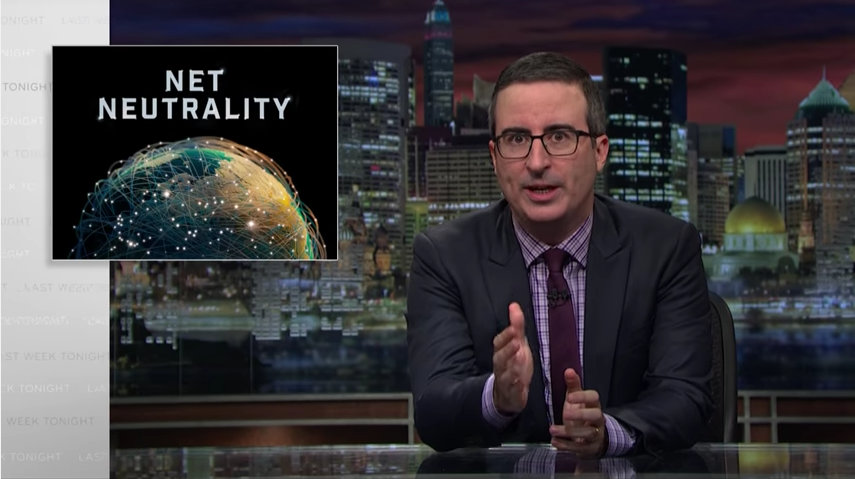
After John Oliver’s latest defense of net neutrality, comments flooded the Federal Communications Commission (FCC) website — over 1.6 million to be exact. While many of those comments were bot accounts, fake comments, and pre-scripted messages, there were some that stood out for their original and colorful language.

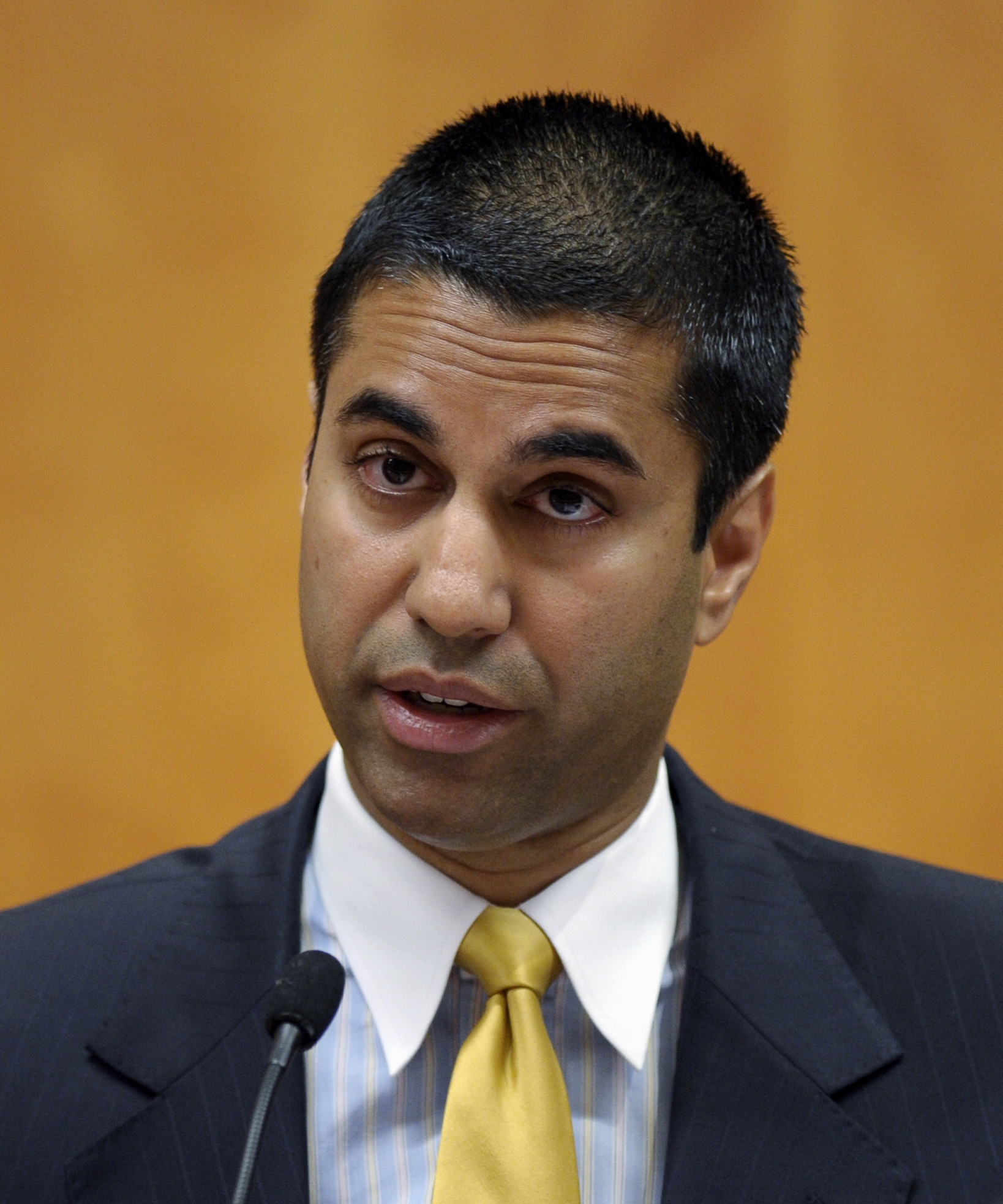
Some comments were death threats against FCC Chairman Ajit Pai, who revealed in April his plan to roll back strong regulations for net neutrality, a policy that expanded the federal government’s control over internet service providers (ISPs). Oliver dedicated his Last Week Tonight show on May 7 to criticizing Pai for his plan.

Other submissions included racist slurs and lots of profanity. Some people used a fake name, including “John Oliver,” “Donald Trump,” and “Jesus Christ” to submit their comments anonymously. Some used their real names — either willingly or unknowingly. The Daily Caller released survey data Wednesday after polling 10,000 of the “pro-net neutrality” respondents. The right-leaning news outlet found that only 44 percent of respondents could recall submitting a comment, while 39 percent denied submitting a comment.

InsideSources reached out to 20 individuals who used obscene language and publicly identified themselves on their FCC public comments about net neutrality. Only 2 people responded to emails, phone calls, Facebook messages, and LinkedIn messages regarding their comments. The people had a variety of jobs including business owners, technology professionals, and students.

For example, there’s a director of business operations for an information tech company, who submitted a comment to the FCC on May 8 that said, “don’t be a tard. keep ISPs in Title 2. And deport the bad arabs.”

There’s also a college student in Oregon who submitted a graphic comment on May 8.

“Fuck this shit take your act and shove it up your ass, you’re never going to get rid of net neutrality you disgusting greedy fucks,” he wrote. “I honestly hope every single greedy politician, stubs their toe tomorrow and trips and face plants. You filthy piles of shit, how dare you and the sad part is I voted republican you guys are disgusting.”

However, InsideSources was able to speak with someone about their use of profanity in their submission.

Meet Gregory Lookerse, an artist and professor, who submitted a comment to the FCC last week.

“If you don’t want to destroy the American economy, if you don’t want the US to remain a third world internet country, if you want America to remain the largest economic power in the world, then keep net neutrality regulations strong,” he said in his comment on Friday.

He wrote a decent amount about how he opposes a reversal of the FCC’s reclassification of ISPs as common carrier public utilities under Title II of the Communications Act. Yet, he ended his comment with this:

“Also that giant Reeses mug is fucking retarded,” he wrote referring to jokes Oliver made about how Pai often carries around a mug with the Reese’s candy logo on it. “You are a grown man leading a major federal organization, take off your diapers and do your job. Also, quit chortling on Verizon’s cock and balls.”

Lookerse admitted to writing the comment, saying how he disagrees with Pai’s actions.

“It’s all this bullshit of putting together a fast lane or it being good for the consumer, but they don’t give any details how,” he told InsideSources. “It seems so clear how they are helping their friends to make money. It’s just a shame.”

But he added that he used the language at the end of his comment for comical humor after watching the Oliver segment.

“I’m not one to use that sort of language in public,” he said. “It’s just so clear that there is quid pro quo or helping one’s friends instead of the entire economy and the American people. It’s a public sphere and if any of my employers did not feel that I conducted myself well enough, that would be a shame. I was thinking it was very lighthearted, especially after watching the John Oliver bit, and it was quite funny and I wrote it as witty and tongue in cheek.”

Opponents of strong net neutrality rules claim the policy is a problem in search of a cause. The light-touch regulations Pai is bringing back into force have been in place since the Clinton administration, and there is a lack of examples of ISPs violating the stronger net neutrality rules instituted in 2015. Quite the opposite, one of net neutrality’s biggest corporate backers, Netflix, was caught throttling traffic from AT&T and Verizon, but as an edge provider, the strong net neutrality rules supported by Oliver don’t prohibit Netflix from throttling, only ISPs.

It can be difficult for those posting public comments to navigate the work-life balance — using free speech as a public citizen, yet also being identified for your profession.

One person, who wished to remain anonymous because of his profession, was happy to speak about his opposition to the repeal of net neutrality, but was concerned after InsideSources asked him about his use of profanity in his comment submission to the FCC.

“It doesn’t really bother me that this is public. I did edit some of my post upon realizing that, but honestly, I’m shocked anyone noticed,” he said. “I think everyone deals with the things they are passionate about in their own way from complaining loudly to mocking to humor to being super fact based to speaking from the heart.”

Yet, he reiterated that he was speaking as a private citizen and not for his employer.

“When I write public comments on the FCC or the New Hampshire State House or when I write op-eds to newspapers or advocate for things that I’m passionate about, I do so as a private citizen, not as a professional,” he said. “I think you can advocate for the things you are passionate about separate from your professional persona as long as you don’t cross the line that forces your employer to decide if you exemplify morals consistent with the mission of your employer. I don’t think that believing Ajit Pai is a self centered empty suit shill for the corporate overlords that want to control the internet is inconsistent with the mission of my employer.”

Despite understanding that his FCC comment about Pai was public, he still didn’t want to risk being identified with his employer.

“I would say that I have a problem with Ajit Pai on a fundamental level because of the way he carries himself,” he said. “He comes across as unaware of the world around him. Ajit seems like the perfect example of a guy who believes a lot of things about how important and smart and funny he is and believes that other people think the same way about him. The [Reese’s] coffee mug is representative of his inability to view the world from the lens of other people. In other words, he lacks empathy. How can a person in charge of making important decisions that affect every person in the country be someone with no empathy? That’s insane.”

Another man, Joe LaRoche of Arlington, Mass., also left a public comment illustrating a sexual act between Pai and President Donald Trump.

“I SUPPORT strong NET NEUTRALITY backed by Title II oversight of ISP’s,” he wrote in his May 8 comment. “I DO NOT APROVE OF THE (BLATANT) CONFLICT OF INTEREST being perpetrated here by EX-VERIZON LACKEY AJIT PAI. By the way, the only thing Ajit’s ridiculously ugly mouth is good for is being Donald Trump’s cock holster.”

LaRoche, the founder of a moving company called Metrosexual Movers just on the outskirts of Boston, took to Facebook to defend his joke, stating he used the term “cock holster” as a reference to late night host Stephen Colbert who used the same term to insinuate the sexual act between Trump and Vladimir Putin. The FCC has since opened an investigation into Colbert’s comments to see if his joke meets the U.S. Supreme Court’s definition of “obscene.”

“Oh, and the bit about Ajit Pai’s mouth being good for nothing other than Trump’s cock holster is because Pai, as Trump’s appointed FCC Chairdouche is going after Stephen Colbert for using that reference about Trump on the air,” LaRoche wrote on Facebook.

Knowing that there are millions of FCC comments and tweets about him, it seems Pai is taking it all in good stride. He responded to several of the offensive and funny tweets in a Jimmy Kimmel-like video.
Follow Kyle on Twitter.

Subscribe for the Latest From InsideSources Every Morning

What Was Missing from John Oliver’s Second Call for Net Neutrality

Comedian John Oliver of HBO’s ‘Last Week Tonight’ gave his show’s second defense of net neutrality Sunday, offering noteworthy attention to an obscure issue — especially since the response from his first episode on the issue three years ago inundated the Federal Communications Commission’s website with enough comments to crash it. In response to the Trump administration’s plan to scale back the rules, Oliver sounded the same clarion call and even made a convenient link to bypass the agency’s new overly complicated comment filing system, but before the internet’s combined activists and trolls storm the servers, they should take note of a few things Oliver left out.

Oliver begins the segment with a few light jabs at the optics of a terrible PR attempt by Verizon to quell the outrage over the new FCC’s plan (“Why wouldn’t you trust the commitment to open access of a man sitting at a table literally blocking an entire hallway?” Oliver quipped) and Ajit Pai, Trump’s pick to lead the agency who, in all fairness, deserved every knock Oliver gave him for using that ridiculously oversized mug.

“For all of Pai’s doofy, ‘Hey I’m just like you guys’ persona, there are some things about him that you should really know,” Oliver said. “He’s a former lawyer for Verizon.”

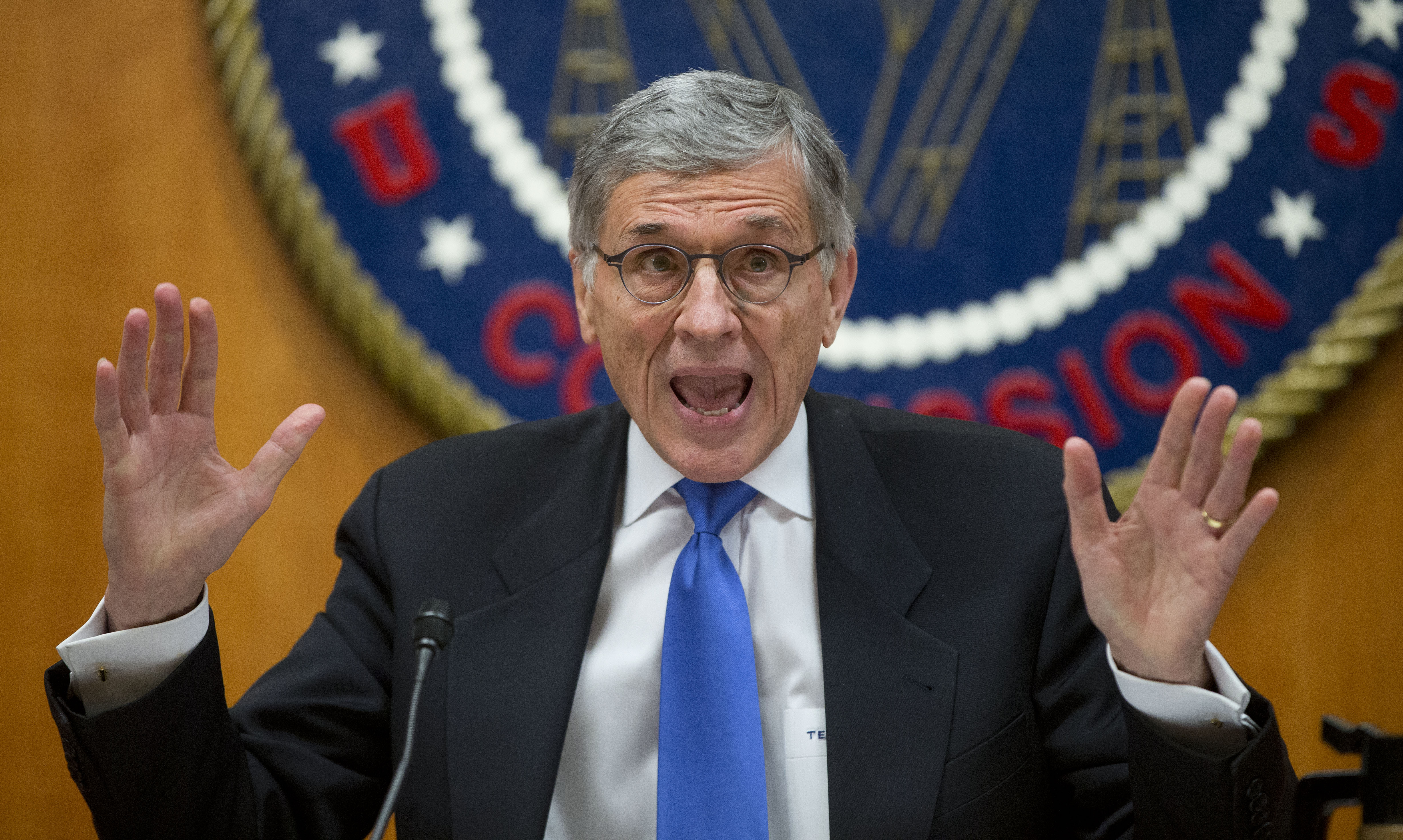
This should sound familiar to anyone who saw Oliver’s first piece on net neutrality, because it’s the same criticism he leveled against former President Obama’s then-FCC Chairman Tom Wheeler, who served as a top lobbyist for the cable industry for two decades.

“Yes, the guy who used to run the cable industry’s lobbying arm is now running the agency tasked with regulating it,” Oliver said in 2014. “That is the equivalent of needing a babysitter and hiring a dingo.”

Wheeler of course went on to create the net neutrality rules Oliver is now defending (he later conceded Wheeler is not a dingo). But describing Wheeler as a dingo for his two decades at the top of two of the industry’s biggest lobbying arms makes Pai’s history at Verizon, where he worked for a few years before spending the majority of his career in public service at the Justice Department, Congress, and FCC, like comparing dingos and chihuahuas.

Next Oliver tackles the argument by Pai and others that there was no evidence to warrant the rules barring internet providers from blocking, throttling, and paid prioritization or reclassifying those providers as public utilities. He plays a clip from a PBS interview with Pai to make his point.

“Let’s just say Comcast created a new TV series, and it just so happened that that competed with a Netflix series very similarly. How is there not an incredible incentive for Comcast to slow Netflix down coming into my house, and make the Comcast video very robust?” William Brangham of Newshour asked Pai in April.

Pai said the situation was hypothetical and the FCC doesn’t see any evidence of that happening (Oliver counters that by recalling wireless carriers blocking Google Wallet in 2013 in favor of their own very poorly named proprietary service). But it’s worth remembering that after championing net neutrality as the issue’s poster child for years, it was last year we found out Netflix was throttling its own traffic to AT&T and Verizon mobile customers.

To examine the other reason it’s just a hypothetical, we have to go to another point brought up by Oliver — that despite claims by Pai and the industry, investment in broadband networks has not gone down since the rules were passed. Oliver cites the words of Verizon CFO Francis Shammo to make his point.

“I mean, to be real clear, this does not influence the way we invest,” Shammo told investors on a call in 2014. “I mean, we’re going to continue to invest in our networks and our platforms, both in wireless and wireline Fios and where we need to. So nothing will influence that.”

That’s the same thing Netflix told its investors in January when rumors began circulating of a net neutrality repeal under Trump.

“Weakening of U.S. net neutrality laws, should that occur, is unlikely to materially affect our domestic margins or service quality because we are now popular enough with consumers to keep our relationships with ISPs stable,” Netflix said in a letter to investors.

Even though capital expenditures are down among the largest internet providers in the U.S. (and Oliver’s correct, it is hard to measure the impact of the rules without a counterfactual, which is exactly what another economist did), Pai wasn’t talking about large incumbents but small and rural internet service providers (ISPs).

“And just this week, 22 small ISPs, each of which has about 1,000 broadband customers or fewer, told the FCC that the Title II Order had ‘affected [their] ability to obtain financing.’ They said it had ‘slowed, if not halted, the development and deployment of innovative new offerings which would benefit our customers.’ And they said Title II hung ‘like a black cloud’ over their businesses,” Pai said when he announced his rollback plan in April.

Two weeks ago, the FCC cleared up another claim Oliver made — that Pai was considering letting ISPs pledge to uphold net neutrality principles in their terms of service.

“You know, the things no human being has ever read, and can change whenever companies want them to,” Oliver said. “That idea would basically make net neutrality as binding as a proposal on the bachelor.”

While ISPs are still subject to lawsuits for violating their terms of service agreement with users, a senior FCC official told reporters in April that’s “not the proposal we are putting forward.”

Oliver’s closing trumpet call to inundate the agency with comments again reportedly crashed the FCC’s website Sunday and left it still moving slow early Monday.

Follow Giuseppe on Twitter

Subscribe for the Latest From InsideSources Every Morning

FCC Chairman: Comedian John Oliver Helped Drive Net Neutrality

Federal Communications Commission Chairman Tom Wheeler took the stage at the 2016 Consumer Electronics Show in Las Vegas Wednesday to discuss big issues before the FCC this year, including the spectrum incentive auction, reflect on victories including net neutrality and thank comedian John Oliver for furthering the debate.

“John Oliver took the ultimate arcane issue, Title II, and made it something that got people interested. And that’s good,” Wheeler said of the host of HBO’s “Last Week Tonight,” who during an episode of the satirical news show discussing net neutrality in 2014 that went viral, likened putting Wheeler — a former telecom industry entrepreneur and lobbyist — in charge of the FCC to “needing a babysitter and hiring a dingo.”

In his annual discussion with Consumer Technology Association President Gary Shapiro, Wheeler gave Oliver credit for more than just prodding him to look up “dingo” in the encyclopedia. The comedian, he said, helped spark interest in an important telecom issue with “real, live consumer impact.”

Comments submitted to the FCC in response to Oliver’s show crashed the FCC website, and the topic of net neutrality was elevated out of policy news cycles into pop culture while the regulatory agency was still hearing public comment.

After the FCC voted to implement Wheeler’s eventual plan in early 2015, bringing broadband and wireless Internet service providers under the umbrella of Title II regulation designed to break up telephone monopolies, Oliver repeated he thinks Wheeler is still “a dingo,” but added he was a “good dingo.”

“You are a dingo,” Oliver said in an episode of “Last Week Tonight” following the divisive agency vote. “It’s just in this one instance, you did not eat the baby. So good dingo. Keep it up.”

Wheeler said he was confident the D.C. Circuit Court of Appeals will uphold net neutrality regulations when it rules on a legal challenge brought by the telecom industry last year. He dismissed challengers’ oral arguments before the court in December alleging the FCC didn’t provide enough notice or hear public comment on the plan, unveiled in February and adopted before the month’s end, according to standard FCC procedure.

The FCC chairman acknowledged the agency’s expanded authority to ensure providers engage in rigorous protection of users’ private data, describing it as a necessity to keep up with the industry’s evolving technology. Wheeler rejected the view of some, including on his own commission, that expanding into the realm of privacy protection was a “power grab” for authority already wielded by the Federal Trade Commission, and added the FCC has decades of precedent for enforcing privacy standards over cable and telephone providers.

Wheeler said the FCC’s new authority to safeguard private data does not extend to content creators like Netflix, YouTube, Amazon, etc., which remain the purview of the Federal Trade Commission — whose chairwoman, Edith Ramirez, followed Wheeler on stage to discuss protecting web users’ private data.

Fellow FCC Commissioner Ajit Pai, a frequent critic of the agency’s Title II expansion over the Internet, described the agency’s privacy standards as ambiguous and overly broad last year, and added he had “no idea” what providers have to do in order to comply with the law.

The agency already settled with AT&T and Cox last year on millions in fines for failing to properly secure user data and giving both employees and third parties improper access to customers’ private information.

On the first high-profile issue before the agency this year — the broadcast spectrum incentive auction — Wheeler said he expects nothing less than an “extravaganza” when the auction kicks off in March.

”You’ll see a spectrum extravaganza,” Wheeler said. “That is going to be transformational.”

Wheeler said the auction represents nothing but “opportunity, opportunity, opportunity” for wireless providers to get “beachfront spectrum” needed to compete for Americans’ growing desire for mobile high-bandwidth services like video streaming.

“This is not bureaucrats sitting around divvying things up,” Wheeler said. “This is the marketplace.”

Pai, representing the Republican opposition on the commission, disagreed in November, and suggested the FCC “postpone the auction” over a host of issues, including testing software designed to repack the spectrum sold by broadcasters for use by wireless carriers.

The commissioner added failing to do so would amount to “courting disaster.”

“I realize that the nuts and bolts of IT implementation isn’t a glamorous issue. But it is critically important,” Pai said. “We have seen what happens when the federal government rushes ahead with flawed IT systems.”

Follow Giuseppe on Twitter