inside sources print logo
Get up-to-date news in your inbox

Pilots Union Hits Back Against Decertification Campaign

A union representing hundreds of pilots at a private airline company hit back Tuesday against a campaign that is seeking to decertify it.

Flexjet and Flight Options are private jet services with several hundred pilots between them. OneSky Flight merged the two companies in 2013. The Teamsters Local 1108 was able to successfully unionize pilots from the two carriers together during a union election a couple of years later.

OneSky Crew Lounge represents unionized pilots who are pushing for the decertification vote. The group filed the application for an election Tuesday. The Teamsters Local 1108 questions the legitimacy of the campaign, arguing that it is being pushed by company management.

“If successful, this effort would mean that all Flexjet/Flight Options pilots would go back to being ‘at-will’ employees, without a contract or even the power to bargain collectively to obtain one,” Local 1108 said in a statement provided to InsideSources. “This would make the Flexjet/Flight Options pilots part of the small minority, since the pilots at Netjets, which is Flexjet/Flight Options’s main competitor, every major carrier and most regional carriers are represented by unions.”

OneSky Crew Lounge argues that it has 50 percent support as required under the Railway Labor Act. The majority of employees first have to sign authorization cards for a “straw man” to represent them. Pilot Frank Woelke, the straw man in the campaign, will act as a rival to the union during the election process.

The Teamsters Local 1108 represents roughly 600 pilots who work for the two private carriers. The union argues that out of the three individuals who filed the decertification petition, only one is a pilot who actually works for one of the companies. The union believes pilots might have been coerced into supporting the election.

“The decertification petition filed by these individuals has been sponsored and encouraged by company management, which has preferred confrontation and litigation against its pilots instead of negotiating with them in good faith,” Local 1108 said. “The line pilots who are the officers of Local 1108 are aware that many of their fellow pilots may have been misled, pressured or coerced by management into signing election authorization cards.”

The Teamsters Local 1108 adds that it is confident the pilots will vote to continue to be represented with the privacy they’ll have during the secret balloting process. OneSky Crew Lounge counters that it is clear that the pilots don’t want union representation anymore given that the majority of them have signed cards.

“Management had absolutely nothing to do with the secret drive,” OneSky Crew Lounge responded in a statement provided to InsideSources. “We received more cards requesting a vote than the IBT Local 1108 had total members in 2017. This isn’t a vote of confidence in the members of the straw man decertification drive or management, it’s a vote of no confidence in the failed IBT 1108 that has disappointed and disenfranchised the very pilots they claim to represent.”

The Teamsters Local 1108 has also challenged the companies for not bargaining in good faith. Management informed the union last year that it would not be implementing an agreement formed during an arbitration process despite pressure from a federal judge to negotiate a contract for the merged carriers.

The National Mediation Board will first have to determine whether the requirements were met before going forward with an election. The pilots will then be allowed to vote on whether they want to scrap their union if a vote is approved. They will have the option to keep the union, write-in an alternative union, or have no union.

“We respect the rights of our Flexjet and Flight Options pilots to have a voice in their future by submitting an application to the National Mediation Board (NMB) to terminate their representation by the Teamsters Local 1108,” Flexjet said in a statement provided to InsideSources. “The simple fact is a majority of our pilots came to this decision independently.”

Flexjet adds that it intends to fully cooperate with federal officials as they review the application and govern the election process. The company also notes that it is confident the process leading to the vote will not interfere with its operations.

The election will ultimately determine whether pilots want to keep their union if it gets approved by federal officials. OneSky Crew Lounge is asking the company to discontinue any and all negotiations with the union until the vote has been held.


Follow Connor on Twitter

Pilots Launch Massive Union Decertification Campaign

Airport Infrastructure

Pilots for a private jet company filed to hold a union decertification election Tuesday in what could potentially be one of the largest successful votes of its kind in history.

OneSky Network provides online aircraft charter and associated services globally by uniting private jet carriers into a network. The company also provides an online flight planning tool that allows users to search options. Now pilots working for the company are petitioning to leave the Teamsters Local 1108.

OneSky Crew Lounge consists of unionized pilots who are pushing the decertification vote. The group filed the application for an election with the National Mediation Board (NMB). Pilot Frank Woelke is representing the disenfranchised pilots by becoming what is known as a “straw man.”

“This application is a step in the right direction returning to a direct relationship with the company,” Woelke said in a statement provided to InsideSources.  “Allow the democratic process to work and then we can move forward positively.”

The Teamsters Local 1108 represents roughly 600 pilots who work for the private airline and its subsidiaries. The decertification effort won’t be the largest straw man campaign, but if they are successful it could become one the largest campaigns of its kind to win – if not the largest.

OneSky Crew Lounge claims to have 50 percent support as required under the Railway Labor Act. The majority of employees first have to sign authorization cards for a “straw man” to represent them. The straw man acts as a rival to the union during the election process.

The NMB will first have to determine whether the requirements were met before going forward with an election. The pilots will then be allowed to vote on whether they want to scrap their union if a vote is approved. They will have the option to keep the union, write-in an alternative union, or have no union.

OneSky Flight is the parent company of private airline services Flexjet and Flight Options. The Teamsters won the right to represent the pilots from those airlines together during a union election in December 2015. OneSky Flight merged the two companies under itself around 2013.

The Teamsters Local 1108 has challenged the company and its subsidiaries for not bargaining in good faith. A federal judge ruled early last year that the company needs to negotiate in good faith for a joint collective bargaining agreement covering the merged carriers. Senior management informed the union months later that it would not implement an agreement formed during an arbitration process.

OneSky Crew Lounge argues that it is clear that the pilots don’t want union representation anymore given that the majority of them have signed cards in support of the decertification election. The group is asking the company to discontinue any and all negotiations with the union until the election has been held.

Follow Connor on Twitter

Teamsters Leader Condemns Inaction in Helping Dreamers

Teamsters President Jim Hoffa had strong words for lawmakers Friday after they failed to pass legislation that would have help immigrants who were brought into the country illegally as children.

Deferred Action for Childhood Arrivals (DACA) protects certain immigrants who were brought into the country illegally as children. Congress was unable to pass legislation that would have protected these immigrants, known as Dreamers, from the looming threat of deportation.

Former President Barack Obama implemented the initiative through executive action in 2012. President Donald Trump began phasing out the initiative in the later months of last year – leaving lawmakers until March 5 to pass something. Congress tried and failed to do just that Thursday.

“The issue of immigration is not always easy and undoubtedly will be closely parsed by those in Congress,” Hoffa said in a statement. “However, immigrant kids in good standing should not be penalized because elected officials refuse to get their act together. They deserve an opportunity to continue to live their lives with their loved ones in their adopted home country.”

The Senate considered a few ideas that would have implemented a pathway to citizenship for almost two million Dreamers. The president actively opposed the main bipartisan proposal – while supporting another that would have also curtailed legal immigration. In the end, both bills failed to receive enough support.

“This nation is the only home these children have ever known,” Hoffa said. “Yet too many lawmakers, most of whom repeatedly make a point of saying they stand up for families, are turning their backs on them in their time of need. That’s not right and is plain un-American.”

Trump has promised to better enforce immigration law and pursue policies that protect domestic workers from unfair foreign competition. The administration has said it will prioritize criminal aliens, but critics have expressed concern over mass deportation – which would include illegal immigrants that are otherwise acting lawfully.

“For centuries, this country has served as a beacon of hope to millions across the globe who sought opportunity and refuge,” Hoffa said. “We mustn’t allow that light to be snuffed out by callous members of Congress seeking to politicize the fate of those who had no choice in coming to this country. These children are our children now.”

The Teamsters union isn’t alone in its opposition to the program potentially being eliminated. The AFL-CIO claimed that the initiative and the temporary protected status program are essential in fighting for better wages and working conditions. Unite Here has also supported efforts to protect Dreamers – while being at the forefront of helping another immigrant group that has lived in the United States legally for years after being displaced from its home country.

The Pew Research Center estimated that up to 1.7 million people might be eligible for DACA when it was first started. Republicans and other critics denounced it as a severe overreach of executive powers. Obama also attempted to expand the program to millions of more recipients later on but the move was rejected by the courts.

Follow Connor on Twitter

Teamsters Leader On Helping the Hurricane Relief Effort

The country has been battered with a string of hurricanes that have left southern states and territories in ruin. But from the destruction arose individuals and groups determined to help those in need. Labor unions were one such group that rallied together to do what they could to help the massive effort.

The Teamsters were able to put their resources and connections together to collect supplies and transport them to areas in need. Teamsters Local 988, in Southern Texas, established a relief center in a warehouse where they coordinated with groups from across the country in response to Hurricane Harvey hitting the state.

“This isn’t our first disaster relief here in the Houston area,” Teamsters Local 988 President Robert Mele told InsideSources. “We had gone through this with Hurricane Ike. But it was kind of more in a specific area, not throughout the whole region that we represent.”

Mele also serves as the president of the Teamsters Joint Council 58 which oversees local chapters in Southern Texas. Hurricane Harvey impacted nearly all of his members across the region. He adds it was also different compared to previous hurricanes because so much of the destruction was brought on by heavy rain and flooding.

“Once the storm had cleared, it’s common that other mobile units will call and offer assistance, and it was the same thing that happened this time except on a much grander scale,” Mele said. “Literally all four corners of the United States were coming in trying to help, not just our local, but the citizens of Houston and the surrounding areas.”

Mele and his members started to prepare when they heard the hurricane was approaching. Once the hurricane had hit, the first step was securing a space where they could bring in supplies for those in need. R2 Corporation provided them a large warehouse which the union was able to setup in once the storm had passed.

“When we figured out these hurricanes were coming it, it was pretty scary because I’m thinking, how are we going to handle this,” Mele said. “We started searching for somebody who would either lease us space or donate space for a warehouse. We happened to walk into a place that had no union exposure at all. Knew nothing about unions.”

R2 Corporation was in the midst of expanding into Houston from Austin when the hurricane came. The company had already donated the space to first responders so they could safely keep their supplies as they awaited the hurricane. Once the hurricane had passed, the company then turned the warehouse over to the union.

“It was really a blessing that this company didn’t have a preconceived notion of what unions were,” Mele said. “We just sat down and talked about it, and we both were on the same page. We wanted to do something to help, not only our members, but the community, and we got this warehouse space given to us.”

The Teamsters were able to start collecting supplies once they had the space. Trucks from across the country arrived from other local chapters and various groups hoping to help. R2 Corp. management had planned on moving into the space around Labor Day but instead kept all the new equipment in Austin to keep the facility clear.

“We had just opened up a new facility in the Houston area, and we did not get flooded,” R2 Corp. President Ed Garcia told InsideSources. “The Teamsters were able to bring materials in, store them, and distribute them out to the needy in Houston.”

R2 Corp. specializes in repair, asset recovery, and environmentally friendly recycling solutions. The new facility covered 81,000 square feet between its warehouse and processing center. The first responders originally used the facility to sleep, store their boats, vehicles, and the other supplies as they awaited the storm.

“The opportunity was there and we were able to open it up,” Garcia said. “The Teamsters were great to work with. I’m on the management side and it was great to see them, the outpouring of what they did for the community and their fellow brothers.”

The Teamsters then started focusing on getting supplies to their members and the community. The warehouse gave them the space to unload supplies, organize them, and then distribute them. The operation needed to be efficient and fast because many people were in a dangerous situation.

“We had to get these trucks unloaded,” Mele said. “Then we had to have the space to sort through and separate all the stuff that people needed so we could get it out. We did not want to be a warehouse. We wanted to be there for disaster relief. So when things came in, we wanted to sort it, we wanted to get it to our members, but also to the community, what they needed.”

Mele recalls how they couldn’t even get into their own building when the hurricane first cleared because of the destruction. But they were able to start moving into the warehouse within the first couple days with the first responders leaving so that they could help in the rescue effort.

The George R. Brown Convention Center was setup as a nearby emergency shelter for Houston area residents. The convention center is large enough to shelter thousands of people. The Teamsters started coordinating with officials at the shelter early on when they were having trouble uploading trucks.

“We would receive calls from people working at the George R. Brown, from a state senator, or the mayor’s office asking us for assistance,” Mele said. “We got a desperate call from the mayor’s office asking for forklift drivers. They said at the George R. Brown they had opened a shelter, and they have all these trucks showing up that they can’t get unloaded.”

Mele didn’t have forklifts around but knew people who did. He quickly turned to social media knowing that the convention center needed help as quickly as possible. The plan worked as nearby people who had access to forklifts quickly started showing up.

“I put it on Facebook, believe it or not, that they are in desperate need,” Mele said. “In about 30 minutes later we got a call saying ‘please stop sending forklift drivers because they were all showing up.’ And then the next day, maybe a day and a half later, I get a text that says ‘Robert, these guys on these forklifts, they’re amazing. The way they can get this stuff off and separated, it would take us days to do what we do in just a few minutes.'”

The Teamsters hit the ground running and were soon distributing supplies to members and other local residents. The union also coordinated with other groups to get them supplies and necessary equipment. At one point the union began sending trucks directly to the convention center.

“We had some trucks come in from Boston, and we had a call from the mayor’s office that they needed water, supplies, and diapers for the George R. Brown,” Mele said. “Those trucks were sent to the George R. Brown so we could help the community.”

The Teamsters were able to setup and hit the ground running quickly despite earlier concerns. But some groups trying to help weren’t as lucky. They noticed what the union was able to do, and turned to them for assistance so they could start helping people too.

“Some of these other locations that were trying to setup the same type of operations were then coming to us saying. ‘how do we do this because we have very good intentions, we have a lot of stuff coming in,’ but they didn’t really know what they were getting into,” Mele said.

Mele recalls how one relief center was setup in a warehouse that dated back to somewhere around the 1940s. The building had clearly not been used for many years. It was dirty and had not been updated to include necessities like a loading dock.

“It was filthy in front, first of all, the second thing is they didn’t even have a dock,” Mele said. “So they were backing up semi-trucks, and they were unloading from the truck to the ground. You can’t do it like that. If you do it like that you’ll be here for years just trying to get it all separated.”

Mele notes that different areas across the region are recovering at a different pace. Some areas are still in desperate need. But he notes they are generally now in the phase of helping their members start to rebuild their homes. They still have a lot of work to do, but are moving forward.

The Teamsters Joint Council 58 and its local affiliates weren’t the only unions trying to help people in need. Harvey was followed by hurricanes Irma and Maria which caused immense damage across Florida, Puerto Rico, and other areas around the Gulf of Mexico.

The Texas AFL-CIO coordinated with other unions and local affiliates to help as well. The union established a worker relief fund to directly support union members, community allies, their families, and neighbors. It has also listed volunteer opportunities so members who can help are able to.

The Communications Workers of America held a fundraiser to raise money for families impacted by the storm. The American Postal Workers Union, the International Longshoremen’s Association, and others have also raised money to help people in need.

Follow Connor on Twitter

NH Prison Guard Union Wants Contract to Address Staffing Crisis

Ex-Offenders

A union representing prison guards is urging state officials to renew a labor contract as part of an ongoing effort to address a severe staffing shortage at state prisons.

Teamsters Local 633 represents more than 380 state correctional officers. The union launched the “Safe Prisons, Safe New Hampshire” campaign this past June. The campaign is aimed at raising public awareness of the staffing shortage faced by the state corrections system.

The campaign on social media has included near-daily tweets and Facebook posts tagging Governor Chris Sununu. The union is also encouraging others to contact his office. The online campaign has found support from opponents of Sununu, including state Democratic Party chairman Ray Buckley and Democratic Rep. Sherry Frost.

Contract talks between the state government and Local 633 originally began in fall of 2016 but came to a halt in March. Since July 1, state correctional officers have been working without a contract. Mediation between the state government and Local 633’s negotiating team now features a ‘fact finder’ to ensure a fair contract is reached.

In a statement provided to NH Journal, Jeffrey Padellaro, secretary-treasurer of Teamsters Local 633, said correctional officers are “routinely forced to work three to four 16-hour shifts per week.” According to Padellaro, officers have put in nearly 12,000 overtime work hours in 2017.

“We are seeking a contract that addresses the prison staffing crisis at New Hampshire state prisons,” Padellaro said. “Dangerously low staffing levels mean our correction officers are working excessive amounts of forced overtime – which is creating safety concerns and putting enormous strain on officers.”

He added this situation affects not only the correctional officers but the prisoners, as well, who have seen their visits and activities cut short due to coverage issues. These shortage issues come as Department of Corrections Commissioner William Wrenn announced that he is stepping down in November.

Padellaro said the Concord Prison for Men has 187 uniformed staff, nearly 100 officers less than it would take to “maintain critical operations” and 200 officers less than “to operate at a normal activity level.” Padellaro added that the state has lost six officers over the past two years despite the state’s recruitment efforts.

Local 633 said the absence of a contract has also delayed the planned opening of the New Hampshire Correctional Facility for Women in Concord. Padellaro said the facility is near completion and ready for occupancy but will require 74 officers to staff while the state legislature has only authorized funds to hire for 55 officers.

One factor to the hiring shortage is the starting salaries for state correctional officers, which are $10,000 less than the average starting pay at local police departments. According to the Bureau of Labor Statistics, the median income for correctional officers in New Hampshire is $42,820. Officers at Federal Correction Institute, Berlin – New Hampshire’s lone federal prison – and those working in correctional facilities in Massachusetts make almost $22,000 more than New Hampshire state officers.

“It’s an investment worth making,” Padellaro said. “Investing in hard-working corrections officers is a far better use of taxpayer dollars – and is more cost effective – than paying for excessive forced overtime and high turnover as a result of officers leaving for better positions.”

In addition to the staffing crisis, overcrowding has remained a problem for the state prison system. There are five state prison facilities in New Hampshire. According to the New Hampshire Department of Corrections, last year the state prison population was 2,631, nearly double the amount since 1990.

“This is a prison safety crisis, and a prison safety crisis is a public safety concern,” Padellaro said.

Follow Jack on Twitter

Unions Show Healthcare Bill Opposition in Tidal Wave of Tweets

Labor unions took their opposition to the Senate healthcare bill online Wednesday where they are encouraging workers to fight back against the legislation.

Republican lawmakers have worked to fulfill a major promise to voters by replacing the Affordable Care Act. Senate leadership introduced a replacement last week amid mixed reviews. Labor unions are now ramping up their opposition online in the wake of a new analysis from the Congressional Budget Office (CBO).

Some unions even started calling their onslaught of opposition tweets a “twitter storm.” Labor unions argue that the bill would be devastating for working families and low-income individuals. Some even called it a life or death situation. They encouraged their followers to join in to make their opposition to the bill known.

“Senate Republicans want to take Medicaid from 15 million ppl,” American Federation of State, County and Municipal Employees (AFSCME) tweeted. “That’s a bad deal for working families.”

The CBO analysis added fuel to the opposition. The report states the bill would cause 22 million people to lose insurance by 2026. It also found the bill would reduce federal deficits by $321 billion over the coming decade.

“Healthcare is a human right,” the AFL-CIO tweeted. The unions then urged supporters not to let Senate Republicans, “take it away from 22M hardworking Americans. Call your senator now!”

The AFL-CIO and other unions expressed particular concern over proposed cuts to Medicaid. AFL-CIO President Richard Trumka added that the bill is a vicious assault on health care security. AFL-CIO local chapters have already started to hold protests against the bill. The American Federation of Teachers held its own protest in Washington D.C.

“The Senate GOP healthcare bill is a shameful bill that leaves 22 million people without insurance,” the Service Employees International Union (SEIU) tweeted.

Local unions contributed to the tidal wave of negative tweets even more so than the national affiliates. Some smaller unions even targeted their local representatives directly. SEIU local 32BJ claimed the bill would destroy healthcare to give millionaires tax breaks.

The Teamsters union encouraged its followers to keep up the fight after a temporary victory Wednesday. Senate leadership decided to delay the vote amid growing opposition from within the party. The union encouraged those opposed to keep calling their senators.

SEIU President Mary Kay Henry‏ added that healthcare bill would result in an immediate decline in health-sector employment in 17 states. 1199SEIU United Healthcare Workers East announced plans on Facebook to hold a candlelight vigil Wednesday night in opposition to the bill.

Follow Connor on Twitter

Subscribe for the Latest From InsideSources Every Morning

Trump Advances Keystone Pipeline Amid Union Support

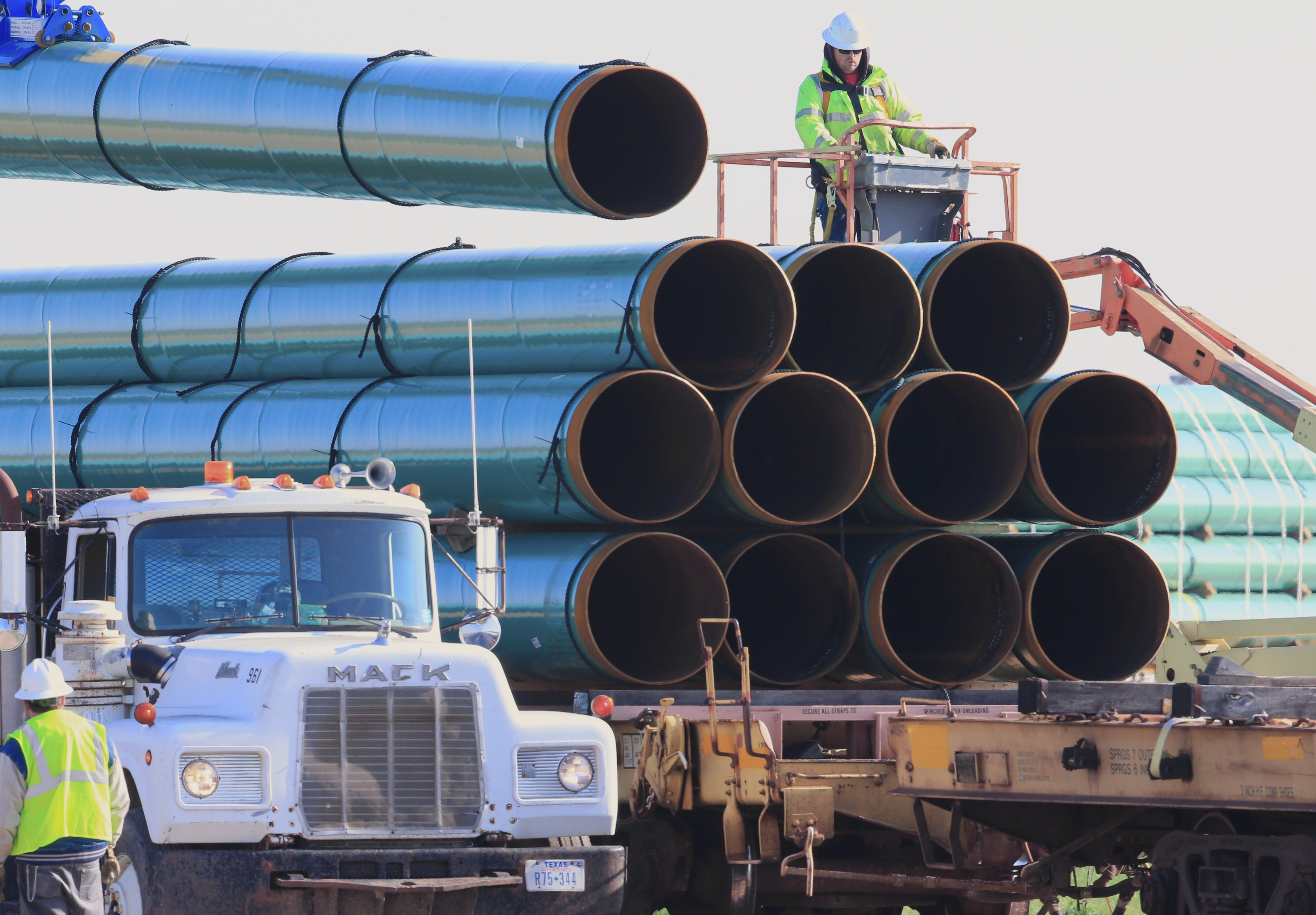
President Donald Trump is receiving some union support for announcing Friday plans to grant a permit that will allow construction of the Keystone Pipeline.

The Keystone XL Pipeline was abandoned by the last administration amid growing political pressure from the left. Labor unions split with progressive allies on the issue. Union workers in the construction and energy sectors stand to see gains from the pipeline.

The president called the pipeline one of many infrastructure projects under his administration, and he noted the safety of pipelines versus other means of transporting oil. The pipeline is expected to create thousands of jobs and cost $8 billion.

The Laborers’ International Union of North America (LIUNA) is hopeful construction will begin soon. “LIUNA welcomes the news that the Keystone Pipeline has at last won a presidential permit – after years of politically motivated delays,” LIUNA General President Terry O’Sullivan said in a statement provided to InsideSources. “I am hopeful that the remaining review by the Nebraska Public Service Commission will be completed swiftly so that the thousands of hard-working men and women of the building trades who have testified, rallied and supported this project.”

Former President Barack Obama had a strong relationship with unions throughout his administration. Environmental policy and trade were some of the few areas where he received backlash from organized labor. The State Department found the project could create 3,900 construction jobs if completed within one year.

The Teamsters has also been a vocal supporter of the pipeline. “This project will put thousands of Americans, including Teamsters, to work in good union jobs that will support working families,” Teamsters General President Jim Hoffa said in a statement.

The split among unions primarily stems from whether their membership will be negatively impacted. The Teamsters represent more than 1.4 million workers from a range of blue collar industries. LIUNA has over a half-million members, primarily in the energy and construction industries.

The Dakota Access Pipeline has also attracted some union support despite general opposition on the left. The Teamsters denounced the last administration for halting pipeline construction last year. LIUNA added that the administration was appeasing environmental extremists.

Environmentalists have noted concern pipelines pose a threat to the surrounding environment. A leak or spill could cause damage to nearby communities, as well. The Fraser Institute, a conservative research group, found that pipelines are actually a safer method for transporting oil.

Not every union deviates from the bunch when it comes to environmental and energy policies. The National Nurses United praised the last administration when it rejected the Keystone pipeline. The Service Employees International Union (SEIU) later applauded the decision to stop construction on the Dakota Access Pipeline.

Trump has built his presidency on the promise that he would help domestic workers. The president argued during his announcement that the government has failed workers and companies alike. He added the pipeline will begin making things right again.

Follow Connor on Twitter

Subscribe for the Latest From InsideSources Every Morning

Lawsuit Against Mandatory Union Dues Eyes Supreme Court

Marbury v. Madison

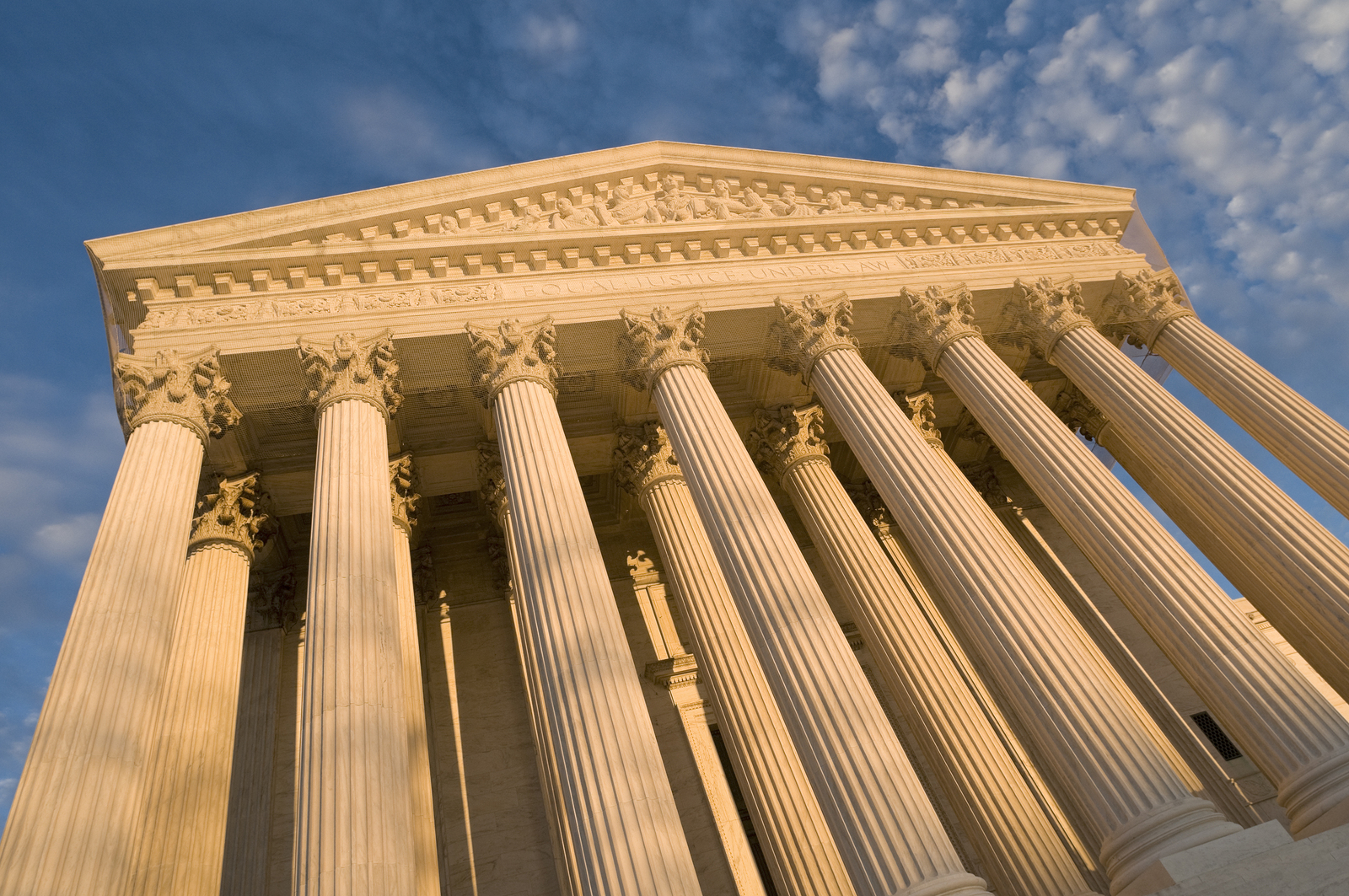
The U.S. Supreme Court could soon hear a case aimed at ending mandatory union dues for all public-sector workers across the country.

The lawsuit argues that mandatory union fees in the public sector are a violation of the First Amendment. Lead plaintiff Mark Janus filed the lawsuit alongside two other Illinois state workers. The nation’s highest court could be next to hear the case currently pending before the Seventh Circuit Court of Appeals.

“Basically this is nothing more than forced political speech,” lead attorney Bill Messenger told InsideSources. “If the First Amendment should prohibit anything, it should prohibit the government from forcing someone to support the speech of another about matters of public policy.”

The lawsuit is directed at the American Federation of State, County and Municipal Employees (AFSCME) Council 31 and the Teamsters Local 916 with the ultimate goal of ending mandatory union fees for all public sector workers. Once a union organizes a workplace they can require payments from workers in states that don’t have right-to-work protections.

A worker can petition to leave their workplace union, in which case they are only required to pay a representation fee. That fee can only cover the cost of representing the workers and not other union activities like politics. The lawsuit argues public sector collective bargaining and political lobbying are indistinguishable.

“What you see in the public sector is that states are forcing their employees to support an organization that lobbies the state over certain matters of public policy,” Messenger said. “We see it as one of the largest regimes of compulsory speech in the country, and that it should be something prohibited under the First Amendment.”

The National Right to Work Legal Defense Foundation (NRTW) has been assisting the state workers in partnership with the Liberty Justice Center (LJC). Messenger is a staff attorney with NRTW. They involved themselves early on when the case hit a few roadblocks that threatened its success.

“This case started after Illinois Gov. Bruce Rauner issued an executive order directing the state to stop taking union fees from state workers who were not union members,” LJC attorney Jacob Huebert told InsideSources. “At the same time, he filed a lawsuit in federal court asking the courts to declare that was correct.”

Illinois Attorney General Lisa Madigan and some state unions moved in to counter the lawsuit. They argued the governor didn’t have standing to bring the lawsuit because he didn’t have to pay union dues or fees. A person with legal standing has a right to bring a lawsuit because they were harmed by a law or action.

“When we saw that situation arise, we wanted to make sure the case went forward so we intervened on behalf of some Illinois state employees who had been forced to pay union fees against their will,” Huebert said. “Shortly afterward the federal judge in that case ruled the governor did not have standing to proceed with the case, but our clients did.”

Labor unions have several arguments for why mandatory union dues are fair. The most widely used is that optional dues encourage workers to free-ride. Once a union gets voted in as an exclusive representative, it must represent all workers in that workplace.

“These mandatory fees prevent the problem of free-riders, employees who enjoy raises and other benefits provided by the union without paying for them, leaving their co-workers to pick up the tab,” AFSCME Council 5 wrote last year. “These are known as ‘fair-share’ fees.”

The free-ride argument is used against both lawsuits challenging mandatory union payments and right-to-work laws. Messenger notes the argument isn’t sound because exclusive representation in its own right is a huge benefit to unions. He also argues the unions are essentially forcing their services on workers whether they want it or not.

“These individuals aren’t free-riders, they’re forced riders,” Messenger said. “It’s the unions that impose their representation on these individuals, whether they like it or not, and then lobby the government for certain things whether these individuals want it or not. And generally speaking you can’t force a service on someone, and then make them pay for it if they don’t want it. And that’s what you see here.”

The Seventh Circuit Court of Appeals is scheduled to hear the case March 1. Either side can petition the Supreme Court to pick up the case once the decision is made. Both sides at the moment are hoping the appeals court affirms an earlier district court decision by dismissing the lawsuit, but for vastly different reasons.

“Technically at this point, all parties agree that the district court’s dismissal of the complaint should be affirmed,” Messenger said. “It’s just afterward we plan on petitioning the Supreme Court to take the case.  I imagine the state and unions will oppose that.”

The lawsuit seeks to overturn a previous Supreme Court case, Abood v. Detroit Board of Education. The case affirmed mandatory dues when it was ruled in 1977, and established the exception for political spending.

“Abood drew this line, a dichotomy, between collective bargaining with the government on the one hand and political and lobbying activities on the other hand,” Messenger said. “That doesn’t make a whole lot of sense because there’s no difference. At the end of the day, collective bargaining with government is indistinguishable from lobbying the government.”

The Supreme Court might pick up the case as early as this year if the case is appealed and judges choose to intervene. Nevertheless, it faces obstacles. The court is hesitant to overturn past cases.

“If the court takes it up that would be a sign they’re open to overturning Abood,” Huebert said. “There wouldn’t be much need for a case saying, yes, Abood is still good law and nothing else. And the four conservative justices already there now have indicated pretty clearly that they think Abood doesn’t make any sense, that it hasn’t worked well.”

The Supreme Court is also missing a ninth justice, which could result in a tied decision. A split vote would default to the lower court ruling. Friedrichs v. California Teachers Association dealt with an identical challenge but failed when the court split after the death of Justice Antonin Scalia.

“Given the four-four split in Friedrichs, right now the odds are the court would split four-four if they took Janus,” Messenger said. “So the ninth justice will most likely be the tie breaker.”

Judge Neil Gorsuch was nominated by President Trump to fill the empty seat, but partisan gridlock has held up his nomination in the U.S. Senate. Messenger is optimistic the gridlock will be resolved before it becomes a problem for the case.

“The timing should be okay unless there is a very long filibuster or something to that effect,” Messenger said. “But otherwise it shouldn’t be problematic, unless, of course, there isn’t a justice by this time next year.”

Huebert notes the case still has to be heard and ruled on before they can even petition the Supreme Court. But he’s optimistic the court would be interested in hearing the case, given it never resolved Friedrichs. The previous case hint their intent.

“It seems likely that this is a case the court will want to pick up,” Huebert said. “You’d think this is an issue they’d want to take up because, presumably, at least those four conservative justices already thought the court should resolve this issue, and I would think they still do.”

Labor unions have a lot to lose if the lawsuit is successful and becomes national policy. Public sector workers account for most of their membership. The Bureau of Labor Statistics (BLS) reported that the union membership rate stands at 34.4 percent for public sector workers but only 6.4 percent for private.

House Republicans introduced a bill last week aimed at making union dues and fees optional for all workers. Republicans hold a congressional majority, making its passage a possibility. Trump has already noted his support for righttowork laws and is likely to sign such a bill.

Council 31 and Local 916 did not respond to requests for comment by InsideSources.

Follow Connor on Twitter

Subscribe for the Latest From InsideSources Every Morning

Labor Unions Applaud Trump for Withdrawing from TPP

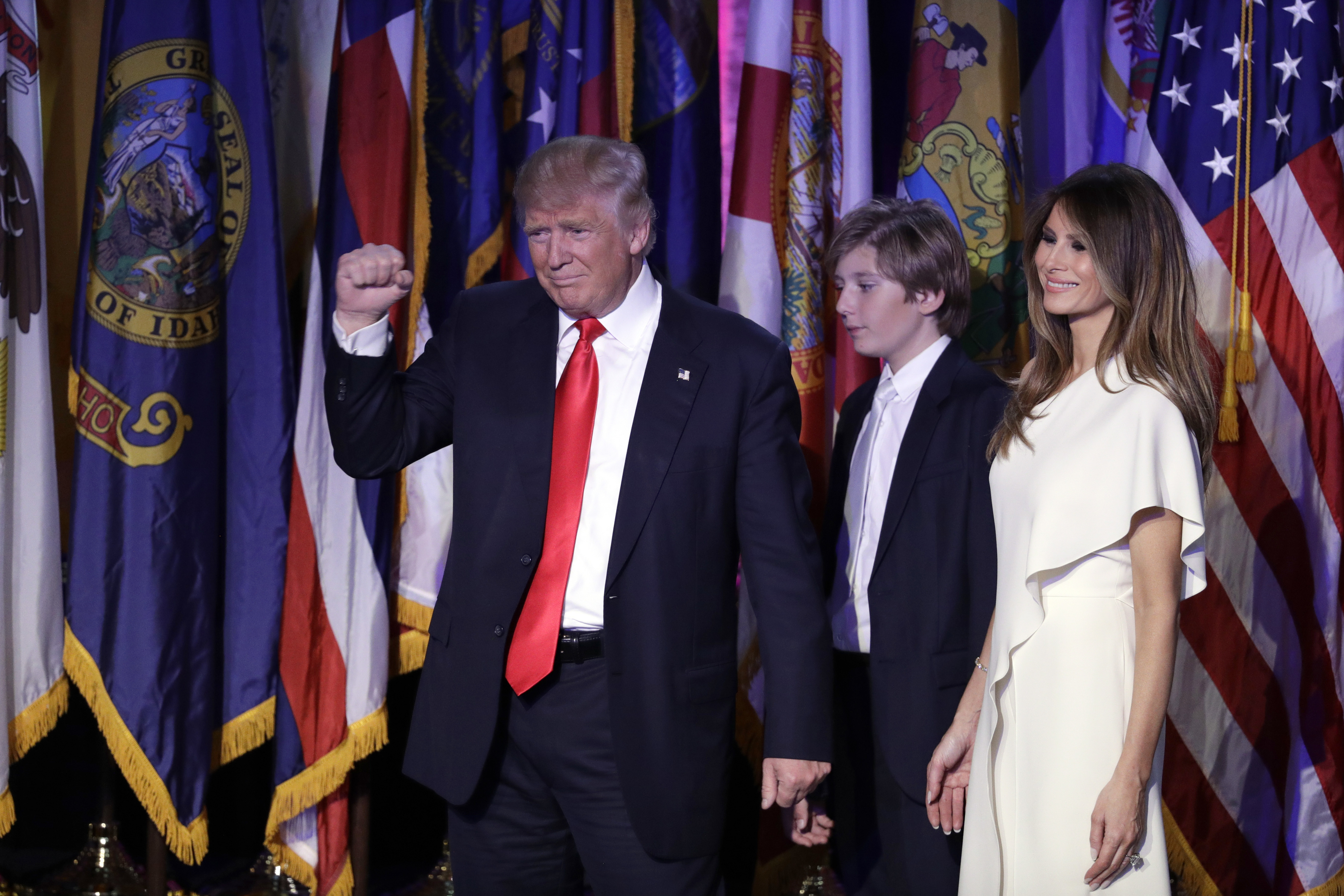
President Donald Trump was praised by some of the top unions Monday for changing course on how the country approaches international trade.

Trump has had a highly contentious relationship with unions since he first launched his campaign. His opposition to the national trade agenda was one of the few policy areas they agreed on. Some labor unions applauded the president for his decision to withdraw support from the Trans-Pacific Partnership (TPP).

“President Trump made good on his campaign promise to withdraw the United States from the Trans-Pacific Partnership,” Teamsters General President James P. Hoffa said. “With this decision, the president has taken the first step toward fixing 30 years of bad trade policies that have cost working Americans millions of good-paying jobs.”

Congress had delayed holding a final vote on the trade deal prompting some to believe it was already dead. It had drawn fierce criticism and became a main talking point during the campaign. Trump also plans to reopen negotiations on the North American Free Trade Agreement (NAFTA), which came into force in 1994.

“Today’s announcement that the U.S. is withdrawing from TPP and seeking a reopening of NAFTA is an important first step toward a trade policy that works for working people,” AFL-CIO President Richard Trumka said. “While these are necessary actions, they aren’t enough. They are just the first in a series of necessary policy changes required to build a fair and just global economy.”

Trump built his campaign on the promise that he would help domestic workers. The president has argued the current approach to trade and immigration has allowed companies to undercut workers with cheap foreign labor. He pledged to withdraw or renegotiate from trade agreements so they better serve American workers.

“Millions of working men and women saw their jobs leave the country as free trade policies undermined our manufacturing industry,” Hoffa said. “We take this development as a positive sign that President Trump will continue to fulfill his campaign promises in regard to trade policy reform.”

The TPP would have been the largest regional trade deal in history with its inclusion of countries that produce roughly 39 percent of global GDP. Former President Barack Obama found himself at odds with many in his own party for negotiating the deal. Labor unions have contested the trade deal is designed to enrich corporations and other special interests at the expense of workers.

“We will continue our relentless campaign to create new trade and economic rules that end special privileges for foreign investors and Big Pharma, protect our planet’s precious natural resources and ensure fair pay, safe conditions and a voice in the workplace for all workers,” Trumka also said.

The deal was designed to unite the partner countries under a uniform set of trade rules. It would have gradually ended thousands of import tariffs and other international trade barriers. It would also establish rules for intellectual property rights, environment protections, and open Internet access.

The Obama White House had argued the trade deal would actually help workers despite what critics claim. It will cover a few countries known for notorious labor and human rights violations, like Vietnam, Malaysia and Brunei. The former administration also said it would help fix many problems NAFTA caused.

Labor unions have tried numerous methods to fight the trade deal. They have held rallies and launched several media campaigns. Democratic Rep. Kathleen Rice was even the target of an attack ad in June 2015 for breaking with the rest of her party to support it.

Follow Connor on Twitter

Subscribe for the Latest From InsideSources Every Morning